- ADN / ARN (acides nucléiques)
- Agitateurs et shakers
- Agrégation plaquettaire
- Analyse cellulaire
- Analyse de l'humidité
- Analyse thermique
- Analyse urinaire
- Caractérisation des particules
- Centrifugation
- Chauffage et refroidissement
- Chimie analytique
- Chimie clinique
- Chromatographie flash & préparative
- Contrôle environnemental
- Contrôles de qualité cliniques
- Couleur-Apparence et tests physiques
- Culture cellulaire et fermentation
- Cytométrie en flux
- Désinfection
- Electrophorèse capillaire
- Essais et caractérisation des matériaux
- Fécondation in vitro (FIV)
- Hottes de Protection
- Hématologie
- Imagerie biologique
- Immuno-hématologie
- Immunoassay
- Lyophilisation
- Microbiologie (clinique)
- Microscopie
- Mobilier de laboratoire et études de conception
- Métrologie
- Nephelometry (Néphélométrie)
- Nettoyage Lavage
- POCT
- Pesage
- Pipetage de liquides (manuel)
- Pompes
- Préparation d'échantillon
- Purification de l'eau
- Rhéomètres
- Robot de pipetage
- Solutions d'automatisation clinique (TLA)
- Solutions informatiques cliniques
- Spectromètres de masse
- Stockage
- Stérilisation
- Synthèse
- Tests sur tablettes
- Texturomètres
- Toxicologie
- Tri cellulaire par Cytométrie en flux
- Viscosimètres
- Électrochimie
- Essais et caractérisation des matériaux Caractérisation des surfaces et nanocouches
- QCMD Quartz Crystal Microbalance with Dissipation
HOME / APPLICATIONS & TECHNIQUES /
QCMD Quartz Crystal Microbalance with Dissipation
Référence: BION-QCMD 100
https://www.analis.com/shop/bion-qcmd-100-qcmd-quartz-crystal-microbalance-with-dissipation-147793 https://www.analis.com/web/image/product.template/147793/image_1920?unique=ad3a0d8QCMD (Quartz Crystal Microbalance with Dissipation monitoring) is a label-free surface analysis technique based on a quartz resonator driven at its resonance frequency and at one or more overtones. At each overtone, QCMD measures changes in resonance frequency and energy dissipation caused by processes on the sensor surface, such as the formation of single or multilayer films or changes in their geometric or physical properties.
Sensors are available with different coatings, including gold (Au), silica (SiO₂) and titania (TiO₂), and the technique works in aqueous media or organic solvents, which makes it widely used to study solid/liquid interfaces.
What does QCMD measure?
QCMD tracks mass and structural changes at a surface in real time by measuring shifts in resonance frequency and energy dissipation. Because it records dissipation as well as frequency, it distinguishes rigid from soft, viscoelastic layers, giving insight into film thickness, structure and conformation that frequency alone cannot provide.
How does it work?
A quartz resonator oscillates at its fundamental frequency and overtones; adsorption or structural change on the sensor surface shifts both the frequency and the dissipation. A modular design supports classic QCM, high-frequency (HFF-QCM) and Love-SAW sensors, and an integrated potentiostat enables simultaneous QCMD and electrochemistry. A high-frequency option adds sensitivity for very small changes.
Key advantages
- Label-free surface analysis with quartz resonator sensors
- High-frequency option for very high sensitivity and accuracy on small changes
- Fast acquisition speed and in-situ measurements
- Modular design suitable for classic QCM, HFF-QCM and Love-SAW sensors
- Quick-lock measurement cells for user-friendly handling and robust measurements
- Integrated potentiostat control for simultaneous QCMD and electrochemistry applications
- Ethernet connection for instrument control and data monitoring
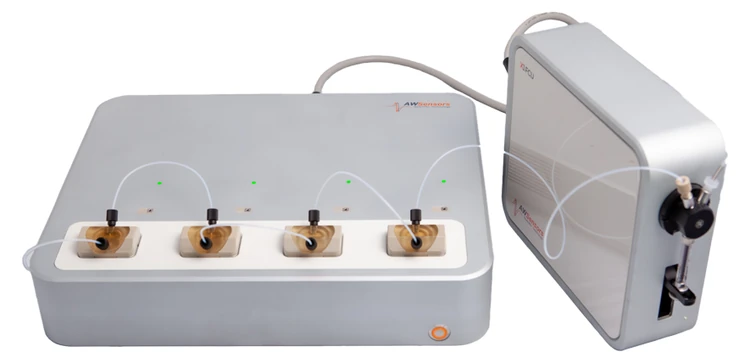
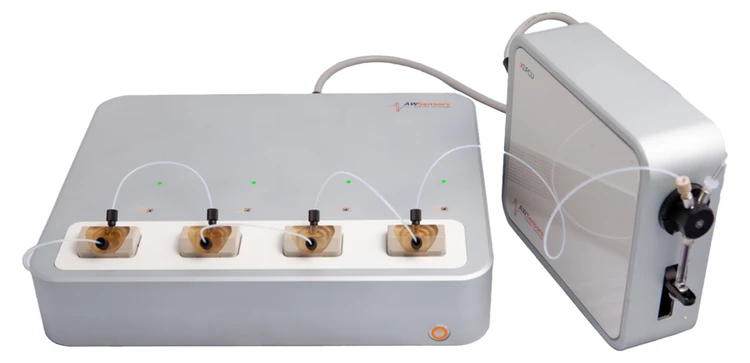
- Optional fluidics module with integrated software control
- Compact and lightweight design with basic data analysis package and export functions
What is QCMD used for?
- Lipid studies: distinguishes geometries and shape changes of lipid compositions at interfaces, such as homogeneous solid-supported bilayers versus adsorbed liposomes or other structures (e.g. cubosomes)
- Electrochemistry: accurate electrochemical measurements by following frequency and dissipation (QCMD 100)
- Biosensors, biophysics and biomaterials: molecule-surface interactions (QCMD 110)
Request a demonstration or quote
Ask Analis’ local Benelux experts for more information, a demonstration, or a personalized quote.
Données Techniques
Category | Specification |
Sensor types | QCM, HFF-QCM (50, 100, 150 MHz) and Love-SAW (120MHz) |
Measurement methods | High resolution (single and multiple overtones) |
Number of overtones | Up to 7 (fundamental + 6 overtones) |
Frequency range | 4MHz to 160MHz |
Maximum frequency resolution | 0.1Hz |
Frequency accuracy | ± 0.5Hz |
Temperature range | 15°C to 45°C |
Temperature stability | ± 0.05°C |
Mass sensitivity in air | 8 pg/cm² |
Mass sensitivity in liquid | 0.6 ng/cm² |
Dimensions | 150 x 400 x 300 mm |
Models
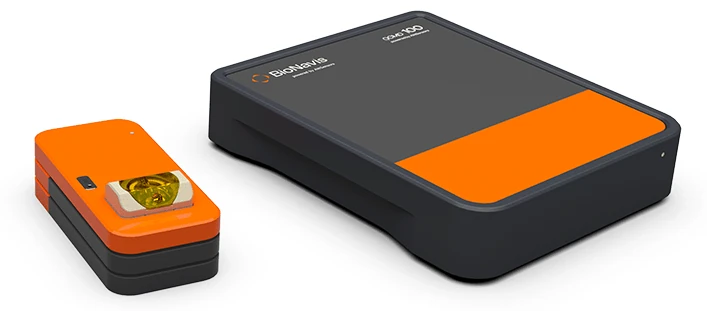
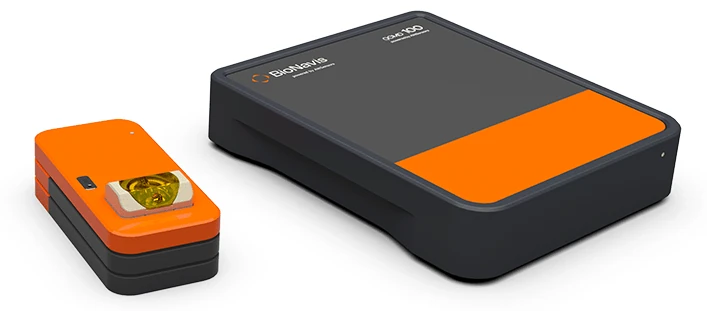
BioNavis QCMD 100 is designed for accurate electrochemistry measurements by following both frequency and dissipation. It offers customizable options, including different electrochemical cells for static and flow conditions and a selection of electrode options. It detects mass changes and interfacial dynamics in electrochemical reactions. The QuickLock cell allows easy sensor placement, efficient setup and real-time visualization during electrochemical measurements.
BioNavis QCMD 110 is an enhanced single-channel QCMD instrument with exceptional sensitivity for measuring molecule-surface interactions. It has precise temperature control from 15 °C to 65 °C and high time resolution, with up to 500 points per second. The QuickLock cell simplifies sensor placement and the instrument can be equipped with a second cell station for simultaneous measurements. With high-frequency sensor capabilities and a precise syringe pump, it suits applications in biosensors, biophysics and biomaterials.
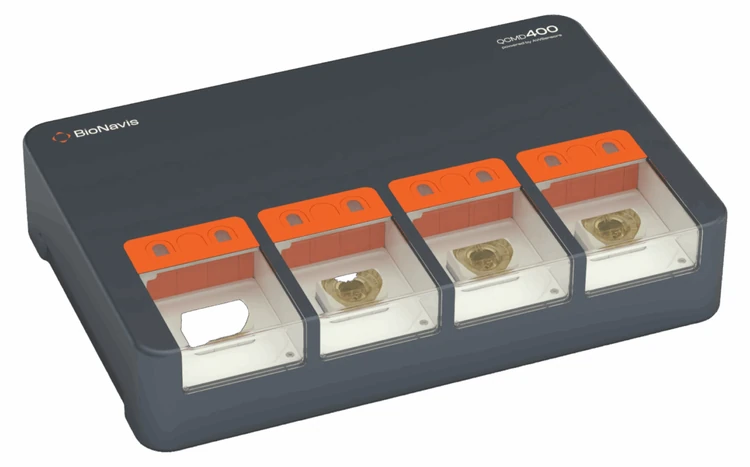
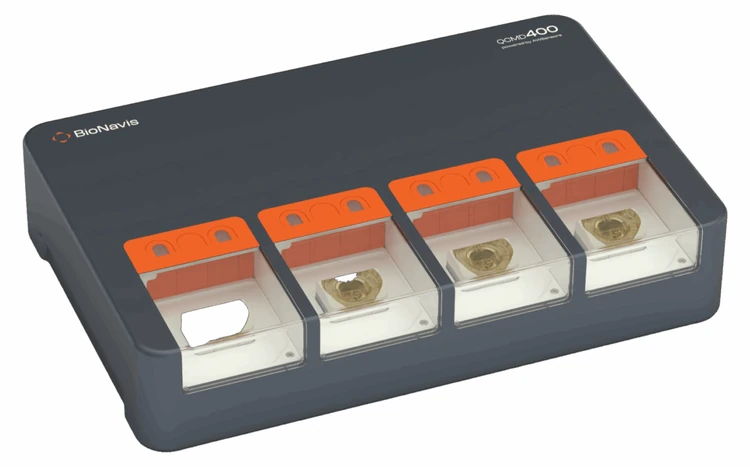
BioNavis QCMD 400 is a multi-channel QCMD instrument for simultaneous measurements on four sensors, which saves time. Temperature, sample solution and flow rate can be set for each cell, giving precise control over the measurements. The QuickLock cell simplifies sensor placement and real-time monitoring, while high-frequency sensor capabilities increase sensitivity further.
Agitateurs et shakers
Agrégation plaquettaire
Analyse cellulaire
Analyse de l'humidité
Analyse thermique
Analyse urinaire
Caractérisation des particules
Centrifugation
Chauffage et refroidissement
Chimie analytique
Chimie clinique
Chromatographie flash & préparative
Contrôle environnemental
Contrôles de qualité cliniques
Couleur-Apparence et tests physiques
Culture cellulaire et fermentation
Cytométrie en flux
Désinfection
Electrophorèse capillaire
Essais et caractérisation des matériaux
Fécondation in vitro (FIV)
Hottes de Protection
Hématologie
Imagerie biologique
Immuno-hématologie
Immunoassay
Lyophilisation
Microbiologie (clinique)
Microscopie
Mobilier de laboratoire et études de conception
Métrologie
Nephelometry (Néphélométrie)
Nettoyage Lavage
POCT
Pesage
Pipetage de liquides (manuel)
Pompes
Préparation d'échantillon
Purification de l'eau
Rhéomètres
Robot de pipetage
Solutions d'automatisation clinique (TLA)
Solutions informatiques cliniques
Spectromètres de masse
Stockage
Stérilisation
Synthèse
Tests sur tablettes
Texturomètres
Toxicologie
Tri cellulaire par Cytométrie en flux
Viscosimètres
Électrochimie