Chip-DSC 10
Référence: LINS-DSC L66 Advanced
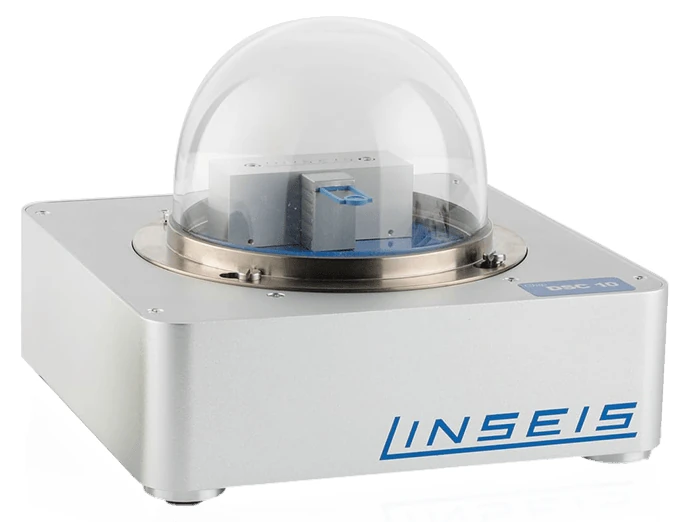
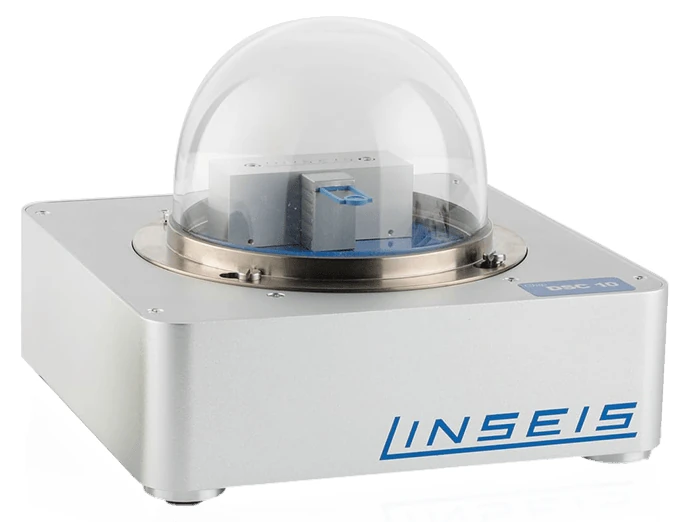
https://www.analis.com/shop/lins-dsc-l66-advanced-chip-dsc-10-147775 https://www.analis.com/web/image/product.template/147775/image_1920?unique=ad3a0d8The LINSEIS Chip-DSC 10 is a Heat Flux Differential Scanning Calorimeter (DSC) that integrates furnace, sensor and electronics in a miniaturized housing. Its chip sensor combines heater and temperature sensor in a chemically inert ceramic design, giving low mass, very fast response and superior reproducibility.
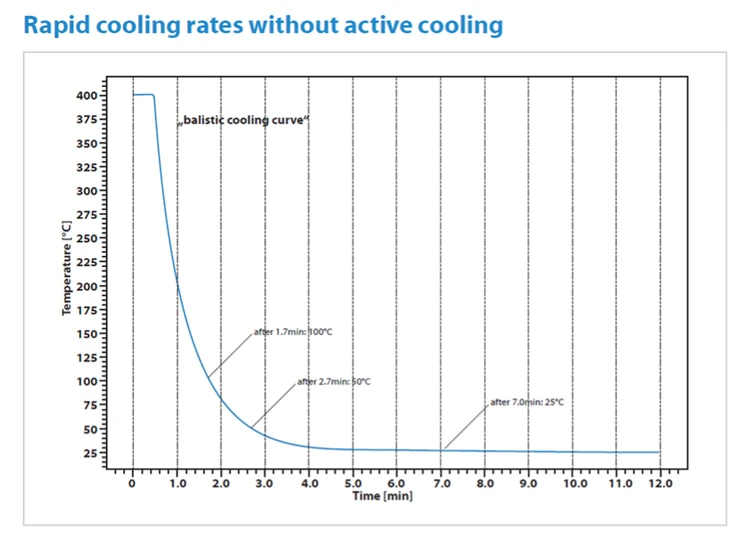
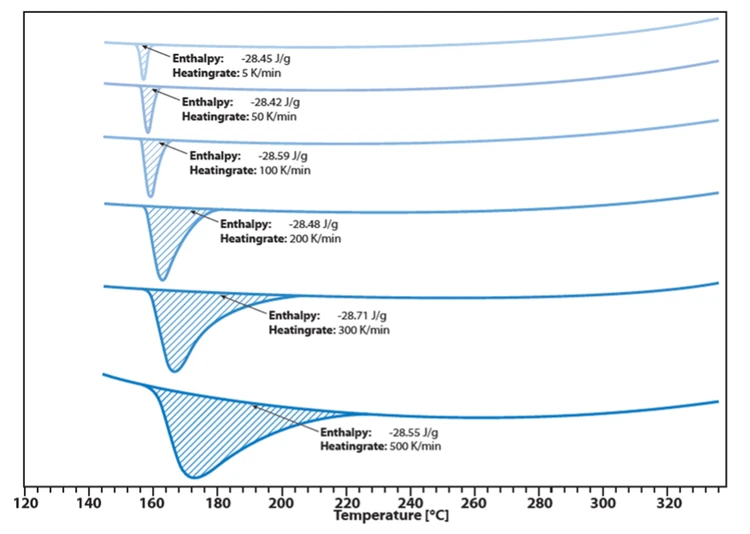
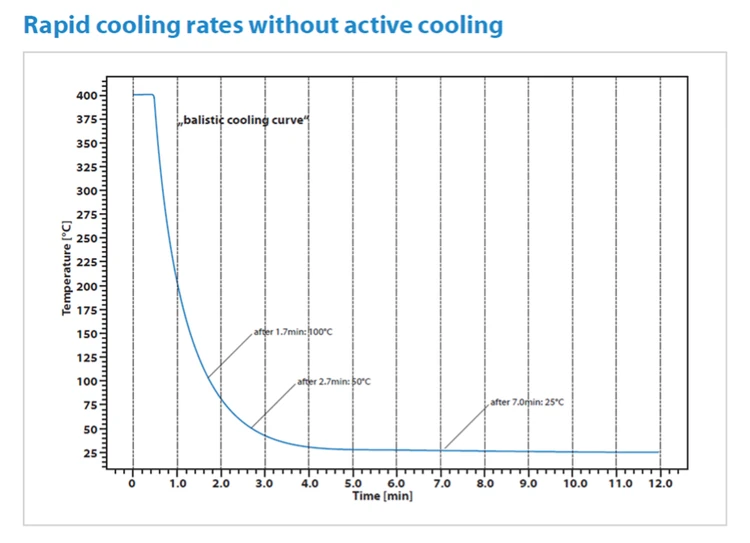
The low-mass chip enables exceptional dynamics: heating rates up to 1000 K/min and cooling up to 500 K/min without an active cooler, which opens up high-speed and advanced DSC applications.
What does the Chip-DSC 10 measure?
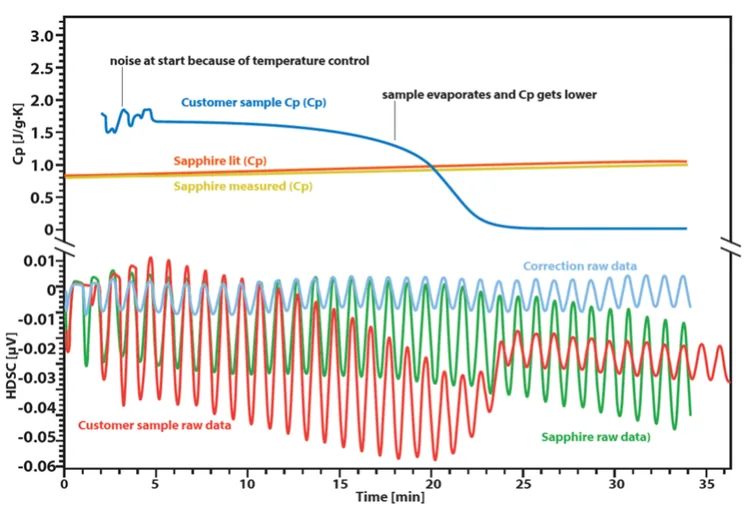
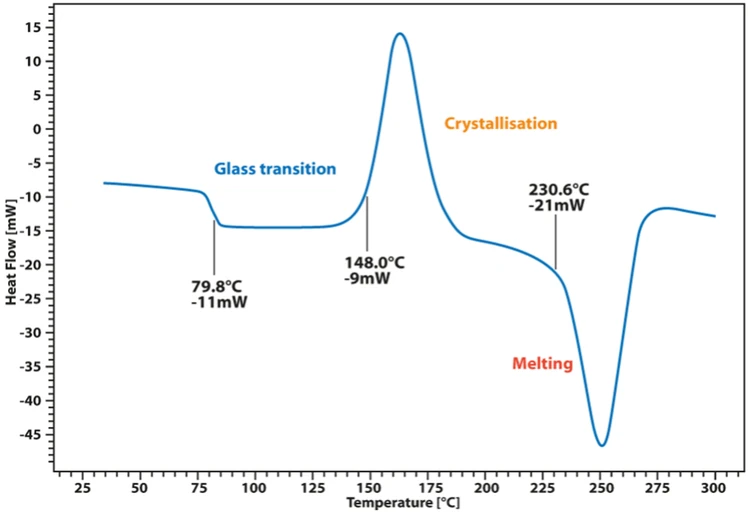
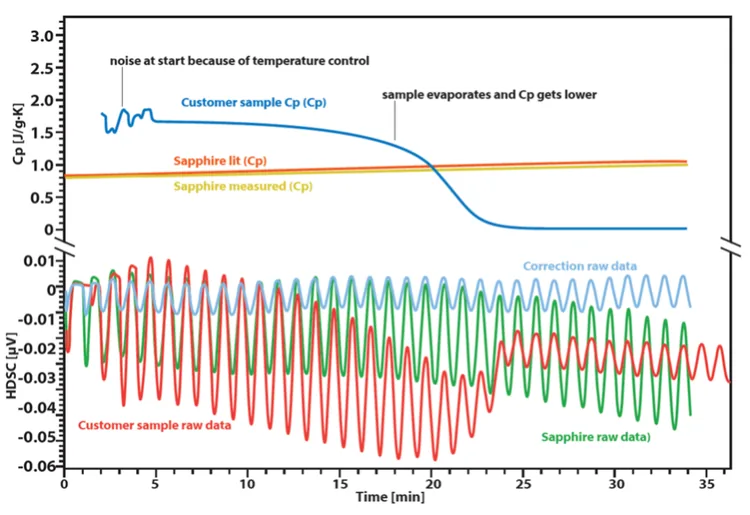
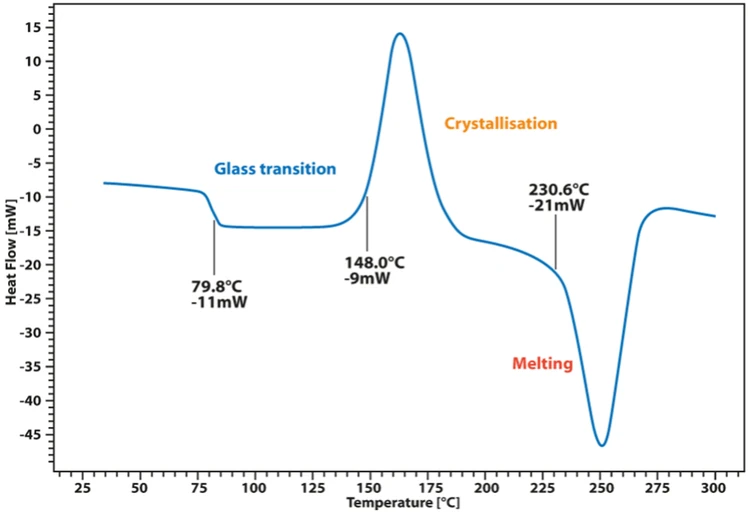
As a Heat-Flux DSC, the Chip-DSC 10 measures heat flow to characterize thermal transitions, glass transition, cold crystallization and melting, shown for example on PET granules at 50 K/min. It also determines heat capacity (Cp) by modulated measurement, demonstrated on sapphire. Superior raw data allows direct analysis without pre- or post-processing.
What sets the Chip-DSC 10 apart?
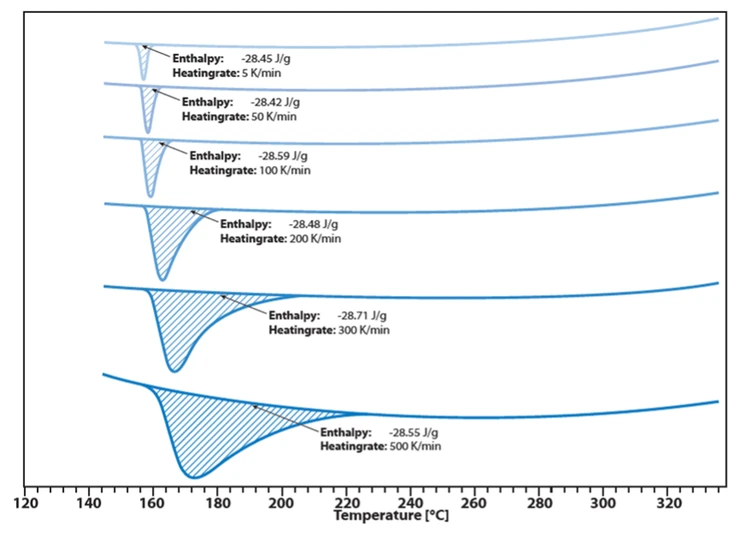
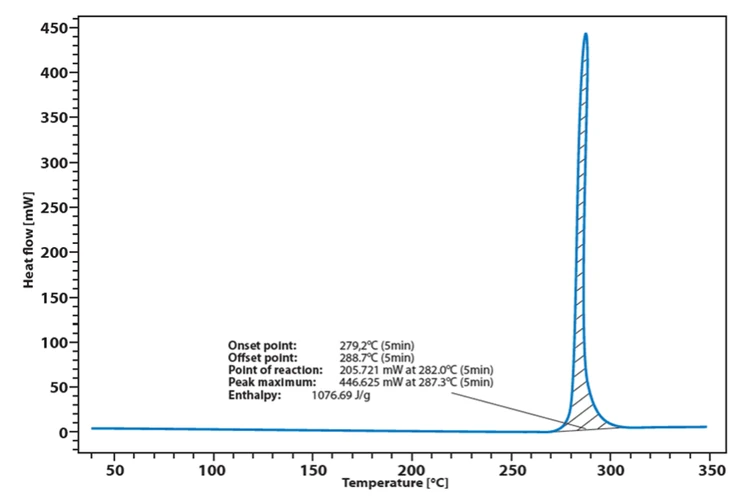
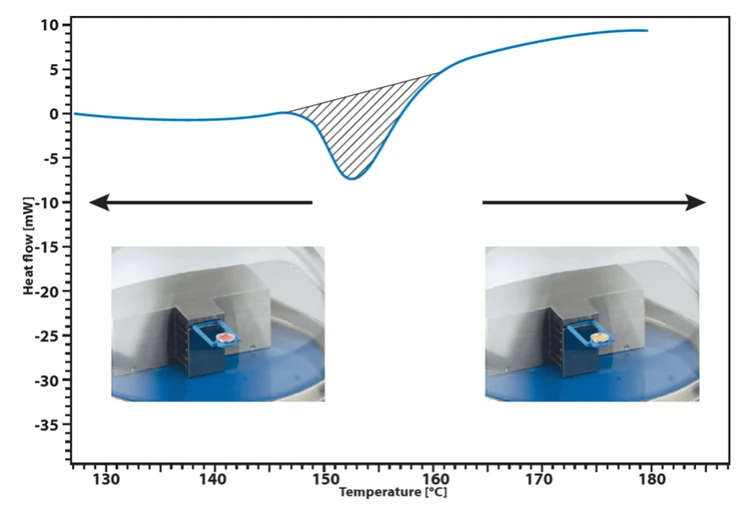
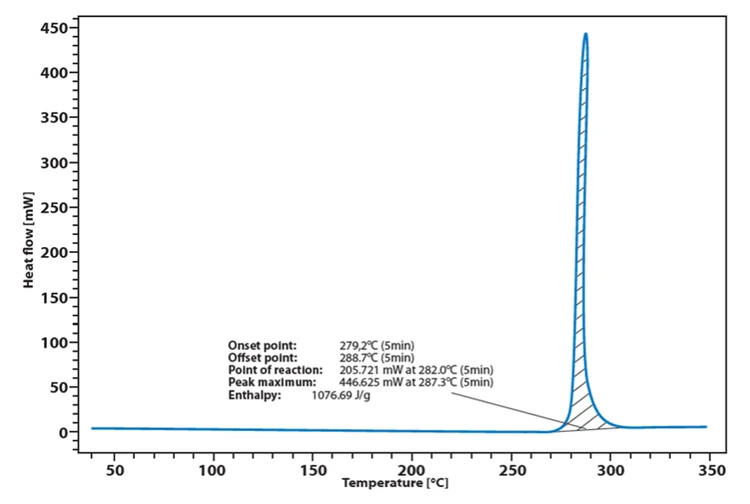
Very high dynamics are the core advantage: heating up to 1000 K/min with excellent reproducibility of melting enthalpy, and cooling up to 500 K/min from 400 °C (400 °C to 30 °C in 4 minutes), without active cooling. The user-exchangeable chip enables unusual applications: high-energy materials (propellants and explosives), where the chip is replaced in seconds and recalibration takes under half an hour, and thermochromic materials, observed through a transparent lid with an optional camera.
Key advantages
- Integrated chip sensor combines heater and temperature sensor in one Heat Flux DSC sensor with low mass and very fast response
- Superior raw data from the integrated chip design, allowing direct analysis without pre- or post-processing of heat flow data
- High resolution with benchmark resolution and clean separation of overlapping effects
- Fast cooling with the low sensor mass enabling very high cooling rates, new applications and higher sample throughput
- Easy sensor exchange by the user, with sensors available at low cost
- Low energy consumption combined with a very fast dynamic response
- Platinum software with AutoEval for standard evaluations and a thermal library of 600 polymers for automatic identification
Suitable for
- Fast cooling without active cooling: cooling rates up to 500 K/min from 400 °C, and 400 °C to 30 °C in 4 minutes
- Polymer analysis: glass transition, cold crystallization and melting, shown on PET granules at 50 K/min
- High-energy materials: propellants and explosives, with the chip replaced in seconds and recalibration in under half an hour
- Fast heating: rates up to 1000 K/min with excellent reproducibility of melting enthalpy
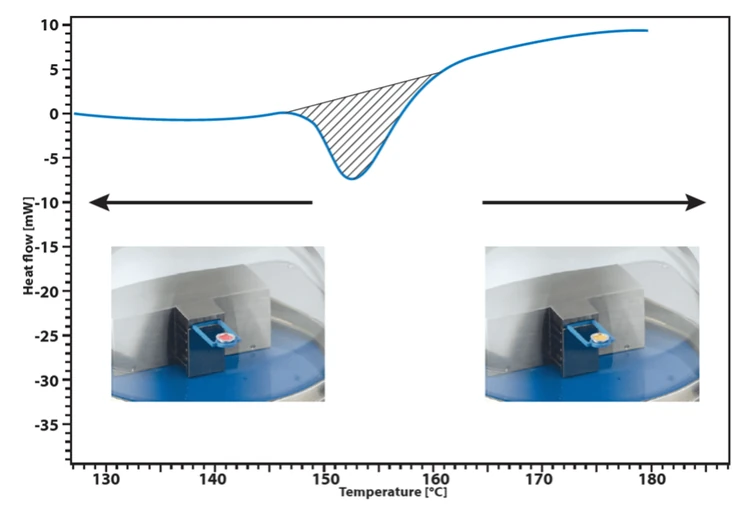
- Thermochromic materials: sample observation through the transparent lid, with an optional camera
- Heat capacity (Cp): modulated measurement, shown on sapphire at 10 K/min with 3 K amplitude
Request a demonstration or quote
Download the brochure below for full specifications. Ask Analis’ local Benelux experts for more information, a demonstration, or a personalized quote.
Données Techniques
Category | Specification |
Temperature range | -180 °C (with suitable cooling option) to +600 °C |
Heating and cooling rates | 0.001 to 300 K/min |
Temperature accuracy | ± 0.2 K |
Temperature precision | ± 0.02 K |
Digital resolution | 16.8 million points |
Resolution | 0.03 µW |
Atmospheres | Inert, oxidizing (static, dynamic) |
Measuring range | ± 2.5 to ± 1000 mW |
Calibration materials | Included |
Calibration | Recommended interval of 6 months |
Quench cooling accessories | The quench cooling accessories provide and open a cooling container around the sample sensor. Depending on the coolant, i.e. dry ice or LN2, the sample temperature can drop to -180 °C. A defined gas atmosphere is not possible during the measurement with this system, because outgassing will surround the sample. |
Software
The Platinum software streamlines your workflow, as its intuitive data processing requires only minimal parameter input. AutoEval guides the user through the evaluation of standard processes such as glass transitions or melting points. The thermal library product identification tool provides a database of 600 polymers for automatic identification of your tested polymer. Instrument control and/or monitoring via mobile devices keeps you in control wherever you are.
- Software packages compatible with the latest Windows operating system
- Set-up menu items
- All specific measurement parameters (user, laboratory, sample, company, etc.)
- Optional password and user levels
- Undo and redo function for all steps
- Unlimited heating, cooling or dwell-time segments
- Multiple language versions such as English, German, French, Spanish, Chinese, Japanese, Russian, etc. (user-selectable)
- Evaluation software with a number of functions that allow complete evaluation of all types of data
- Multiple smoothing models
- Full evaluation history (all steps can be undone)
- Evaluation and data acquisition can run simultaneously
- Data can be corrected using zero and calibration correction
- Data evaluation includes: peak separation software, signal correction and smoothing, first and second derivative, curve arithmetic, data peak evaluation, glass point evaluation, slope correction; zoom / individual segment display, multiple curve overlay, annotation and drawing tools, copy-to-clipboard function, multiple export functions for graphics and data export, reference-based correction