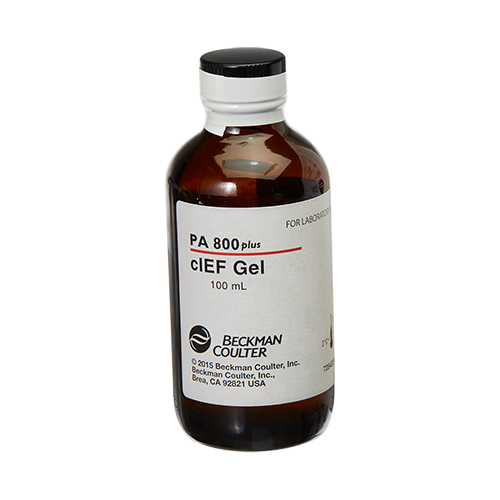
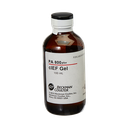
Separation Buffer for performing capillary Isoelectric Focusing.
(100 mL).
Gel used in the cIEF application for experimentally determining a molecule's isoelectric point (pI) and the various charge variants of the molecule.
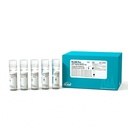
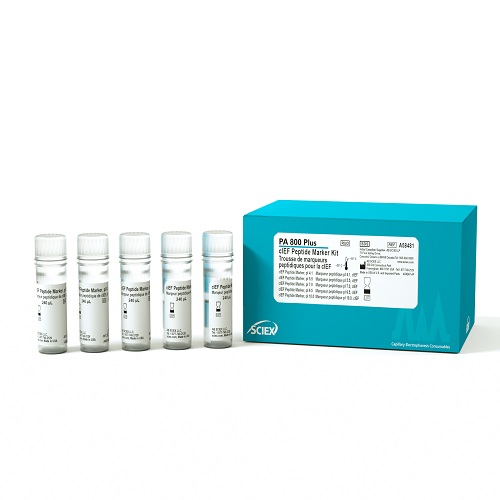
pI Marker Kit features synthetic peptides for high resolution and quantitative reproducibility in calculating protein pI. The combination of the advanced cIEF methods, the synthetic pI markers, and the PA 800 Plus system results in cIEF separations with the highest level of precision for pI determination and isoform quantitation of your sample.
This kit includes:
• Five vials containing 240 µL each of peptides with the following pI values: pI 4.1, pI 5.5, pI 7.0, pI 9.5, pI 10.0.
This volume enables 100 cIEF runs.
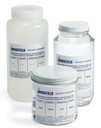
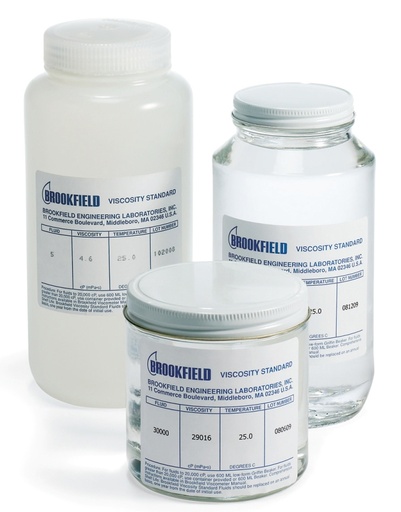
Les fluides étalons de viscosité au silicone servent couramment à vérifier l'étalonnage des viscosimètres et rhéomètres Brookfield, et sont moins sensibles à la température que les huiles minérales.
Les fluides silicones polyvalents sont l'étalon le plus utilisé pour vérifier l'étalonnage de votre viscosimètre ou rhéomètre Brookfield.
Les étalons silicones sont des fluides newtoniens, précis à ±1 % de la valeur de viscosité.
Les fluides silicones offrent une excellente stabilité en température et sont moins sensibles à la température que les étalons à base d'huile.
Les étalons de viscosité Brookfield sont certifiés par des méthodes traçables au National Institute of Standards and Technology (NIST) des États-Unis.
Un ou deux fluides fournissent généralement assez de points de mesure pour vérifier l'étalonnage de votre instrument.
Tous les fluides sont livrés en contenants d'½ litre (1 pinte) avec un certificat d'étalonnage.
CARACTÉRISTIQUES ET AVANTAGES
- Précision : ±1 % de la valeur de viscosité
- Excellente stabilité en température
- Recommandé pour les viscosimètres rotatifs Brookfield et la plupart des autres
- Très économique
- Valeurs de viscosité et étalonnages en température spéciaux sur demande
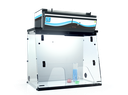
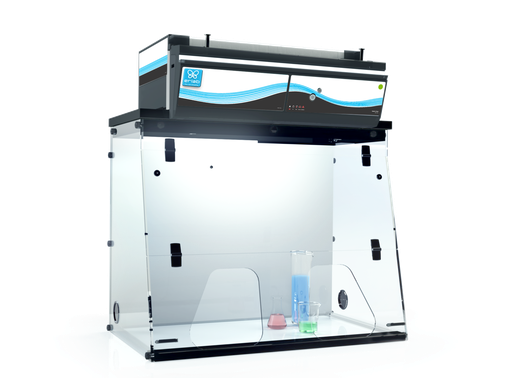
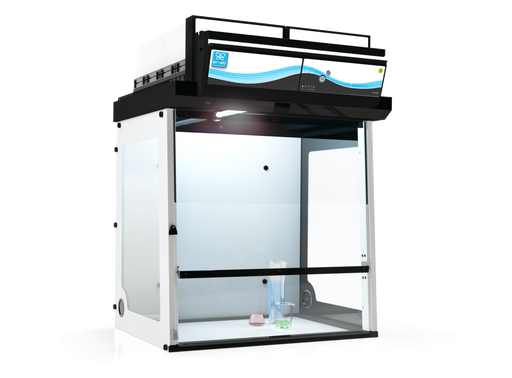
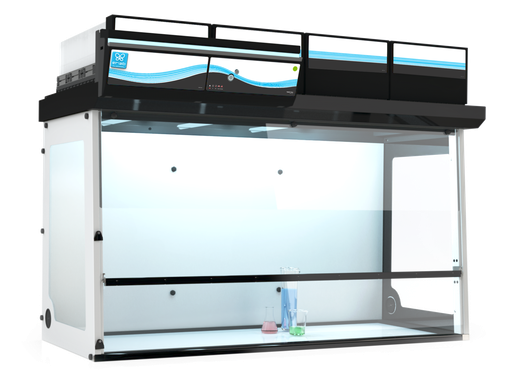
The Erlab captair Smart 491 is a ductless filtration fume hood designed to protect the user by filtering hazardous vapors produced by your samples. It is quiet, easy to use and fully customizable to your exact needs and laboratory application.
Features:
- Oblong type opening
- Cut costs of installation, maintenance and operation with a ductless fume hood
- With Erlab’s unrivalled SMART technology you can work with complete confidence that you are fully protected from the hazardous fumes and particles produced from your laboratory applications
- Simple communication by clear sound and light pulses indicate varied information including faults, run time, air face velocity, filter saturation, ventilation settings, fan failure, etc.
- Overall dimensions (WxD) 1005x620 mm. Height is dependent on filter configuration and can be 1110-1285 mm.
- Corrosion resistant, electro-galvanized steel coated with an anti-acid polymer
- The eGuard App is available for remote control monitoring of the hood, changing the settings, and delivering safety alerts immediately to your devices (mobile phone, tablet and PC)
- One filtering column that can be configured to handle liquids, powders or both
- Continuous monitoring of air face velocity
- 65W
Options:
- Three different work surface options with built in spill tray (Trespa/phenolic resin, 304L stainless steel or tempered glass)
- Can be supplied with a fixed or mobile bench or you have the option to use your own bench
- The Molecode detection sensor can be supplied in three types (acid, solvents and formaldehyde)
- By providing us with your chemical handlings, we can calculate what type of activated carbon or HEPA filters you require and initiate a filter rotation schedule to ensure full protection for years to come
- Safety filter in case of main filter saturation
- Available with a number of tap options (nitrogen, hot water, cold water, vacuum, natural gas, compressed air, distilled water, un-ionized water, methane, etc.)
- Transparent back panel
- Internal 240V electrical socket
- Waste port
- Sink (30x15 cm), location to be indicated by customer
- Analis exclusive warranty and service contract available to include annual visits and replacement filters
Power supply:
- Standard 230V
Safety Standards
- AFNOR NF X 15-211:2009: France - BS 7989: England, DIN 12 927:Germany - EN 1822:1998 (HEPA H14 & ULPA U17 Filters) - CE Marking
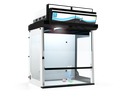
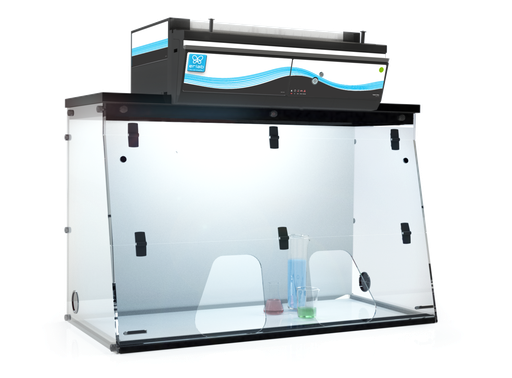
La hotte sans raccordement Erlab captair Smart 392 est conçue pour protéger l'utilisateur en filtrant les vapeurs dangereuses produites par les échantillons. Elle est silencieuse, facile à utiliser et entièrement personnalisable en fonction des besoins précis et de l'application du laboratoire.
Caractéristiques :
- Ouverture de type Reverso
- Réduisez les coûts d'installation, de maintenance et d'exploitation grâce à une hotte sans conduit
- Grâce à la technologie SMART inégalée d'Erlab, vous pouvez travailler en toute confiance, sachant que vous êtes entièrement protégé contre les fumées et particules dangereuses produites par vos applications de laboratoire
- Une communication simple par des impulsions sonores et lumineuses claires indique diverses informations, notamment les défauts, la durée de fonctionnement, la vitesse de l'air, la saturation du filtre, les réglages de ventilation, les pannes de ventilateur, etc.
- Dimensions hors tout (L x P) 1005 x 749 mm. La hauteur dépend de la configuration du filtre et peut varier entre 1340 et 1515 mm.
- Acier électro-galvanisé résistant à la corrosion, recouvert d'un polymère anti-acide.
- L'application eGuard permet de contrôler la hotte à distance, de modifier les réglages et de recevoir immédiatement des alertes de sécurité sur vos appareils (téléphone portable, tablette et PC).
- Une colonne de filtration pouvant être configurée pour traiter les liquides, les poudres ou les deux.
- Surveillance continue de la vitesse de l'air.
- 105W
Options:
- Trois options différentes pour la surface de travail avec bac de récupération intégré (Trespa/résine phénolique, acier inoxydable 304L ou verre trempé)
- Peut être fourni avec un plan de travail fixe ou mobile, ou vous pouvez utiliser votre propre plan de travail
- Le capteur de détection Molecode est disponible en trois types (acide, solvants et formaldéhyde)
- En nous indiquant les produits chimiques que vous manipulez, nous pouvons calculer le type de charbon actif ou de filtres HEPA dont vous avez besoin et mettre en place un programme de rotation des filtres afin de garantir une protection totale pendant de nombreuses années
- Filtre de sécurité en cas de saturation du filtre principal
- Disponible avec plusieurs options de robinets (azote, eau chaude, eau froide, vide, gaz naturel, air comprimé, eau distillée, eau non ionisée, méthane, etc.)
- Panneau arrière transparent
- Prise électrique interne 240 V
- Écoulement des déchets
- Évier (30 x 15 cm), emplacement à indiquer par le client
- Contrat de garantie et de service exclusif Analis disponible, comprenant des visites annuelles et le remplacement des filtres
Alimentation électrique :
- 230 V standard
Normes de sécurité
- AFNOR NF X 15-211:2009 : France - BS 7989 : Angleterre, DIN 12 927 : Allemagne - EN 1822:1998 (filtres HEPA H14 et ULPA U17) - Marquage CE
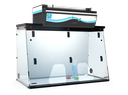
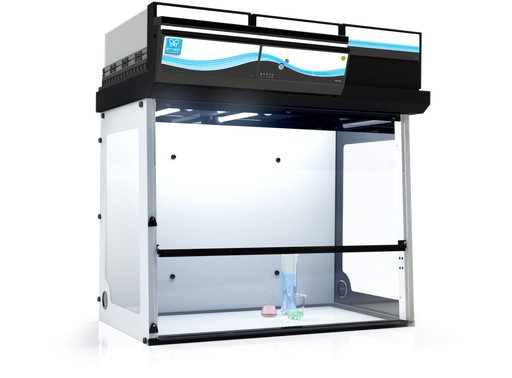
The Erlab captair Smart 481 is a ductless filtration fume hood designed to protect the user by filtering hazardous vapors produced by your samples. It is quiet, easy to use and fully customizable to your exact needs and laboratory application.
Features:
- Oblong type opening
- Cut costs of installation, maintenance and operation with a ductless fume hood
- With Erlab’s unrivalled SMART technology you can work with complete confidence that you are fully protected from the hazardous fumes and particles produced from your laboratory applications
- Simple communication by clear sound and light pulses indicate varied information including faults, run time, air face velocity, filter saturation, ventilation settings, fan failure, etc.
- Overall dimensions (WxD) 1260x620 mm. Height is dependent on filter configuration and can be 1110-1285 mm.
- Corrosion resistant, electro-galvanized steel coated with an anti-acid polymer
- The eGuard App is available for remote control monitoring of the hood, changing the settings, and delivering safety alerts immediately to your devices (mobile phone, tablet and PC)
- One filtering column that can be configured to handle liquids, powders or both
- Continuous monitoring of air face velocity
- 65W
Options:
- Three different work surface options with built in spill tray (Trespa/phenolic resin, 304L stainless steel or tempered glass)
- Can be supplied with a fixed or mobile bench or you have the option to use your own bench
- The Molecode detection sensor can be supplied in three types (acid, solvents and formaldehyde)
- By providing us with your chemical handlings, we can calculate what type of activated carbon or HEPA filters you require and initiate a filter rotation schedule to ensure full protection for years to come
- Safety filter in case of main filter saturation
- Available with a number of tap options (nitrogen, hot water, cold water, vacuum, natural gas, compressed air, distilled water, un-ionized water, methane, etc.)
- Transparent back panel
- Internal 240V electrical socket
- Waste port
- Sink (30x15 cm), location to be indicated by customer
- Analis exclusive warranty and service contract available to include annual visits and replacement filters
Power supply:
- Standard 230V
Safety Standards
- AFNOR NF X 15-211:2009: France - BS 7989: England, DIN 12 927:Germany - EN 1822:1998 (HEPA H14 & ULPA U17 Filters) - CE Marking
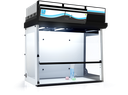
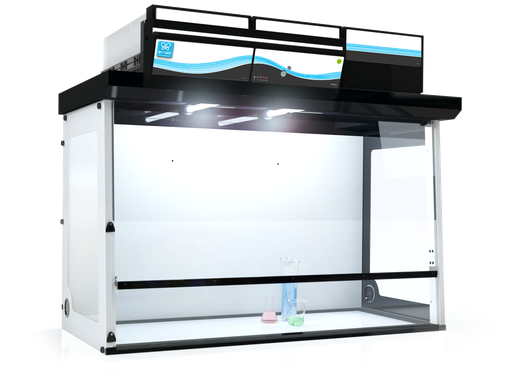
The Erlab captair Smart 483 is a ductless filtration fume hood designed to protect the user by filtering hazardous vapors produced by your samples. It is quiet, easy to use and fully customizable to your exact needs and laboratory application.
Features:
- Reverso type opening
- Cut costs of installation, maintenance and operation with a ductless fume hood
- With Erlab’s unrivalled SMART technology you can work with complete confidence that you are fully protected from the hazardous fumes and particles produced from your laboratory applications
- Simple communication by clear sound and light pulses indicate varied information including faults, run time, air face velocity, filter saturation, ventilation settings, fan failure, etc.
- Overall dimensions (WxD) 1280x749 mm. Height is dependent on filter configuration and can be 1340-1515 mm.
- Corrosion resistant, electro-galvanized steel coated with an anti-acid polymer
- The eGuard App is available for remote control monitoring of the hood, changing the settings, and delivering safety alerts immediately to your devices (mobile phone, tablet and PC)
- One filtering column that can be configured to handle liquids, powders or both
- Continuous monitoring of air face velocity
- 160W
Options:
- Three different work surface options with built in spill tray (Trespa/phenolic resin, 304L stainless steel or tempered glass)
- Can be supplied with a fixed bench or you have the option to use your own bench
- The Molecode detection sensor can be supplied in three types (acid, solvents and formaldehyde)
- By providing us with your chemical handlings, we can calculate what type of activated carbon or HEPA filters you require and initiate a filter rotation schedule to ensure full protection for years to come
- Safety filter in case of main filter saturation
- Available with a number of tap options (nitrogen, hot water, cold water, vacuum, natural gas, compressed air, distilled water, un-ionized water, methane, etc.)
- Transparent back panel
- Internal 240V electrical socket
- Waste port
- Sink (30x15 cm), location to be indicated by customer
- Analis exclusive warranty and service contract available to include annual visits and replacement filters
Power supply:
- Standard 230V
Safety Standards
- AFNOR NF X 15-211:2009: France - BS 7989: England, DIN 12 927:Germany - EN 1822:1998 (HEPA H14 & ULPA U17 Filters) - CE Marking
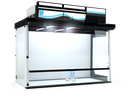
The Erlab captair Smart 633 is a ductless filtration fume hood designed to protect the user by filtering hazardous vapors produced by your samples. It is quiet, easy to use and fully customizable to your exact needs and laboratory application.
Features:
- Reverso type opening
- Cut costs of installation, maintenance and operation with a ductless fume hood
- With Erlab’s unrivalled SMART technology you can work with complete confidence that you are fully protected from the hazardous fumes and particles produced from your laboratory applications
- Simple communication by clear sound and light pulses indicate varied information including faults, run time, air face velocity, filter saturation, ventilation settings, fan failure, etc.
- Overall dimensions (WxD) 1604x749 mm. Height is dependent on filter configuration and can be 1340-1515 mm.
- Corrosion resistant, electro-galvanized steel coated with an anti-acid polymer
- The eGuard App is available for remote control monitoring of the hood, changing the settings, and delivering safety alerts immediately to your devices (mobile phone, tablet and PC)
- One filtering column that can be configured to handle liquids, powders or both
- Continuous monitoring of air face velocity
- 160W
Options:
- Three different work surface options with built in spill tray (Trespa/phenolic resin, 304L stainless steel or tempered glass)
- Can be supplied with a fixed bench or you have the option to use your own bench
- The Molecode detection sensor can be supplied in three types (acid, solvents and formaldehyde)
- By providing us with your chemical handlings, we can calculate what type of activated carbon or HEPA filters you require and initiate a filter rotation schedule to ensure full protection for years to come
- Safety filter in case of main filter saturation
- Available with a number of tap options (nitrogen, hot water, cold water, vacuum, natural gas, compressed air, distilled water, un-ionized water, methane, etc.)
- Transparent back panel
- Internal 240V electrical socket
- Waste port
- Sink (30x15 cm), location to be indicated by customer
- Analis exclusive warranty and service contract available to include annual visits and replacement filters
Power supply:
- Standard 230V
Safety Standards
- AFNOR NF X 15-211:2009: France - BS 7989: England, DIN 12 927:Germany - EN 1822:1998 (HEPA H14 & ULPA U17 Filters) - CE Marking
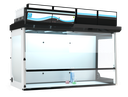
The Erlab captair Smart 714 is a ductless filtration fume hood designed to protect the user by filtering hazardous vapors produced by your samples. It is quiet, easy to use and fully customizable to your exact needs and laboratory application.
Features:
- Reverso type opening
- Cut costs of installation, maintenance and operation with a ductless fume hood
- With Erlab’s unrivalled SMART technology you can work with complete confidence that you are fully protected from the hazardous fumes and particles produced from your laboratory applications
- Simple communication by clear sound and light pulses indicate varied information including faults, run time, air face velocity, filter saturation, ventilation settings, fan failure, etc.
- Overall dimensions (WxD) 1805x749 mm. Height is dependent on filter configuration and can be 1340-1515 mm.
- Corrosion resistant, electro-galvanized steel coated with an anti-acid polymer
- The eGuard App is available for remote control monitoring of the hood, changing the settings, and delivering safety alerts immediately to your devices (mobile phone, tablet and PC)
- One filtering column that can be configured to handle liquids, powders or both
- Continuous monitoring of air face velocity
- 220W
Options:
- Three different work surface options with built in spill tray (Trespa/phenolic resin, 304L stainless steel or tempered glass)
- Can be supplied with a fixed bench or you have the option to use your own bench
- The Molecode detection sensor can be supplied in three types (acid, solvents and formaldehyde)
- By providing us with your chemical handlings, we can calculate what type of activated carbon or HEPA filters you require and initiate a filter rotation schedule to ensure full protection for years to come
- Safety filter in case of main filter saturation
- Available with a number of tap options (nitrogen, hot water, cold water, vacuum, natural gas, compressed air, distilled water, un-ionized water, methane, etc.)
- Transparent back panel
- Internal 240V electrical socket
- Waste port
- Sink (30x15 cm), location to be indicated by customer
- Analis exclusive warranty and service contract available to include annual visits and replacement filters
Power supply:
- Standard 230V
Safety Standards
- AFNOR NF X 15-211:2009: France - BS 7989: England, DIN 12 927:Germany - EN 1822:1998 (HEPA H14 & ULPA U17 Filters) - CE Marking
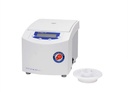
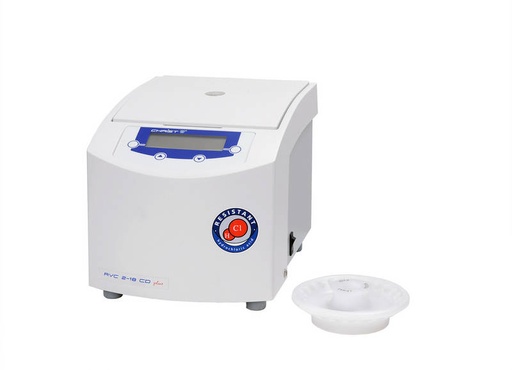
La RVC 2-18 CDplus HCl (modèle de table) est une version résistante aux produits chimiques et au HCL (Hastelloy) avec système d'entraînement magnétique et joints résistants, 230 V, 50/60 Hz. L'appareil est équipé d'une chambre rotative émaillée, d'un couvercle en verre borosilicaté avec hublot, d'un verrouillage électrique et d'un dispositif de sécurité. Vanne résistante pour la purge du vide. Système de commande convivial avec écran LCD et présélection de la durée et de la température de chauffage jusqu'à +60 °C par incréments de 1 °C. La durée de chauffage et la durée de fonctionnement peuvent être réglées séparément.
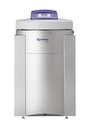
Inclus dans le prix de base :
- Commande entièrement automatique par microprocesseur avec 12 programmes :
1-3 Solides
4-5 Sacs de destruction de déchets
6-7 Déchets liquides
8-11 Milieux liquides
12 Nettoyage
- Générateur de vapeur séparé intégré (aucun élément chauffant dans la chambre de stérilisation)
- Nouveau système de fermeture à verrouillage annulaire avec joint à lèvre
- Température et pression de vapeur jusqu'à 140 °C / 4 bar de pression absolue
- Verrou thermique : verrouillage de la porte commandé par la pression et la température du milieu selon la réglementation sur les appareils à pression
- Sonde de température PT-100 flexible pour cuve de référence
- Durée de stérilisation régulée par la température du milieu
- Transducteur de pression électronique pour le contrôle de la pression et de la température
- Autofill : alimentation automatique en eau déminéralisée pour la production de vapeur
- Programme spécial de destruction des déchets avec montée en température pulsée pour une meilleure ventilation des sacs
- Démarrage par horloge/minuterie pour une heure de départ programmée
- Condensation des vapeurs d'échappement, refroidie à l'eau et régulée par thermostat
- Raccordement collecteur commun pour toutes les sorties
- Vanne de vidange
- Plaque de base pour cuves, paniers, etc.
- Port de validation
- Interface RS 232 pour le transfert de données externe
- Préparé pour l'installation ultérieure d'une imprimante
- Préparé pour l'installation ultérieure d'un refroidissement rapide
- Préparé pour l'installation ultérieure d'un système de vide
- Préparé pour l'installation ultérieure d'un système de séchage
- Coupure de sécurité en cas de bas niveau d'eau
- Coupure de sécurité en cas de température excessive
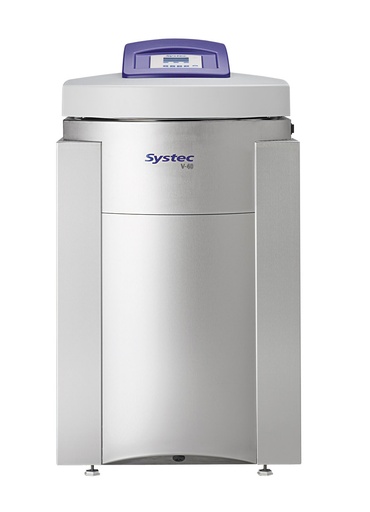
Les autoclaves de laboratoire Systec série V se distinguent par leur design moderne, leurs fonctions faciles d'utilisation et leur technologie de pointe.
Couvercle et système de verrouillage :
La fermeture à verrouillage annulaire, associée à un robuste joint à lèvre, maintient le couvercle de l'autoclave hermétiquement fermé et sûr. La pression de vapeur comprime davantage le joint à lèvre ; aucun air comprimé supplémentaire n'est donc nécessaire. Le verrouillage est automatique à la fermeture du couvercle.
Le verrouillage annulaire se libère d'une pression sur un bouton et le couvercle s'ouvre automatiquement. Chaque programme peut aussi être réglé pour ouvrir le couvercle automatiquement en fin de cycle. Le joint est en silicone thermorésistant et très fiable. Un capot en plastique thermorésistant protège l'utilisateur du contact avec les pièces chaudes.
Les autoclaves Systec série V sont équipés en usine d'un verrou de porte régulé en température, conforme à la réglementation sur les appareils à pression pour la stérilisation des liquides et aux normes ISO/DIN. La porte reste verrouillée tant qu'une surpression subsiste dans la chambre.
Mécanismes de commande :
Un microprocesseur spécialement développé régule toutes les fonctions de l'autoclave : pression de vapeur, température, durée de stérilisation, ainsi que les fonctions optionnelles de refroidissement rapide, pré- et post-vide et séchage. Tout écart par rapport aux valeurs de consigne déclenche une alarme.
La commande par menu est simple d'utilisation. Tous les paramètres de stérilisation se modifient via des codes numériques spéciaux. Le panneau de commande est intégré de façon ergonomique dans le capot en plastique du couvercle.
Générateur de vapeur :
La vapeur est produite dans une cuve totalement séparée de la chambre de stérilisation (aucun élément chauffant dans la chambre elle-même). Le générateur de vapeur est intégré au corps de l'autoclave. Étant séparé de la chambre, il n'a pas besoin d'être refroidi pendant la phase de refroidissement.
Avantages :
- Refroidissement plus rapide.
- Moins d'eau de refroidissement nécessaire.
- La vapeur est disponible immédiatement après le refroidissement, car le générateur n'est pas refroidi.
Le générateur de vapeur intègre toutes les fonctions de commande, vannes et pompes nécessaires au remplissage en eau déminéralisée.
Condenseur de vapeur d'échappement :
La vapeur évacuée pendant le programme est automatiquement refroidie et condensée. Cela évite les odeurs désagréables et protège de la surchauffe les conduites d'eaux usées éventuellement en plastique. Le processus est régulé par thermostat via une sonde PT 100, ce qui économise l'eau de refroidissement.
Soupape de sécurité de l'appareil à pression :
L'appareil à pression de l'autoclave est en acier inoxydable 316L (1.4404) résistant à la corrosion et électropoli pour un nettoyage facile. En cas de dépassement de la pression maximale, une soupape de sécurité homologuée s'active et libère la pression.
Le microprocesseur entièrement automatique, commandé par menu, intègre 12 programmes standard :
Les paramètres de chaque programme, comme la température et la durée, peuvent être réglés et enregistrés individuellement.
Programmes 1-3 : cycle rapide pour solides, instruments, appareils et objets en plastique, avec échappement rapide de la vapeur.
Programmes 4-5 : pour déchets en sacs de destruction, avec phase de montée en température pulsée pour une meilleure ventilation des sacs.
Programmes 6-7 : stérilisation de déchets liquides avec échappement lent de la vapeur (ou rétro-refroidissement rapide en option).
Programmes 8-11 : liquides avec échappement contrôlé de la vapeur puis auto-refroidissement (ou rétro-refroidissement rapide en option).
Programme 12 : programme de nettoyage avec échappement rapide de la vapeur.
Des variantes et des programmes pour applications spéciales sont disponibles sur demande.
Les programmes se déroulent entièrement automatiquement. La température est mesurée dans la chambre de stérilisation ou, pour la stérilisation de liquides, dans une cuve de référence via une sonde flexible, plus une seconde sonde fixe au point le plus froid de l'évacuation des condensats. Les deux sondes doivent atteindre la température requise pendant la stérilisation ; une valeur inférieure déclenche un message d'erreur.
La commande combine régulation de température et de pression, permettant de dépasser la pression de vapeur de consigne jusqu'à 0,3 bar pendant la montée en température sans dépasser la température du produit. La phase de montée peut ainsi être raccourcie d'environ 50 % par rapport à une simple régulation de température. La température de stérilisation est réglable de 60 à 140 °C et la durée de 1 à 9999 minutes.
La température du produit ou de la chambre et la pression dans la chambre sont affichées en permanence pendant tout le programme.
Validation et documentation :
Un port de validation de 1/2 pouce est prévu pour la validation avec des sondes de température externes. Diverses options de documentation sont également disponibles — de l'imprimante au logiciel PC via l'interface RS 232, ou des systèmes d'enregistrement séparés pour une documentation conforme GMP.
Options :
Autres options : divers systèmes de refroidissement rapide avec ou sans pression d'appoint ; systèmes de vide ; procédés de séchage ; ventilation dans la chambre ; mélanges vapeur-air ; pulvérisation d'eau chaude ou systèmes sub-aqua ; dispositifs de levage pour la charge ; filtration de l'air d'échappement pour micro-organismes infectieux ; phases prolongées de maintien en température pour stériliser des micro-organismes très résistants ou pour des essais de résistance des matériaux en industrie. Des programmes spéciaux supplémentaires peuvent être élaborés et testés selon les spécifications du client.
Toutes ces options peuvent aussi être installées a posteriori sur les autoclaves Systec actuels. La version de base inclut déjà tous les raccordements nécessaires à chaque option.
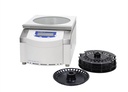
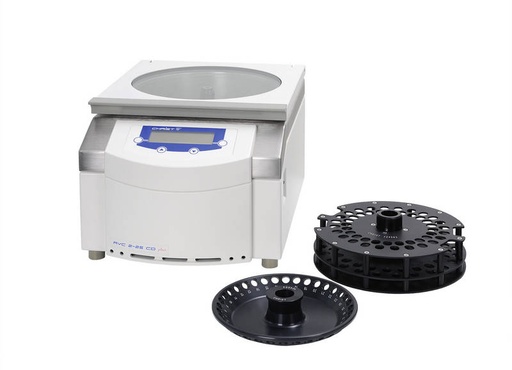
Concentrateur rotatif sous vide RVC 2-25 CDplus, 230 V, 50/60 Hz (modèle de table) avec chambre rotative en acier inoxydable, système d'entraînement magnétique, couvercle avec hublot, verrouillage électrique et dispositif de sécurité. Système de commande convivial avec écran LCD.
Tension spéciale, voir référence 120100.