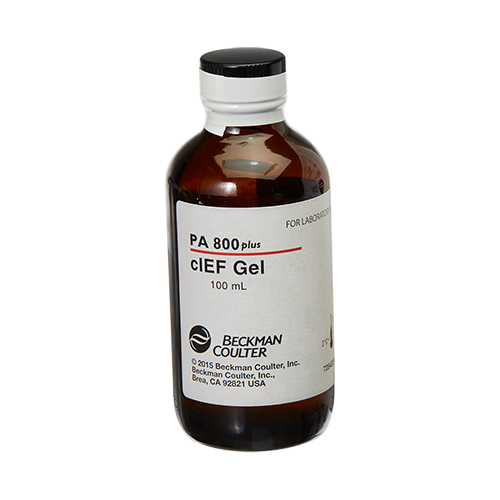
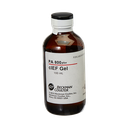
Separation Buffer for performing capillary Isoelectric Focusing.
(100 mL).
Gel used in the cIEF application for experimentally determining a molecule's isoelectric point (pI) and the various charge variants of the molecule.
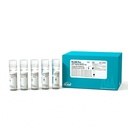
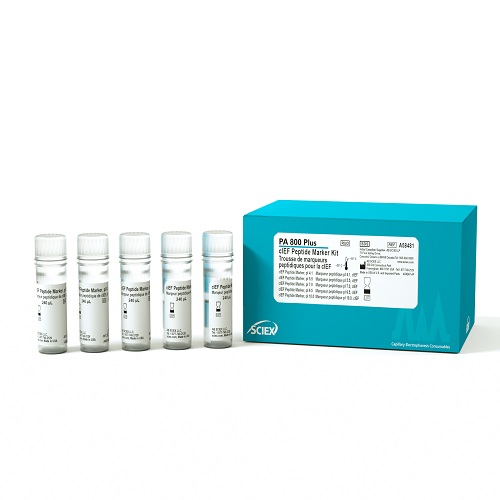
pI Marker Kit features synthetic peptides for high resolution and quantitative reproducibility in calculating protein pI. The combination of the advanced cIEF methods, the synthetic pI markers, and the PA 800 Plus system results in cIEF separations with the highest level of precision for pI determination and isoform quantitation of your sample.
This kit includes:
• Five vials containing 240 µL each of peptides with the following pI values: pI 4.1, pI 5.5, pI 7.0, pI 9.5, pI 10.0.
This volume enables 100 cIEF runs.
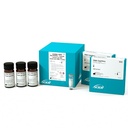
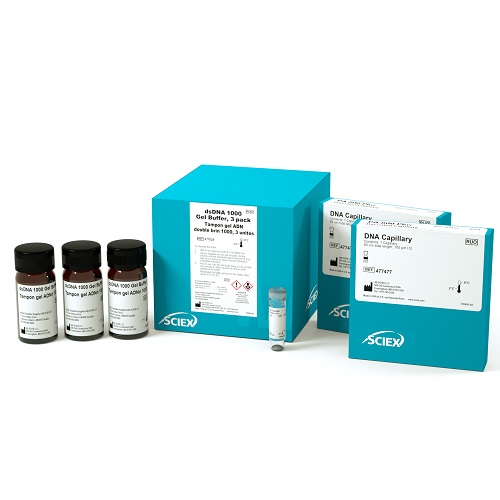
The eCAP dsDNA 1000 Kit is designed for DNA fragment pattern recognition, quantitation of PCR fragments, and molecular sizing on SCIEX CE Systems.
This chemistry utilizes linear polyacrylamide in solution to form a sieving gel. A neutral capillary provided with this kit has a stable, physically bonded polyacrylamide coating that eliminates electroosmotic flow (EOF) and suppresses interactions of the sample with the capillary wall. This chemistry utilizes a standard Tris-Borate EDTA buffer and allows the addition of intercalating dyes like ethidium bromide or our proprietary EnhanCE™ to improve resolution and increase sensitivity.
This kit is ideal for the analysis of double-stranded DNA fragments from 72 to 1000 base pairs as well as for the analysis of PCR products, which can be analyzed directly with no sample clean-up. Applications of this kit include gene expression analysis (competitive PCR), and genotyping experiments.
The system is compatible with both UV and LIF detection, but LIF is recommended for most applications. For LIF applications, we recommend the use of the intercalating dye EnhanCE. This kit is not compatible with PDA detection.
Kit provides reagent volumes for analysis of 100 samples and includes:
> 100 µm I.D. 65 cm, 2 units neutral capillaries (DNA),
> vials of replaceable polyacrylamide gel,
> test mix consisting of HaeIII restriction digest 174 DNA containing 11 fragments from 72 bp to 1,353 bp,
> and instructions and methods for system set-up and analysis.
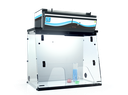
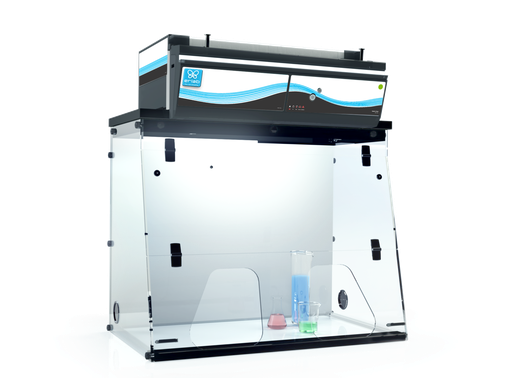
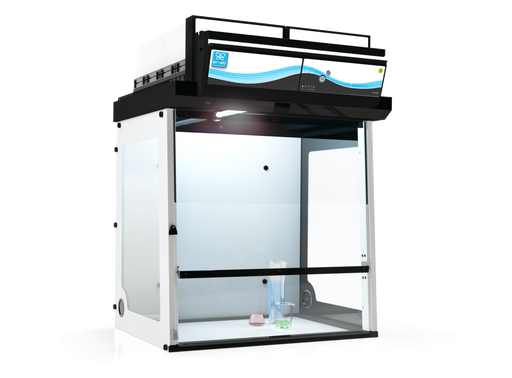
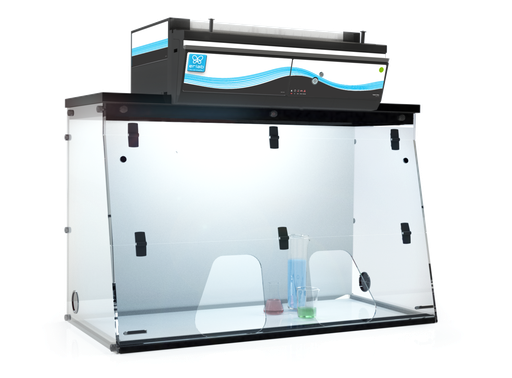
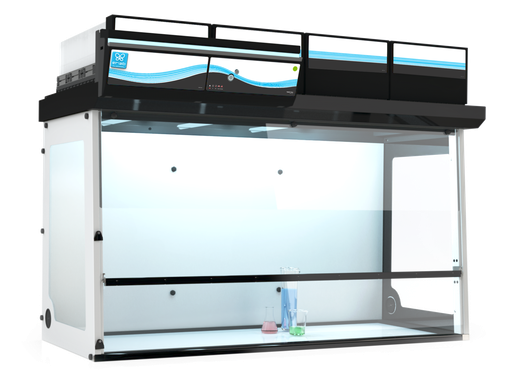
The Erlab captair Smart 491 is a ductless filtration fume hood designed to protect the user by filtering hazardous vapors produced by your samples. It is quiet, easy to use and fully customizable to your exact needs and laboratory application.
Features:
- Oblong type opening
- Cut costs of installation, maintenance and operation with a ductless fume hood
- With Erlab’s unrivalled SMART technology you can work with complete confidence that you are fully protected from the hazardous fumes and particles produced from your laboratory applications
- Simple communication by clear sound and light pulses indicate varied information including faults, run time, air face velocity, filter saturation, ventilation settings, fan failure, etc.
- Overall dimensions (WxD) 1005x620 mm. Height is dependent on filter configuration and can be 1110-1285 mm.
- Corrosion resistant, electro-galvanized steel coated with an anti-acid polymer
- The eGuard App is available for remote control monitoring of the hood, changing the settings, and delivering safety alerts immediately to your devices (mobile phone, tablet and PC)
- One filtering column that can be configured to handle liquids, powders or both
- Continuous monitoring of air face velocity
- 65W
Options:
- Three different work surface options with built in spill tray (Trespa/phenolic resin, 304L stainless steel or tempered glass)
- Can be supplied with a fixed or mobile bench or you have the option to use your own bench
- The Molecode detection sensor can be supplied in three types (acid, solvents and formaldehyde)
- By providing us with your chemical handlings, we can calculate what type of activated carbon or HEPA filters you require and initiate a filter rotation schedule to ensure full protection for years to come
- Safety filter in case of main filter saturation
- Available with a number of tap options (nitrogen, hot water, cold water, vacuum, natural gas, compressed air, distilled water, un-ionized water, methane, etc.)
- Transparent back panel
- Internal 240V electrical socket
- Waste port
- Sink (30x15 cm), location to be indicated by customer
- Analis exclusive warranty and service contract available to include annual visits and replacement filters
Power supply:
- Standard 230V
Safety Standards
- AFNOR NF X 15-211:2009: France - BS 7989: England, DIN 12 927:Germany - EN 1822:1998 (HEPA H14 & ULPA U17 Filters) - CE Marking
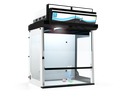
The Erlab captair Smart 392 is a ductless filtration fume hood designed to protect the user by filtering hazardous vapors produced by your samples. It is quiet, easy to use and fully customizable to your exact needs and laboratory application.
Features:
- Reverso type opening
- Cut costs of installation, maintenance and operation with a ductless fume hood
- With Erlab’s unrivalled SMART technology you can work with complete confidence that you are fully protected from the hazardous fumes and particles produced from your laboratory applications
- Simple communication by clear sound and light pulses indicate varied information including faults, run time, air face velocity, filter saturation, ventilation settings, fan failure, etc.
- Overall dimensions (WxD) 1005x749 mm. Height is dependent on filter configuration and can be 1340-1515 mm.
- Corrosion resistant, electro-galvanized steel coated with an anti-acid polymer
- The eGuard App is available for remote control monitoring of the hood, changing the settings, and delivering safety alerts immediately to your devices (mobile phone, tablet and PC)
- One filtering column that can be configured to handle liquids, powders or both
- Continuous monitoring of air face velocity
- 105W
Options:
- Three different work surface options with built in spill tray (Trespa/phenolic resin, 304L stainless steel or tempered glass)
- Can be supplied with a fixed bench or you have the option to use your own bench
- The Molecode detection sensor can be supplied in three types (acid, solvents and formaldehyde)
- By providing us with your chemical handlings, we can calculate what type of activated carbon or HEPA filters you require and initiate a filter rotation schedule to ensure full protection for years to come
- Safety filter in case of main filter saturation
- Available with a number of tap options (nitrogen, hot water, cold water, vacuum, natural gas, compressed air, distilled water, un-ionized water, methane, etc.)
- Transparent back panel
- Internal 240V electrical socket
- Waste port
- Sink (30x15 cm), location to be indicated by customer
- Analis exclusive warranty and service contract available to include annual visits and replacement filters
Power supply:
- Standard 230V
Safety Standards
- AFNOR NF X 15-211:2009: France - BS 7989: England, DIN 12 927:Germany - EN 1822:1998 (HEPA H14 & ULPA U17 Filters) - CE Marking
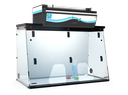
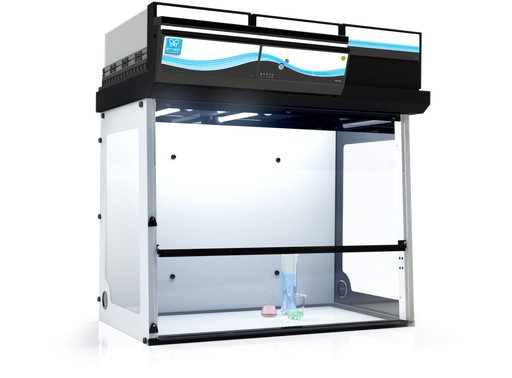
The Erlab captair Smart 481 is a ductless filtration fume hood designed to protect the user by filtering hazardous vapors produced by your samples. It is quiet, easy to use and fully customizable to your exact needs and laboratory application.
Features:
- Oblong type opening
- Cut costs of installation, maintenance and operation with a ductless fume hood
- With Erlab’s unrivalled SMART technology you can work with complete confidence that you are fully protected from the hazardous fumes and particles produced from your laboratory applications
- Simple communication by clear sound and light pulses indicate varied information including faults, run time, air face velocity, filter saturation, ventilation settings, fan failure, etc.
- Overall dimensions (WxD) 1260x620 mm. Height is dependent on filter configuration and can be 1110-1285 mm.
- Corrosion resistant, electro-galvanized steel coated with an anti-acid polymer
- The eGuard App is available for remote control monitoring of the hood, changing the settings, and delivering safety alerts immediately to your devices (mobile phone, tablet and PC)
- One filtering column that can be configured to handle liquids, powders or both
- Continuous monitoring of air face velocity
- 65W
Options:
- Three different work surface options with built in spill tray (Trespa/phenolic resin, 304L stainless steel or tempered glass)
- Can be supplied with a fixed or mobile bench or you have the option to use your own bench
- The Molecode detection sensor can be supplied in three types (acid, solvents and formaldehyde)
- By providing us with your chemical handlings, we can calculate what type of activated carbon or HEPA filters you require and initiate a filter rotation schedule to ensure full protection for years to come
- Safety filter in case of main filter saturation
- Available with a number of tap options (nitrogen, hot water, cold water, vacuum, natural gas, compressed air, distilled water, un-ionized water, methane, etc.)
- Transparent back panel
- Internal 240V electrical socket
- Waste port
- Sink (30x15 cm), location to be indicated by customer
- Analis exclusive warranty and service contract available to include annual visits and replacement filters
Power supply:
- Standard 230V
Safety Standards
- AFNOR NF X 15-211:2009: France - BS 7989: England, DIN 12 927:Germany - EN 1822:1998 (HEPA H14 & ULPA U17 Filters) - CE Marking
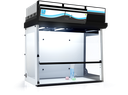
The Erlab captair Smart 483 is a ductless filtration fume hood designed to protect the user by filtering hazardous vapors produced by your samples. It is quiet, easy to use and fully customizable to your exact needs and laboratory application.
Features:
- Reverso type opening
- Cut costs of installation, maintenance and operation with a ductless fume hood
- With Erlab’s unrivalled SMART technology you can work with complete confidence that you are fully protected from the hazardous fumes and particles produced from your laboratory applications
- Simple communication by clear sound and light pulses indicate varied information including faults, run time, air face velocity, filter saturation, ventilation settings, fan failure, etc.
- Overall dimensions (WxD) 1280x749 mm. Height is dependent on filter configuration and can be 1340-1515 mm.
- Corrosion resistant, electro-galvanized steel coated with an anti-acid polymer
- The eGuard App is available for remote control monitoring of the hood, changing the settings, and delivering safety alerts immediately to your devices (mobile phone, tablet and PC)
- One filtering column that can be configured to handle liquids, powders or both
- Continuous monitoring of air face velocity
- 160W
Options:
- Three different work surface options with built in spill tray (Trespa/phenolic resin, 304L stainless steel or tempered glass)
- Can be supplied with a fixed bench or you have the option to use your own bench
- The Molecode detection sensor can be supplied in three types (acid, solvents and formaldehyde)
- By providing us with your chemical handlings, we can calculate what type of activated carbon or HEPA filters you require and initiate a filter rotation schedule to ensure full protection for years to come
- Safety filter in case of main filter saturation
- Available with a number of tap options (nitrogen, hot water, cold water, vacuum, natural gas, compressed air, distilled water, un-ionized water, methane, etc.)
- Transparent back panel
- Internal 240V electrical socket
- Waste port
- Sink (30x15 cm), location to be indicated by customer
- Analis exclusive warranty and service contract available to include annual visits and replacement filters
Power supply:
- Standard 230V
Safety Standards
- AFNOR NF X 15-211:2009: France - BS 7989: England, DIN 12 927:Germany - EN 1822:1998 (HEPA H14 & ULPA U17 Filters) - CE Marking
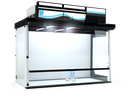
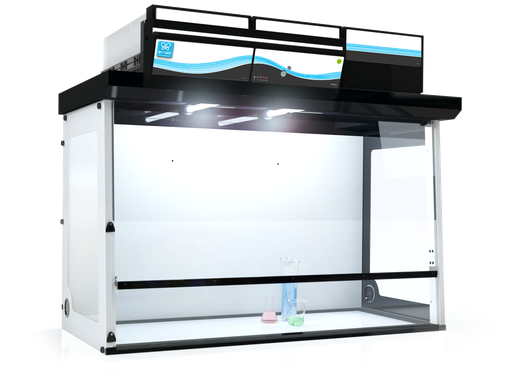
The Erlab captair Smart 633 is a ductless filtration fume hood designed to protect the user by filtering hazardous vapors produced by your samples. It is quiet, easy to use and fully customizable to your exact needs and laboratory application.
Features:
- Reverso type opening
- Cut costs of installation, maintenance and operation with a ductless fume hood
- With Erlab’s unrivalled SMART technology you can work with complete confidence that you are fully protected from the hazardous fumes and particles produced from your laboratory applications
- Simple communication by clear sound and light pulses indicate varied information including faults, run time, air face velocity, filter saturation, ventilation settings, fan failure, etc.
- Overall dimensions (WxD) 1604x749 mm. Height is dependent on filter configuration and can be 1340-1515 mm.
- Corrosion resistant, electro-galvanized steel coated with an anti-acid polymer
- The eGuard App is available for remote control monitoring of the hood, changing the settings, and delivering safety alerts immediately to your devices (mobile phone, tablet and PC)
- One filtering column that can be configured to handle liquids, powders or both
- Continuous monitoring of air face velocity
- 160W
Options:
- Three different work surface options with built in spill tray (Trespa/phenolic resin, 304L stainless steel or tempered glass)
- Can be supplied with a fixed bench or you have the option to use your own bench
- The Molecode detection sensor can be supplied in three types (acid, solvents and formaldehyde)
- By providing us with your chemical handlings, we can calculate what type of activated carbon or HEPA filters you require and initiate a filter rotation schedule to ensure full protection for years to come
- Safety filter in case of main filter saturation
- Available with a number of tap options (nitrogen, hot water, cold water, vacuum, natural gas, compressed air, distilled water, un-ionized water, methane, etc.)
- Transparent back panel
- Internal 240V electrical socket
- Waste port
- Sink (30x15 cm), location to be indicated by customer
- Analis exclusive warranty and service contract available to include annual visits and replacement filters
Power supply:
- Standard 230V
Safety Standards
- AFNOR NF X 15-211:2009: France - BS 7989: England, DIN 12 927:Germany - EN 1822:1998 (HEPA H14 & ULPA U17 Filters) - CE Marking
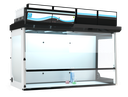
The Erlab captair Smart 714 is a ductless filtration fume hood designed to protect the user by filtering hazardous vapors produced by your samples. It is quiet, easy to use and fully customizable to your exact needs and laboratory application.
Features:
- Reverso type opening
- Cut costs of installation, maintenance and operation with a ductless fume hood
- With Erlab’s unrivalled SMART technology you can work with complete confidence that you are fully protected from the hazardous fumes and particles produced from your laboratory applications
- Simple communication by clear sound and light pulses indicate varied information including faults, run time, air face velocity, filter saturation, ventilation settings, fan failure, etc.
- Overall dimensions (WxD) 1805x749 mm. Height is dependent on filter configuration and can be 1340-1515 mm.
- Corrosion resistant, electro-galvanized steel coated with an anti-acid polymer
- The eGuard App is available for remote control monitoring of the hood, changing the settings, and delivering safety alerts immediately to your devices (mobile phone, tablet and PC)
- One filtering column that can be configured to handle liquids, powders or both
- Continuous monitoring of air face velocity
- 220W
Options:
- Three different work surface options with built in spill tray (Trespa/phenolic resin, 304L stainless steel or tempered glass)
- Can be supplied with a fixed bench or you have the option to use your own bench
- The Molecode detection sensor can be supplied in three types (acid, solvents and formaldehyde)
- By providing us with your chemical handlings, we can calculate what type of activated carbon or HEPA filters you require and initiate a filter rotation schedule to ensure full protection for years to come
- Safety filter in case of main filter saturation
- Available with a number of tap options (nitrogen, hot water, cold water, vacuum, natural gas, compressed air, distilled water, un-ionized water, methane, etc.)
- Transparent back panel
- Internal 240V electrical socket
- Waste port
- Sink (30x15 cm), location to be indicated by customer
- Analis exclusive warranty and service contract available to include annual visits and replacement filters
Power supply:
- Standard 230V
Safety Standards
- AFNOR NF X 15-211:2009: France - BS 7989: England, DIN 12 927:Germany - EN 1822:1998 (HEPA H14 & ULPA U17 Filters) - CE Marking
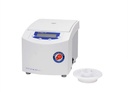
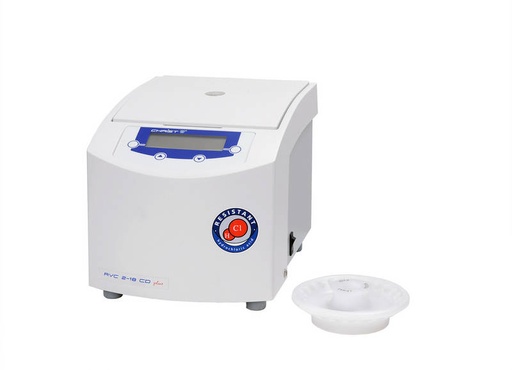
Rotational-vacuum-concentrator RVC 2-18 CDplus HCl, HCL-resistant version, 230 V, 50/60 Hz, bench top unit, magnetic drive system, chemical resistant (Hastelloy), resistant sealings, rotor chamber enamel-coated, lid made of borosilicate glass with inspection window and electrical locking- and safety device, resistant valve to release vacuum, user-friendly control system with LC display, preselection of heating temperature through +60°C in one steps and time, heating time and running time can be selected seperately
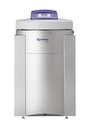
Included in the basic price:
- Fully automatic microprocessor control with 12 programs:
1-3 Solids
4-5 Waste destruction bags
6-7 Liquid waste
8-11 Liquid Media
12 Cleaning
- Integrated separate steam generator (no heating elements in the sterilization chamber)
- Novel safety ring-lock closure system with lip seal
- Temperature and steam pressure up to 140 °C / 4 bar absolute pressure
- Thermal lock: door lock controlled by pressure and medium temperature according to Pressure Vessel Regulations
- Flexible PT-100 temperature sensor for the reference vessel
- Medium temperature-controlled sterilization time
- Electronic pressure transducer for pressure and temperature control
- Autofill: automatic demineralized water feed for steam generation
- Special waste destruction program with pulsating heat-up phase for improved ventilation of waste bags
- Start by clock/timer for a programmed start time
- Steam exhaust condensation, water-cooled, thermostatically controlled
- Common collector connection for all outlets
- Emptying valve
- Base plate for vessels, baskets, etc.
- Validation port
- RS 232 interface for external data transfer
- Prepared for subsequent printer installation
- Prepared for subsequent rapid cooling installation
- Prepared for subsequent installation of a vacuum system
- Prepared for subsequent drying installation
- Safety cut-off at low water level
- Safety cut-off at excess temperature
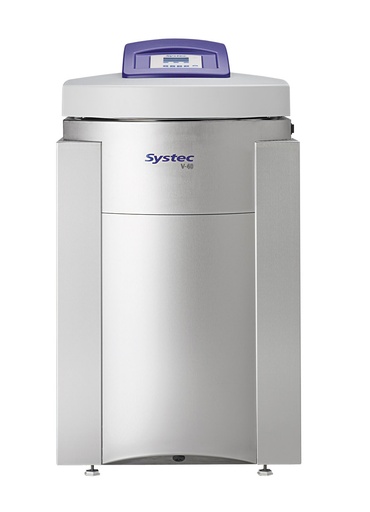
Systec V-series laboratory autoclaves combine a modern design, user-friendly functions and up-to-date technology.
Lid and locking system:
The ring-lock closure combined with a robust lip seal keeps the autoclave lid hermetically sealed and safe. Steam pressure further compresses the lip seal, so no additional compressed air is needed. Locking is automatic when the lid closes.
The ring lock releases at the press of a button and the lid opens automatically. Each program can also be set to open the lid automatically at the end of the cycle. The seal is heat-resistant silicone and very reliable. A heat-resistant plastic cover protects the user from contact with hot parts.
Systec V-series autoclaves come from the factory with a temperature-controlled door lock, compliant with Pressure Vessel Regulations for liquid sterilization and with ISO/DIN regulations. The door stays locked as long as there is excess pressure in the chamber.
Control mechanisms:
A purpose-built microprocessor controls all autoclave functions: steam pressure, temperature, sterilization time, and the optional rapid cooling, pre- and post-vacuum and drying. Any deviation from the set values triggers an alarm.
Menu-based control is easy to operate. All sterilization parameters can be changed using special numerical codes. The control panel is ergonomically integrated into the autoclave's plastic lid cover.
Steam generator:
Steam is generated in a vessel completely separate from the sterilization chamber (no heating elements in the chamber itself). The steam generator is built into the autoclave housing. Because it is separate from the chamber, it need not be cooled during the cool-down phase.
Advantages:
- More rapid cooling.
- Less cooling water required.
- Steam is available immediately after cooling, since the steam generator is not cooled.
The steam generator includes all the control functions, valves and pumps needed for filling with demineralized water.
Steam exhaust condenser:
The steam vapor exhausted during the program is automatically cooled and condensed. This prevents unpleasant odors and protects plastic waste-water piping from overheating. The process is thermostatically controlled via a PT 100 sensor, which saves cooling water.
Pressure vessel safety valve:
The autoclave's pressure vessel is made of corrosion-resistant 316L (1.4404) stainless steel and is electropolished for easy cleaning. If pressure exceeds the maximum, a type-approved safety valve opens and releases it.
The fully automatic, menu-controlled microprocessor includes 12 standard programs:
Individual program parameters such as temperature and time can be set and stored for each program.
Programs 1-3: fast cycle for solids, instruments, apparatus and plastic items, with rapid steam exhaust.
Programs 4-5: for waste in waste destruction bags, using a pulsating heat-up phase for better ventilation of the bags.
Programs 6-7: sterilization of liquid waste with slow steam exhaust (or rapid retro-cooling as an option).
Programs 8-11: liquids with controlled steam exhaust and self-cooling (or rapid retro-cooling as an option).
Program 12: cleaning program with rapid steam exhaust.
Program variants and programs for special applications are available on request.
The programs run fully automatically. Temperature is measured in the sterilization chamber or, for liquid sterilization, in a reference vessel via a flexible sensor, plus a second fixed sensor at the coldest point of the condensate exhaust. Both sensors must reach the required temperature during sterilization; a lower reading triggers a failure message.
The control combines temperature and pressure regulation, letting the set steam pressure be exceeded by up to 0.3 bar during heat-up without exceeding the product temperature. This can shorten the heat-up phase by about 50% versus simple temperature regulation. Sterilization temperature is freely selectable from 60 to 140 °C and time from 1 to 9999 minutes.
The product or chamber temperature and the chamber pressure are displayed continuously throughout the program.
Validation, documentation:
A 1/2-inch validation port is fitted for validation with external temperature sensors. Various documentation options are also available — from a printer to PC software via RS 232, or separate data logger systems for GMP-compliant documentation.
Options:
Further options include: various rapid cooling systems with or without support pressure; vacuum systems; drying processes; in-chamber ventilation; steam-air mixtures; hot water spraying or sub-aqua systems; lifting devices for the load; exhaust air filtration for infectious microorganisms; and extended temperature-hold phases for sterilizing highly resistant microorganisms or for material stress testing in industry. Additional special programs can be built and tested to customer specifications.
All these options can also be retrofitted to current Systec autoclaves. The basic version already includes all the connections needed for any option.
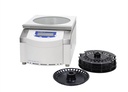
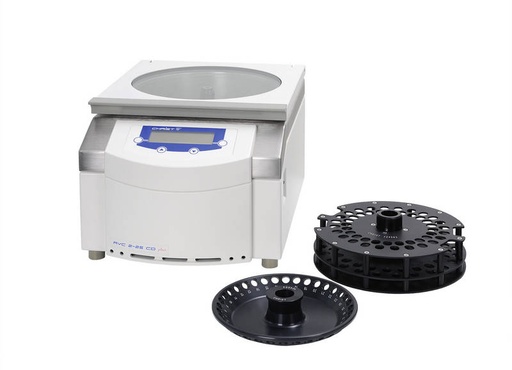
Rotational-vacuum-concentrator RVC 2-25 CDplus, 230 V, 50/60 Hz, bench top unit, stainless stell rotor chamber, magnetic drive system, lid with inspection window and electrical locking- and safety device, user-friendly control system with LC display,
special voltage see part no. 120100