HOME / APPLICATIONS & TECHNIQUES /
Calibration Weights
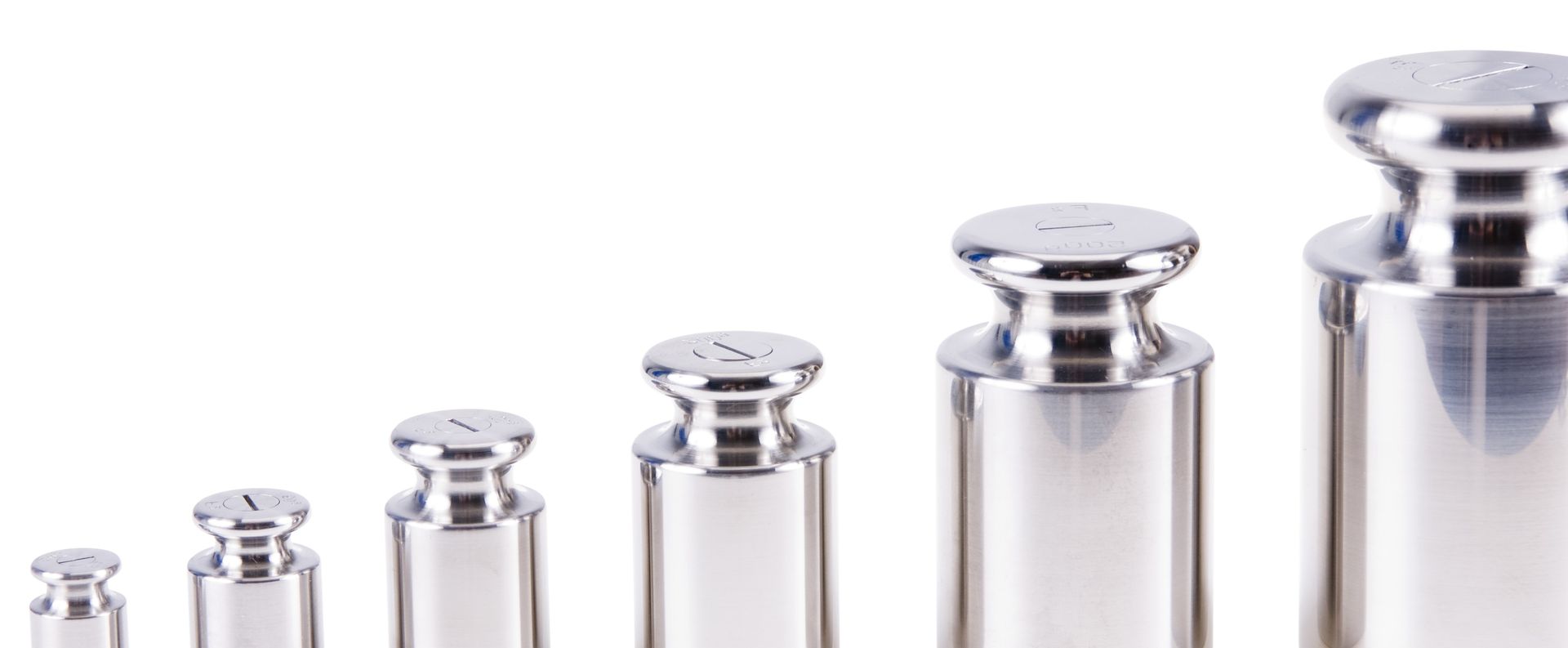
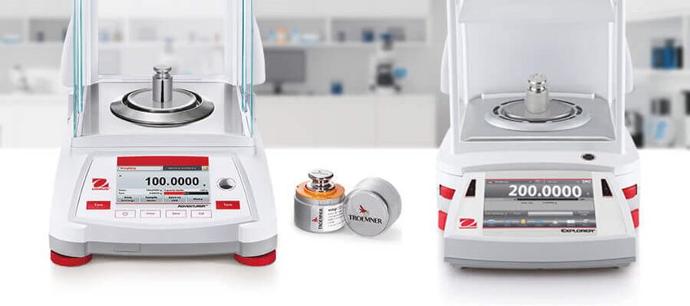
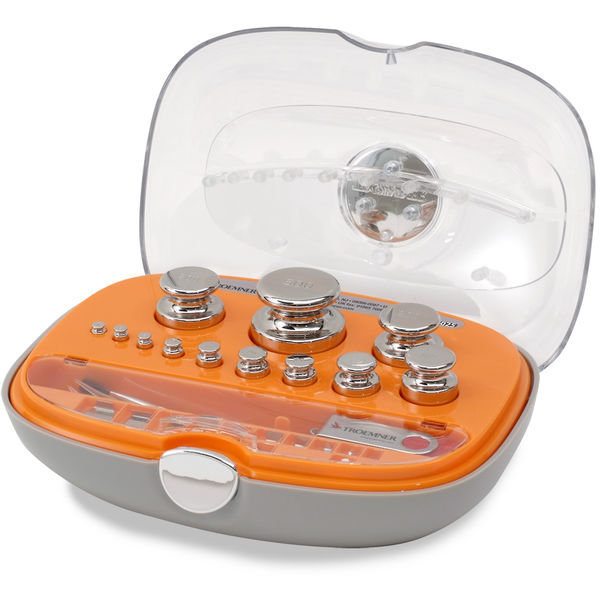
Request more informationOIML weights or calibration weights are an important part of quality assurance when you are doing weighing applications using a balance.
How often do I need to calibrate my balance?
A balance needs to be calibrated upon initial setup and then anytime it is moved to another location. Beyond that, it depends on how often you use it and for what purposes. High-resolution balances such as analytical balances may need to be calibrated more often than precision balances.
For quality control, laboratories should perform calibration according to their organization’s standard operating procedure or industry standard. In highly regulated industries such as pharmaceuticals, it may be necessary to perform daily calibration. A manufacturer may need to perform calibration on every work shift. In a university setting it may be necessary to calibrate between class experiments.
What is internal calibration?
Some balances come equipped with an internal calibration feature. A reference weight and motorized mechanism are built into the balance which relies on preset parameters to perform calibrations and calibration adjustments at the touch of a button.
Laboratory balances with an auto-calibration function will perform a self-calibration (without user intervention) when they detect a temperature change or based on a time interval.
Do I still need calibration weights when I have internal calibration?
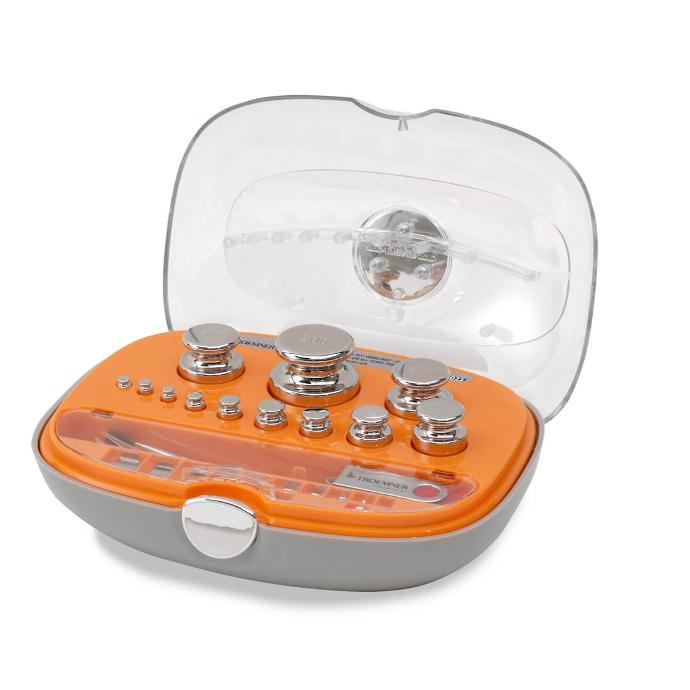
Internal calibration makes it very easy to do routine calibration. It is advised to still calibrate using OIML weights on a frequent basis (for example monthly or quarterly) to verify that the internal calibration does not deviate. If deviations are found, the internal calibration can be adjusted.
Related product categories
News

Automated Liquid Handling
Capillary Electrophoresis
Cell culture and Fermentation
Cell health
Centrifugation
Chromatography (flash & prep)
Cleaning
Clinical Automation (TLA)
Clinical IT solutions
Clinical chemistry
Clinical quality controls
Color-Appearance and Physical tests
DNA / RNA (Nucleic acids)
Disinfection
Electrochemistry
Environmental monitoring
Flow cytometry
Flow cytometry Cell sorting
Freeze drying
Heating & cooling
Hematology
Imaging
Immuno-Hematology
Immunoassay
In Vitro Fertilization (IVF)
Lab furniture & design studies
Liquid Handling (Manual)
Mass spectrometers
Material testing & characterization
Metrology
Microbiology (Clinical)
Microscopy
Moisture analysis
Nephelometry
POCT
Particle characterization
Platelet aggregation
Protection cabinets
Pumping
Rheometers
Sample preparation
Shakers and stirrers
Sterilization
Storage
Synthesis
Tablet testing
Texture analyzers
Toxicology
Urine analysis
Viscometers
Water purification
Weighing