What is sonification?
Sonication uses high-frequency vibrations to transfer energy.
At around 20,000 Hz, these vibrations cause cavitation in liquids. The key advantage is energy transfer without heating the sample — useful for processes where heat would cause unwanted side effects.
Analis is the distributor of Sonics ultrasonic processors and probes for Belgium, the Netherlands and Luxembourg.
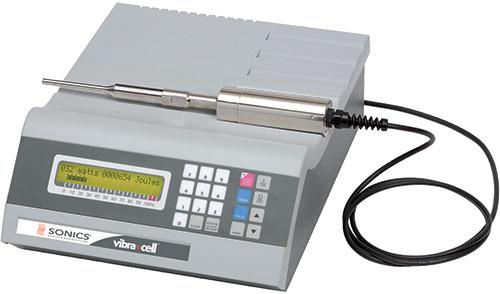
How does a sonicator work?
A sonicator (ultrasonic liquid processor) has three main parts: an energy source, a converter and a probe.
The energy source takes mains electricity (230 V, 50 Hz in the Benelux) and converts it to power at 20,000 Hz — the power rises and falls 20,000 times per second. It sends this power to the converter.
The converter holds four piezoelectric crystals. Each time the voltage rises and falls, the crystals expand or contract. They are linked to a metal pin — the hammer — which strikes the base of the converter 20,000 times per second.
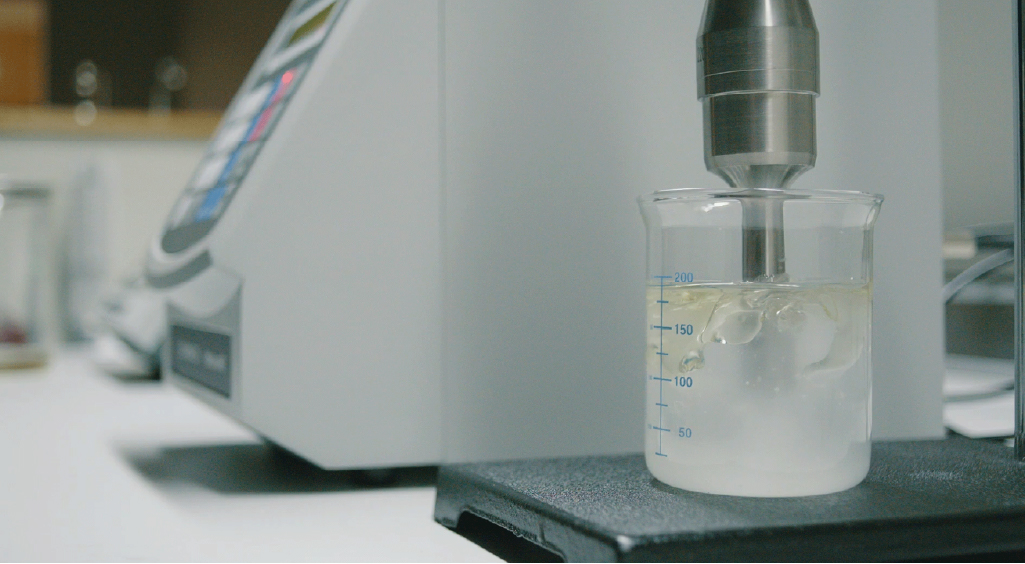
The probe screws into the base of the converter. It is a titanium rod of a specific length that resonates at 20,000 Hz. Through resonance, the rod expands and contracts 20,000 times per second.
This creates explosive pressure changes in the fluid near the probe tip, forming and imploding millions of tiny bubbles. This is cavitation — the mechanism that transfers energy to the fluid.
What is the difference between a sonicator and an ultrasonic bath?
An ultrasonic bath works at low intensity, with slow energy transfer spread across the whole bath and no cavitation. Typical uses: detaching cells from filters, cleaning production equipment, and similar tasks.
A sonicator produces cavitation and transfers far more energy. Intensity is focused around the probe tip, but cavitation moves the fluid so vigorously that the whole volume is affected evenly. Typical uses: cell lysis, sonochemistry, degassing, atomization, and more.
Our products
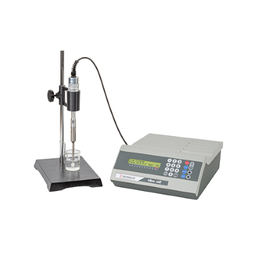
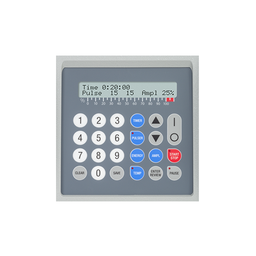
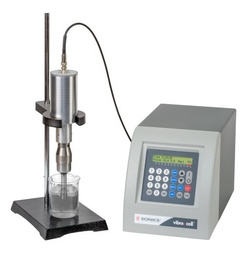
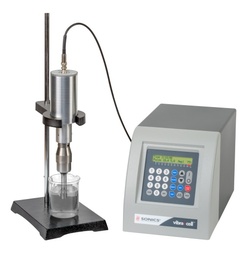
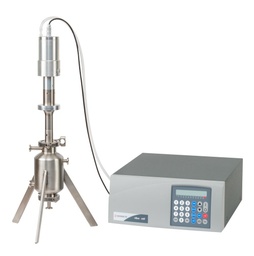
The VCX 130 is a laboratory-scale 130 watt model, programmable ultrasonic processor, and our most popular small volume system.
This model offers the same programmability as larger VCX versions.
The 1/4" probe (10 – 50 mL volumes) is included with the VCX 130, and a variety of accessories are available for various applications and sample volumes.
Part No. VCX 130A can be used to order the system without the standard probe.
Features:
- Programmable
- Pulse mode
- 10 hour timer
- Variable power output
- Wattage and Energy display
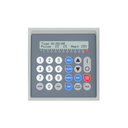
The VC 505 is a cost effective alternative to the VCX model. This 500 watt system
offers the same processing power and choice of accessories as the VCX500 without
temperature monitoring or energy set point programming.
A standard ½” diameter probe with replaceable tip is included and many optional
accessories are available to meet the needs of any application.
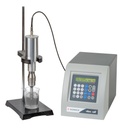
The VCX 500 offers 500 watts of power to handle a range of liquid processing applications. This model shares the same microprocessor based operating system and programming screens as the VCX750 system.
Using a variety of accessories, the system can process a wide range of sample types and volumes for many different applications.The VCX 500 includes a standard 1/2" diameter probe (50 – 250mL volumes) with replaceable tip.
Part No. VCX 500A can be used to order the system without the standard probe.
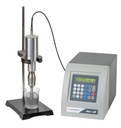
The VCX 750 is a powerful and versatile ultrasonic liquid processor. Using a variety of accessories, the system can process a wide range of sample types and volumes for many different applications.
The VCX 750 is microprocessor based and programmable. Intuitive screens are user friendly and easy to navigate. The 750 watt power supply has the capability of operating our largest assortment of horns and accessories. A standard 1/2" diameter probe (50 – 250mL volumes) with replaceable tip is included with the system.
Part No. VCX 750A can be used to order the system without the standard probe.
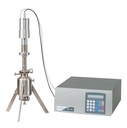
The VCX 1500 is a reliable and durable choice for many applications. This model includes a 1" diameter, 10" long probe with a 100μm maximum amplitude and a booster.
A variety of probe options are available including the flow cell inline processing accessory. Electrical requirements are 220V, 50/60Hz, single phase, 20A.
Part No. VCX 1500A can be used to order the system without the standard probe and booster.
Air cooling of the converter by compressed air is required to prevent overheating of the ultrasonic processor.