Why upgrade your current refrigerated circulators?
As laboratories prepare for the
gradual transition to low-GWP refrigerants, many organisations are
reviewing the long-term sustainability and serviceability of their cooling
equipment.
Want to understand the broader impact
of the 2027 EU refrigerant regulation on your laboratory? Read our guide:
Preparing Your Laboratory for the 2027 EU Refrigerant Regulation.
To support this transition, Analis and
JULABO offer a trade-in program for refrigerated circulators.
How does the trade-in program work?
Our specialists can:
- Evaluate your current refrigerated circulators
- Identify refrigerant types
- Review refrigerant technologies in use
- Assess regulatory exposure
- Recommend suitable replacement solutions
- Discuss available trade-in opportunities
Why a proactive transition before 2027?
- To control your budget
- to reduce the risk of downtime
- to anticipate shortages of fluorinated refrigerants
- to plan your installation in advance
- to ensure optimal ESG performance
Waiting until regulatory pressure increases may result in higher costs and limited availability.
Why consider an upgrade with our trade-in program?
Modern refrigerated circulators provide advantages
beyond regulatory
readiness:
- Natural refrigerant technology
- Reduced environmental impact
- Improved energy efficiency
- Lower operating costs
- Long-term service continuity
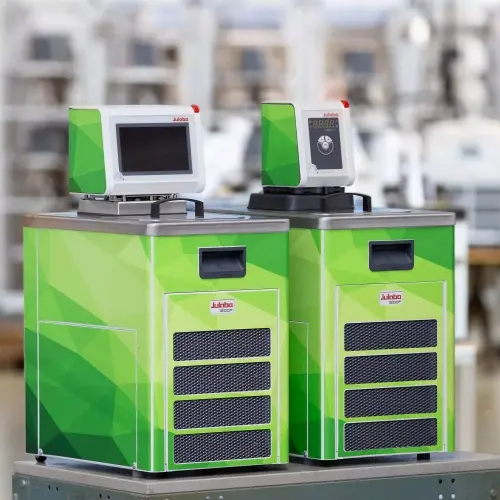
Upgrading before equipment becomes a critical issue allows laboratories to plan investments under controlled conditions rather than reacting to future maintenance or availability constraints.
Energy-Efficient Refrigerated Circulators
JULABO’s latest CORIO, DYNEO and MAGIO refrigerated circulators integrate low-GWP and natural refrigerant technologies while maintaining the performance and reliability expected in demanding laboratory applications.
Discover our Julabo compliant refrigerated circulators
These systems combine:
- High cooling capacity (up to 1.24 kW at 20°C)
- Broad temperature ranges (down to −50°C)
- Optimized energy efficiency
- Compact design
- Advanced digital control
These systems reduce operating costs while improving environmental performance and long-term regulatory security.