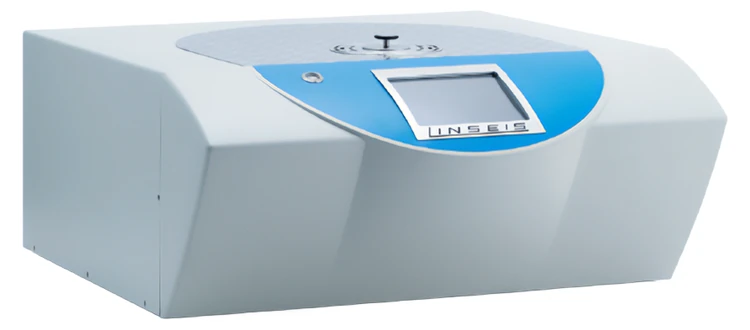
DSCPT 1000 Differential Scanning Calorimeter
Reference: LINS-DSC L63
https://www.analis.com/shop/lins-dsc-l63-dscpt-1000-differential-scanning-calorimeter-147780 https://www.analis.com/web/image/product.template/147780/image_1920?unique=ad3a0d8The LINSEIS DSC PT 1000 is a temperature-modulated DSC (Differential Scanning Calorimetry) for general use, covering a wide range from −180 to 600 °C for all common applications. It is built around an extremely stable baseline and high reproducibility, which makes it a versatile research-grade calorimeter.
Its HiperRes® ceramic/metal sensor combines high resolution and sensitivity with superior reproducibility, detecting the smallest thermal effects with the shortest possible time constants.
What does the DSC PT 1000 measure?
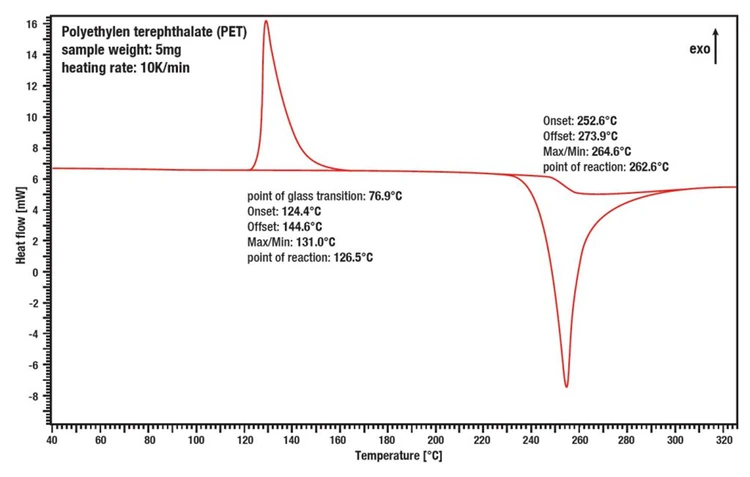
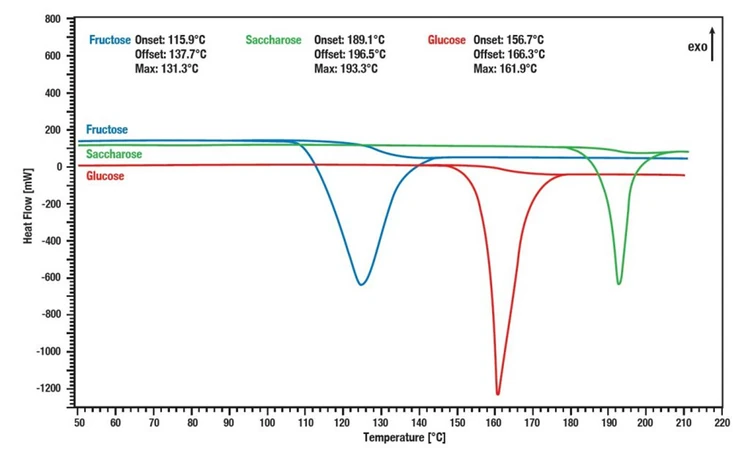
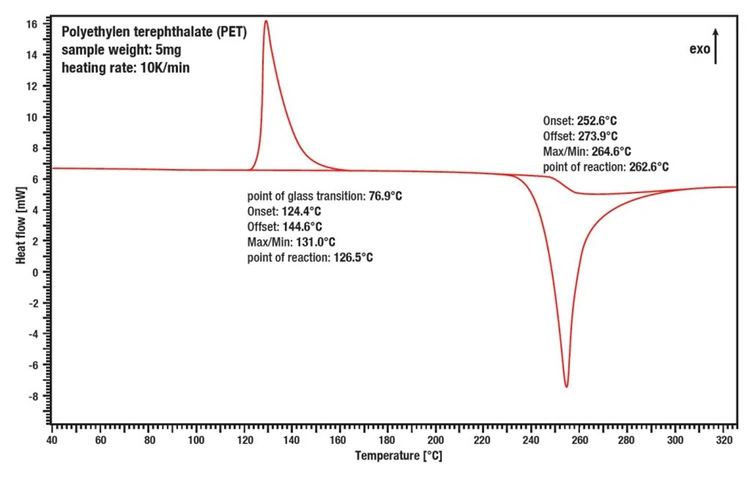
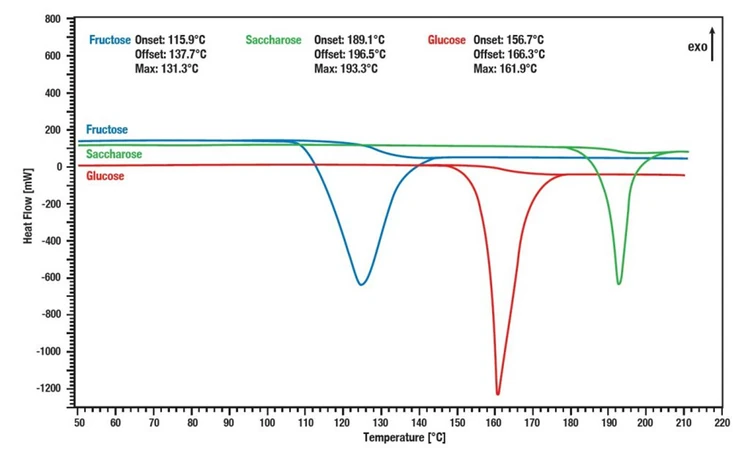
As a Differential Scanning Calorimeter, the PT 1000 measures heat flow to characterize thermal transitions, glass transitions, crystallization and melting, across a wide material range. For example, in PET it resolves the glass transition near 76.9 °C, cold crystallization at 131.0 °C and the melting peak, which together indicate the degree of crystallization; it also distinguishes sugars such as fructose, glucose and sucrose by their characteristic melting points, even in mixtures of identical molecular weight.
What makes the PT 1000 different?
The HiperRes® sensor uses a ceramic/metal design that resists oxidation and ageing, so, unlike competing metal sensors, it can run continuously across the full temperature range. It separates overlapping thermal effects over the entire range, and the platform supports multi-method analysis across DSC, TG, TMA and DIL, as well as both manual and automatic operation, with maximum mechanical and chemical resistance from the cell concept.
Key advantages
- Wide temperature range from −180 to 600 °C for all common applications
- Extremely stable baseline and high reproducibility
- Manual and automatic operation supported by the design
- Maximum mechanical and chemical resistance from the cell concept
- HiperRes® sensor line with a ceramic/metal sensor that combines high resolution and sensitivity with superior reproducibility
- Detection of the smallest thermal effects with the shortest possible time constants, separating overlapping effects over the full temperature range
- No oxidation or ageing because the ceramic design, unlike competing metal sensors, can be used continuously over the full temperature range
- Multi-method analysis across DSC, TG, TMA and DIL
Suitable for
- Thermoplastics: polyethylene terephthalate (PET) shows a significant endothermic glass point at about 76.9 °C. The exothermic cold crystallization at 131.0 °C and the endothermic melting peak indicate the degree of crystallization. In PET the crystalline part is very small, giving good transparency
- Sugars: fructose, glucose and sucrose show distinctive melting points that DSC determines accurately, so even mixtures with identical molecular weight such as fructose and glucose can be identified
Request a demonstration or quote
Ask Analis’ local Benelux experts for more information, a demonstration, or a personalized quote.
Technical information
DSC PT1000
Category | Specification |
Temperature range | -180°C ... 600°C |
Heating rates | 0.01 K/min ... 100 K/min |
Cooling rates | 0.01 K/min ... 100 K/min |
Sensor | Heat flux |
Vacuum | – |
Sample robot | 42 positions |
PC interface | USB |
DSC PT1000 hires
Category | Specification |
Temperature range | -180°C ... 750°C |
Heating rates | 0.01 K/min ... 300 K/min |
Cooling rates | 0.01 K/min ... 300 K/min |
Sensor | Heat flux and power compensation |
Vacuum | Yes, optional |
Sample robot | 84 positions |
PC interface | USB |
Accessories
- Various manual, semi-automatic and automatic gas control boxes (with MFC)
- Wide range of crucibles in gold, silver, platinum, aluminum and stainless steel (high pressure), etc.
- Standard sealing press and special high-pressure crucible sealing press
- Liquid nitrogen cooling unit (-180°C)
- Selection of intracoolers as an alternative to liquid nitrogen cooling
- Sample robot with up to 84 positions
All LINSEIS thermal analysis instruments are PC-controlled, and the individual software modules run exclusively under Microsoft Windows operating systems. The complete software consists of 3 modules: temperature control, data acquisition and data evaluation.
For a DSC run, the software has all the essential features for preparing, running and evaluating measurements, as for other thermal analysis experiments. LINSEIS developed this easy-to-understand and very practical software with its specialists and application experts.
General Features
- Temperature-modulated DSC
- Repeat measurements with minimal parameter input
- Evaluation of current measurement
- Curve comparison of up to 32 curves
- Curve subtraction
- Analysis with multiple methods (DSC, TG, TMA, DIL, etc.)
- Zoom function
- 1st and 2nd derivative
- Multiple smoothing functions
- Complex peak evaluation
- Multi-point calibration for sample temperature
- Multi-point calibration for change of enthalpy
- Cp calibration for heat flow
- Storage and export of evaluations
- Program with text editing
- Export and import of data in ASCII
- Data export to MS Excel
- Signal-controlled measurement procedures
- Undo function