AZ Delta:
Working together to deliver high-quality and innovative care
AZ Delta is a leading hospital in West Flanders that provides care for more than a thousand patients every day. With four campuses in Rumbeke, Roeselare, Menen and Torhout, 1,358 accredited beds and a team of 4,000 staff and doctors, the hospital offers a wide range of medical care and specialist treatments.
The name AZ Delta refers to the Greek word diaphora, meaning ‘difference’. This ambition reflects the hospital’s commitment to making a positive impact on patients’ lives. Quality, collaboration and innovation are key pillars of this approach. Through scientific research and the development of new technologies, AZ Delta continues to invest in the healthcare of tomorrow.
In her testimonial below, Dr Apr. Barbara Depreter explains more about this approach and the role of innovation within AZ Delta.

From heterogeneous cell populations to targeted molecular diagnostics
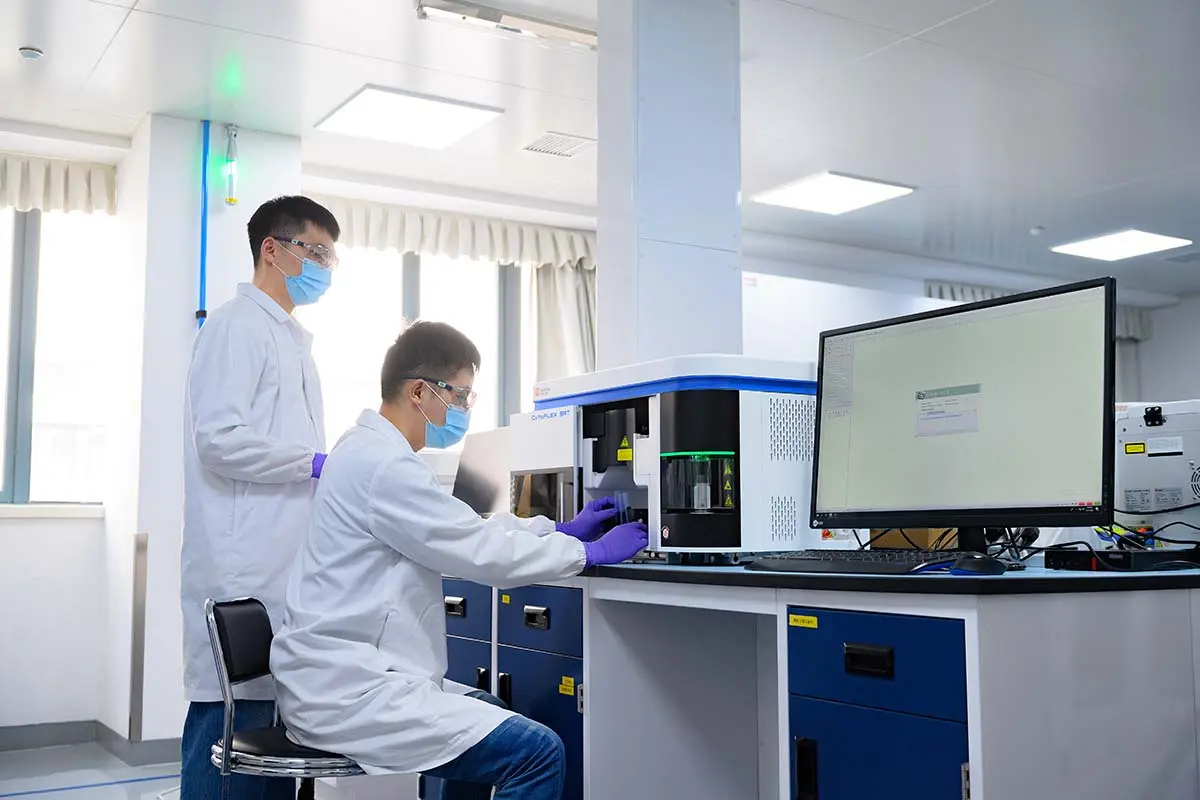
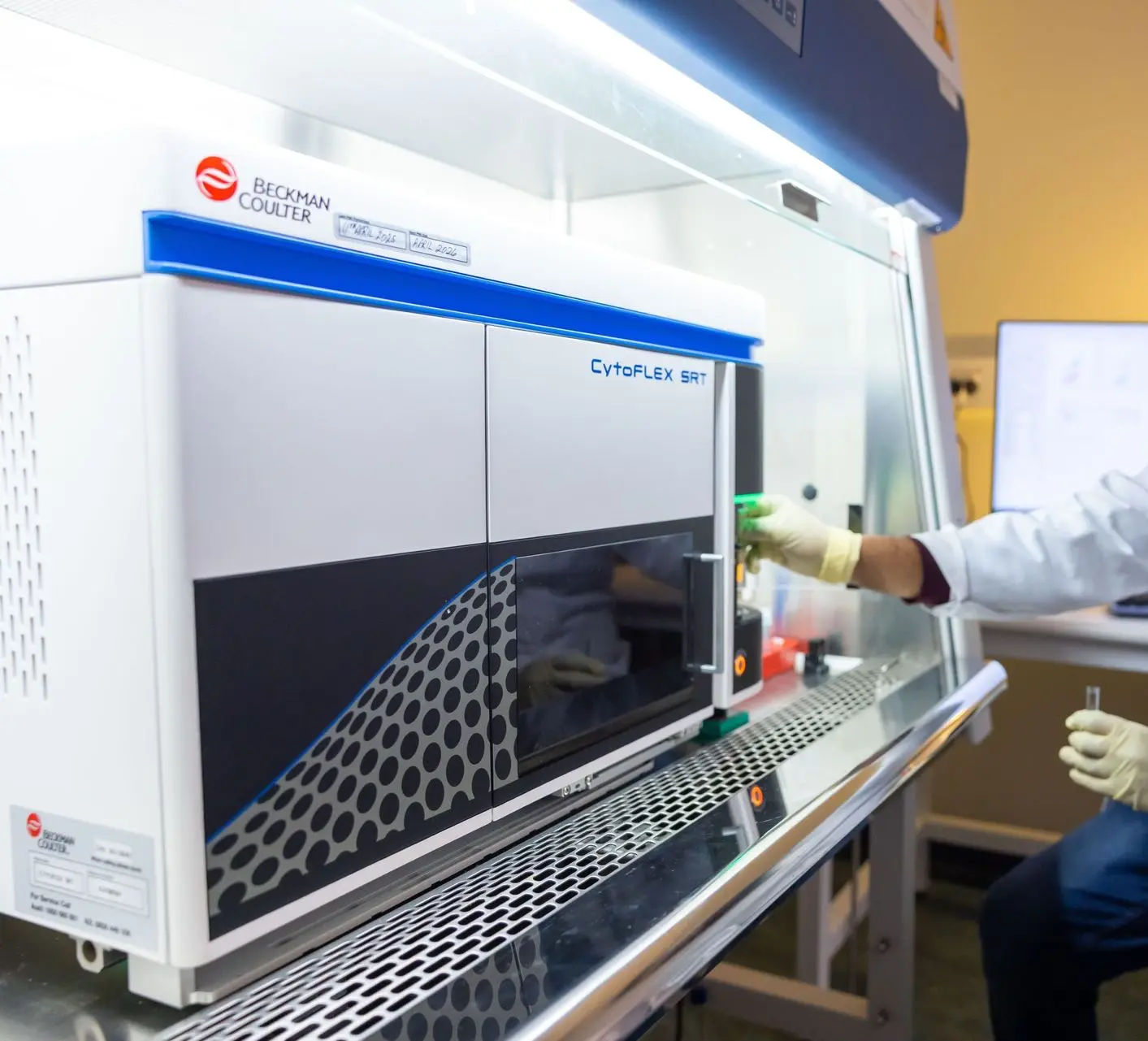
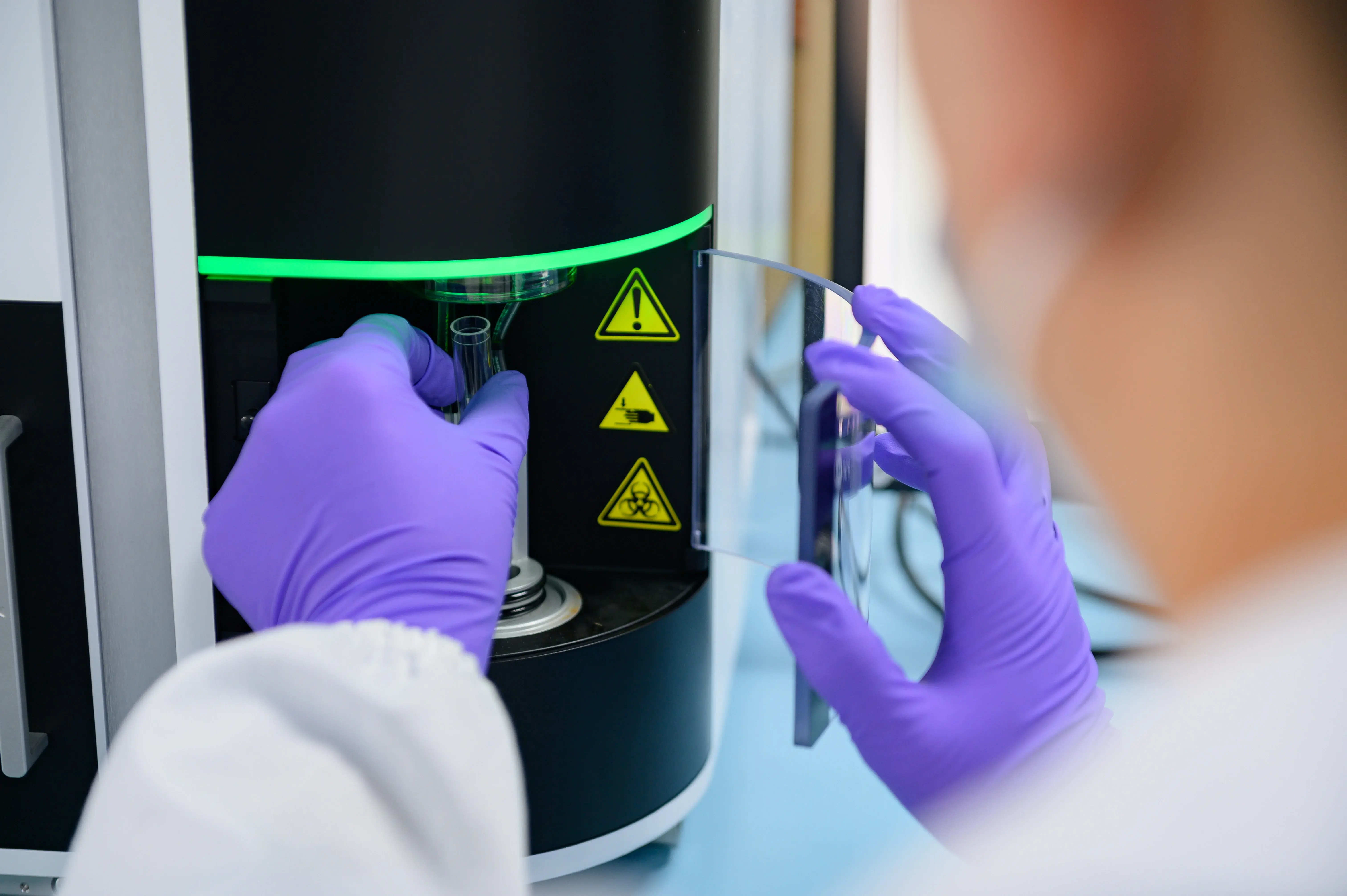
AZ Delta Roeselare utilises cell sorting to further elucidate complex haematological issues. Using the Beckman Coulter CytoFLEX SRT cell sorter, specific cell populations can be isolated and subsequently examined individually at a molecular level.
For Dr Barbara Depreter, a clinical biologist at AZ Delta and clinical professor at the VUB, this represents a significant expansion of diagnostic capabilities: “With cell sorting, we can not only identify which mutation is present, but also in which cell clone that mutation is located.”
From bulk diagnostics to cell-specific information
At AZ Delta, around 3,000 flow cytometric samples are analysed each year. The laboratory possesses extensive expertise in haematological diagnostics, combining flow cytometry, morphology and molecular diagnostics.
At the same time, the growing range of molecular tests in haematological diagnostics brings with it new challenges. Haematological malignancies often consist of heterogeneous cell populations, meaning that an analysis of the entire sample does not always reveal which cell population is responsible for a particular genetic abnormality.
“In a conventional molecular analysis, we start with DNA or RNA from a sample containing all the white blood cells present in the entire haematopoietic system. You then know that a particular mutation, copy number alteration or translocation is present, but not necessarily in which cell population that molecular abnormality is found.”
“Without prior sorting, this sometimes leaves patients with a dual diagnosis in the dark. By sorting the relevant cell populations separately and then analysing them molecularly, we can determine much more precisely where the molecular abnormality is located."
The power of the combination
That distinction can be clinically relevant. In a patient with CLL, for example, a genetic abnormality may be present that could fit both the CLL clone and a myeloid disorder such as MDS. By analysing the different cell populations separately, it is possible to determine which clone carries the abnormality.
"That can make a significant difference to the diagnosis. Sometimes there is one malignancy, sometimes two. In haematology, it is never just flow cytometry or just molecular diagnostics. We combine morphology, flow cytometry and molecular diagnostics. Cell sorting adds another piece to the jigsaw.”
From multiple myeloma to chimerism
One of the applications where cell sorting offers clear added value is multiple myeloma. In a bone marrow aspirate, the plasma cell population can be relatively small. When only a small percentage of the cells are plasma cells, a molecular abnormality can be masked by the large number of normal cells.
By enriching the plasma cells first, the subsequent molecular analysis can be carried out in a much more targeted manner.
The SRT is also routinely used in cases of chimerism following stem cell transplantation. T-cell chimerism determines, after a stem cell transplant, what proportion of the T-cells originates from the donor and what proportion still originates from the patient. Instead of examining only the entire white blood cell compartment, specific populations, such as T-cells, can be isolated.
An integrated workflow with the CytoFLEX SRT
The introduction of
the CytoFLEX SRT fits within AZ Delta’s existing flow cytometry workflow. In
addition to the SRT, the laboratory has the DxFLEX and the AQUIOS for, amongst
other things, TBNK, CD34 and leukaemia and lymphoma screening.
According to Dr Apr.
Barbara Depreter, a key advantage is the compatibility between the systems.
“All the panels we use on the DxFLEX can also be used on the CytoFLEX. The optics and software are compatible, making the methods highly transferable.”
The SRT not only offers
flexibility but also provides an important form of continuity. It can be
used as a backup for the existing flow cytometry setup, and staff do not
need to be completely retrained for a different platform.
“You don’t need to
maintain two completely different sets of skills and training programmes. That
makes the workflow very efficient.”
Automation also plays
a key role.
Whereas older cell sorters required a great deal of manual
configuration and experience, the CytoFLEX SRT automates a large part of the
process. This makes cell sorting more accessible for routine use.
Efficiency that goes beyond the technology
For AZ Delta, the added value of the SRT lies not only in its technical capabilities. Its impact on the day-to-day organisation of the laboratory also plays a role.
There are alternatives to cell purification, such as using beads. These may work perfectly well in certain applications, but they require additional work steps, reagents, costs, staff resources and training.
“In our lab, a cell purification or concentration task is added to the workflow at the flow cytometry workstation and can be carried out simultaneously alongside other flow cytometric analyses."
The sorter naturally requires staff to be present during the sorting process, but staff can carry out other tasks in the meantime. This allows the technology to be efficiently integrated into the lab’s day-to-day operations.

A look to the future
Flow cytometry, including cell sorting and molecular diagnostics, will converge even more closely in the future, according to Dr Apr. Barbara Depreter
“We are becoming increasingly molecularly oriented, and our diagnostic and therapeutic decisions are also increasingly based on molecular data.”
According to her, this also increases the need to link molecular information to specific cell populations. One promising application, for example, is the assessment of chimerism in sorted blasts from patients who lack a leukaemia-associated immunophenotype (LAIP) or a sensitive and stable molecular marker. It is therefore expected that cell-specific molecular diagnostics will play an increasingly important role within haematology.
A long-term partnership
For AZ Delta, however, the technology is only part of the story. The partnership with Analis plays a key role in the day-to-day operation of the equipment.
“When you use an instrument as part of your routine, you want to know you have somewhere to turn if something goes wrong. You want prompt clarity and support when needed. I find Analis to be very responsive. Even when a technical problem arises, rapid support is essential, according to Barbara Depreter. After all, an instrument that is unavailable can have a direct impact on routine work and, ultimately, on diagnostics.”
This long-term relationship is in line with how Analis aims to approach its collaboration with customers: not merely as a supplier of equipment, but as a partner standing alongside the lab and working together to find solutions.
More than just a sorter
For AZ Delta, the CytoFLEX SRT has ultimately meant more than simply adding a new instrument to the lab. The technology has introduced a new capability to the diagnostic workflow: the targeted isolation of cell populations so that their molecular characteristics can then be examined individually.
“For us, the SRT has, above all, added an extra dimension to diagnostics. We can now isolate cell populations when necessary and then link them to molecular information.”
And according to Dr Apr. Barbara Depreter, this is precisely where the greatest added value lies: when bulk diagnostics are no longer sufficient, cell sorting makes it possible to go one step further — from detecting the presence of a molecular abnormality in heterogeneous cell populations to targeted molecular diagnostics.