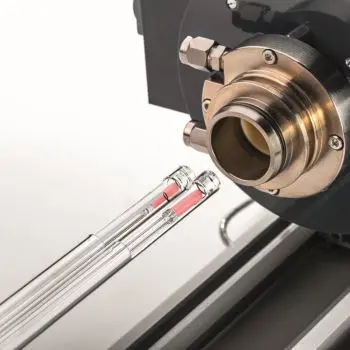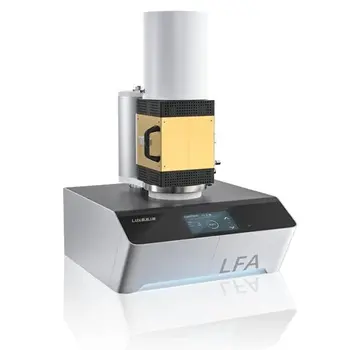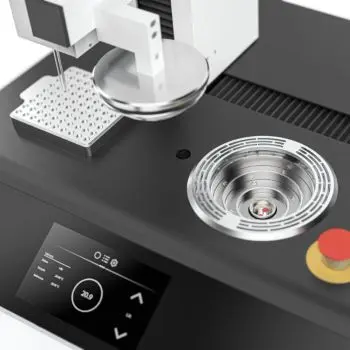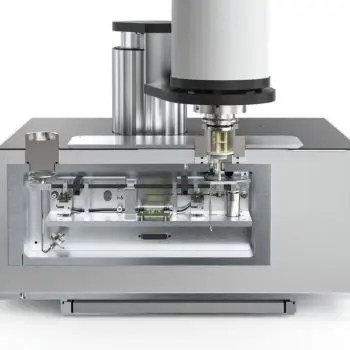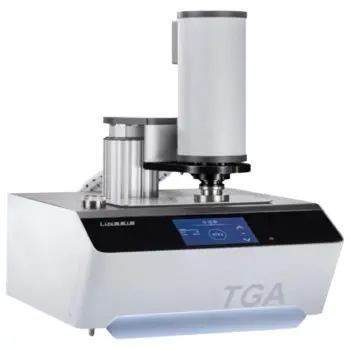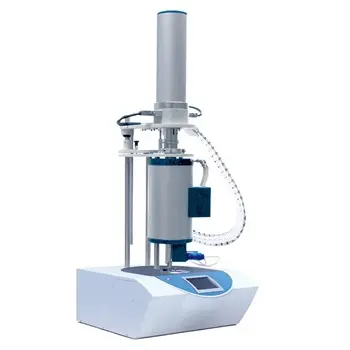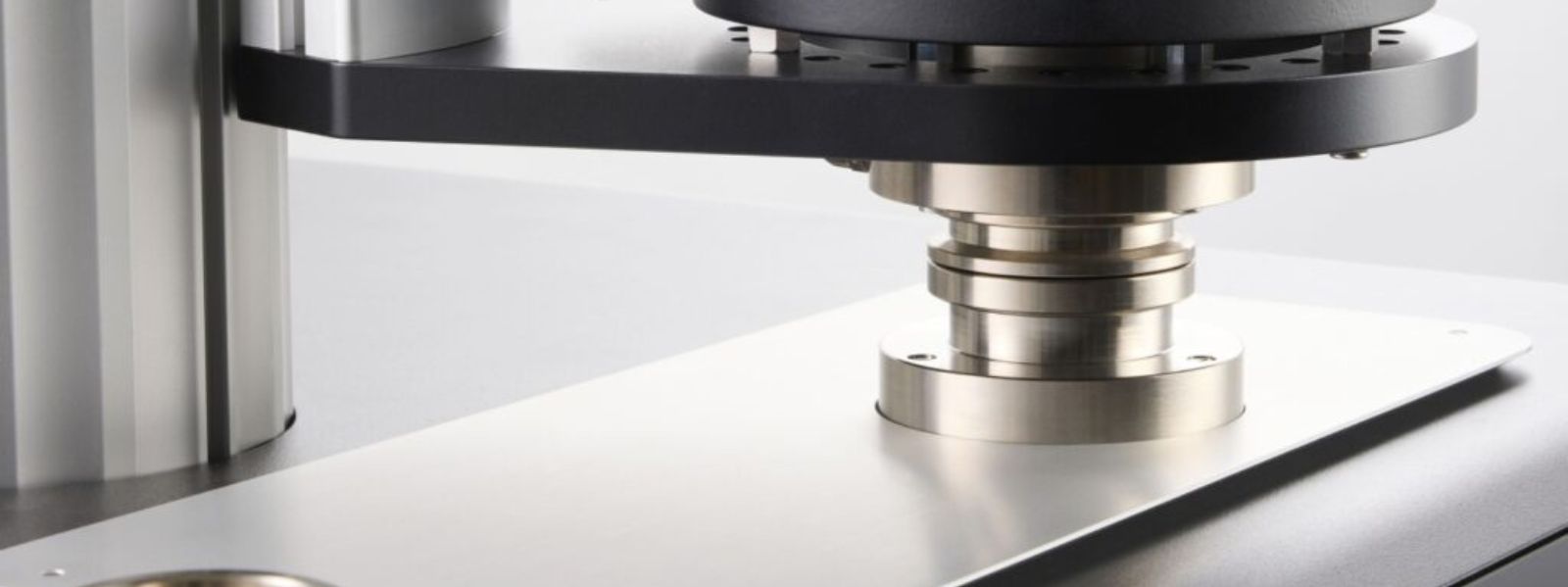
STA (TGA-DSC) instruments to measure mass change and heat flow on the same sample
Simultaneous Thermal Analysis (STA) combines Thermogravimetric Analysis (TGA) and Differential Scanning Calorimetry (DSC) on the same sample at the same time. TGA measures mass changes during heating, cooling or exposure to a defined atmosphere, revealing decomposition, oxidation and evaporation. DSC measures the heat absorbed or released during melting, crystallization and phase transitions.
Because both signals are recorded under identical temperature, time and atmosphere, thermal effects and mass changes are directly correlated: you know whether a peak comes with a mass loss or not. This removes the uncertainty of comparing two separate runs.
For reactions that depend on pressure, such as coal and biomass gasification or pyrolysis, LINSEIS high-pressure STA systems measure TGA-DSC up to 150 bar: the benchtop STA HP 3 (up to 1200 °C) and the STA HP 1/HP 2 (up to 1800 °C). Analis helps you define the right setup.
Our products
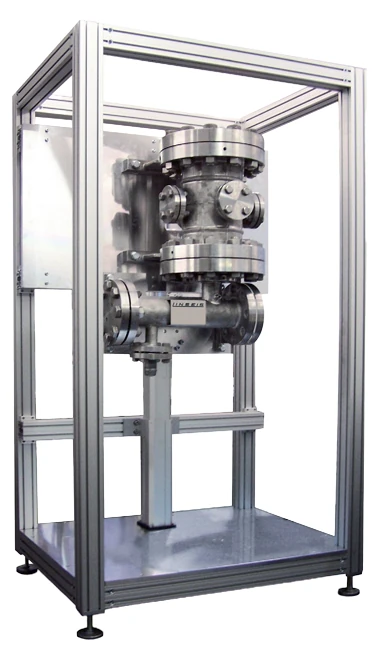
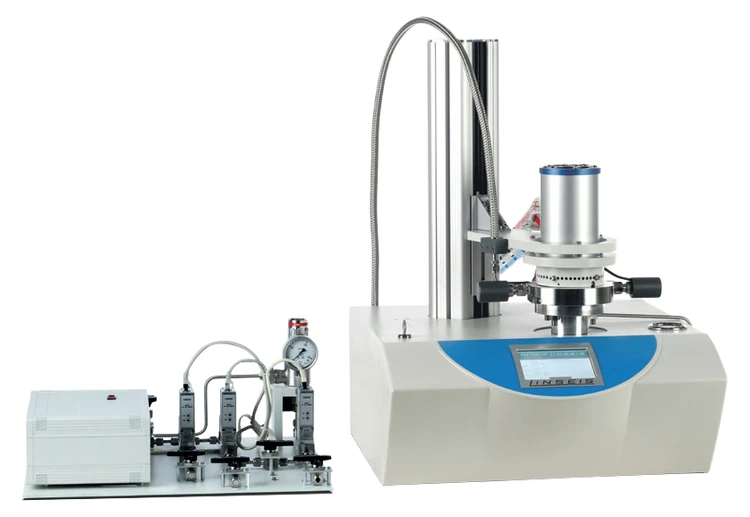
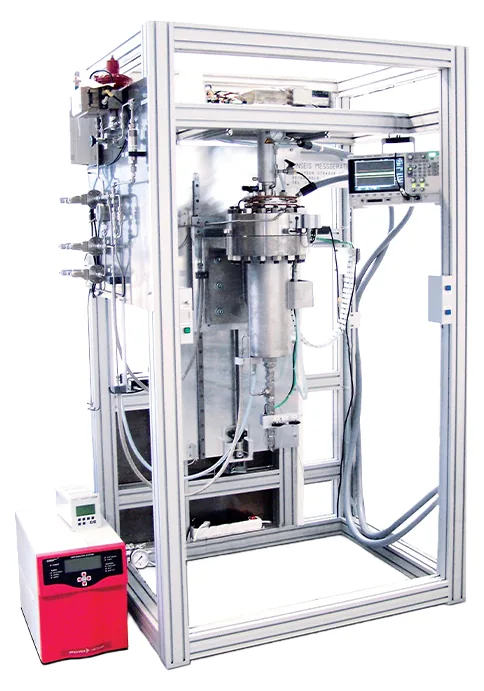
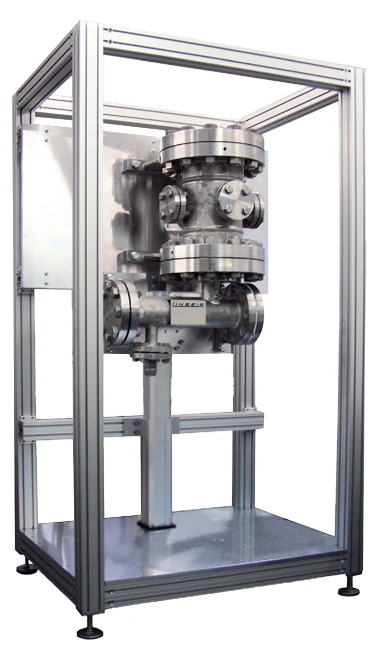
The LINSEIS High-Pressure STA (High-Pressure TG-DSC) determines simultaneous changes in mass (TG) and caloric reactions (HDSC) under a defined atmosphere and high pressure (up to 50/150 bar), across a temperature range of −170 °C to 1800 °C. Part of the Platinum series, it is built for demanding high-temperature and high-pressure applications.
What does the High-Pressure STA measure?
As a simultaneous thermal analyzer (STA), it records mass change (TG) and heat flow (DSC) at the same time, on the same sample, under identical pressure and atmosphere. Measuring both under pressure reveals reaction behavior, equilibria and thermal effects that are invisible at ambient pressure.
How does it work?
A single run captures TG and HDSC simultaneously under a defined atmosphere and high pressure (up to 150 bar) from −170 to 1800 °C, with high precision, high resolution and long-term drift stability. An optional pressure-controllable gas-mixing system (MFCs) sets precise atmospheres for reactive studies.
Key advantages
- Simultaneous TG and DSC under defined atmosphere and high pressure
- High precision and high resolution
- Long-term drift stability
- Developed for demanding conditions: the High-Pressure STA Platinum series meets the requirements of high-temperature and high-pressure applications
- Pressure-controllable gas mixing system (MFCs) as an option
Suitable for
- Pyrolysis studies
- Gasification of coal and biomass
- Testing of getter materials (O₂, H₂, etc.)
- Metal reduction/oxidation studies
Request a demonstration or quote
Ask Analis’ local Benelux experts for more information, a demonstration, or a personalized quote.
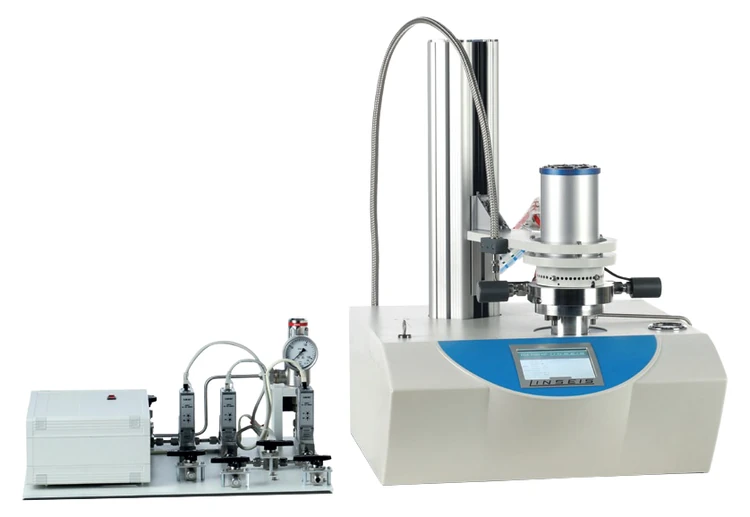
The LINSEIS STA HP 3 is a benchtop high-pressure simultaneous thermal analyzer (STA) combining thermogravimetry and DSC (TGA-DSC), built on 25 years of experience in thermal analysis under pressure. It runs experiments up to 1200 °C and up to 150 bar in reactive or inert atmospheres.
A high-speed micro furnace, a top-loading microbalance and a true TG-DSC design measure mass change and calorimetric events in a single run, under identical temperature, gas and pressure conditions.
What does the STA HP 3 measure?
As a simultaneous thermal analyzer, it records mass change (TGA) and calorimetric events (DSC), such as endothermic or exothermic reactions and phase transitions, in one run on the same sample. Because the thermocouple is in direct contact with the sample, sample temperature is accurate, eliminating errors caused by the distance between sample and thermocouple.
What makes high-pressure STA different?
Running thermal analysis under pressure (up to 150 bar) shifts reaction equilibria and transition temperatures, which reveals behavior invisible at ambient pressure. For example, in the thermal decomposition of calcium oxalate monohydrate at 100 bar, water and CO₂ loss shift to higher temperatures than at 2 bar. High-pressure STA is therefore key to studies such as coal gasification (hydrogasification), where pressure determines the chemical equilibria in the production of CO, H₂, methanol and methane.
How does it work?
Plug-and-play sensors are user-exchangeable: TGA only (volumes up to 1 ml) or combined TGA-DSC (0.12 or 0.3 ml). The micro heater delivers controlled heating up to 300 °C/min and cooling up to 150 °C/min, and the small furnace volume enables fast gas changes with much lower gas and energy consumption. Flexible gas dosing handles up to 3 gases as standard (more on request), with an optional vapor generator and an automatic evacuation and gas-combustion safety system for gases such as hydrogen and hydrocarbons.
Key advantages
- Top-loading combined TG-DSC measures mass change and calorimetric events such as endothermic or exothermic reactions and phase transitions in one run, under the same temperature, gas and pressure conditions
- Plug-and-play sensors that the user exchanges easily: TGA only with volumes up to 1 ml, or combined TGA-DSC with a volume up to 0.12 or 0.3 ml
- Accurate sample temperature as the thermocouple is in direct contact with the sample, which eliminates errors from the distance between sample and thermocouple
- Fast heating and cooling with the micro heater, up to 300 °C/min controlled heating rate and up to 150 °C/min cooling rate
- Small furnace volume for fast gas changes and sharply lower gas and energy consumption
- Flexible gas dosing with panels designed to your needs: up to 3 gases as standard, more on request, an optional vapor generator and an automatic evacuation and gas combustion safety system for gases such as hydrogen and hydrocarbons
- Steam options with condensate traps, water vapor generators and heated transfer lines for steam and other condensing gases
- Tabletop design for maximum flexibility; all gas control panels meet high German quality and safety standards
Suitable for
The STA HP 3 also works at high pressure, for example 100 bar:
- Thermal decomposition of calcium oxalate monohydrate: DSC and TG signals in static nitrogen at 100 bar and 20 K/min up to 600 °C, compared with 2 bar. Water loss and CO₂ loss shift to later temperatures at higher pressure, while CO loss (an irreversible decomposition) is largely independent of pressure
- Coal gasification (hydrogasification): studying the reaction of carbon with water vapor, where pressure determines the position of the chemical equilibria in the production of CO, H₂, methanol and methane
Request a demonstration or quote
Ask Analis’ local Benelux experts for more information, a demonstration, or a personalized quote.
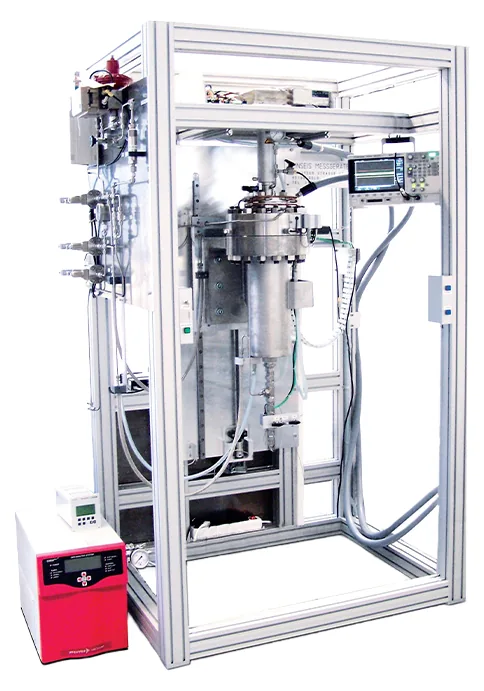
The LINSEIS MSB PT 1 is a magnetic suspension balance for gravimetric measurements over a wide temperature and pressure range, including under aggressive media. It consists of a balance that records the measured values, a suspension coupling that carries the sample weight, a position sensor for the levitation part and a control unit that drives the coupling.
The key principle is contactless weight transfer: the sample hangs from a magnetic coupling, so the sensitive microbalance stays at ambient conditions and is protected from heat, pressure and corrosive atmospheres.
What does the MSB PT 1 measure?
The MSB PT 1 performs gravimetric and density measurements under conditions that would damage a conventional balance. Density is determined using the principle of Archimedes: a mass of known volume is weighed and the density is calculated from the buoyancy of the sample. The compact construction allows this over a large temperature and pressure range, and evolved gas analysis with MS/FTIR is possible.
How does it work?
Weight is transferred without contact using a levitation magnet (permanent magnet) and a holding magnet (electromagnet suspended from the balance). A position sensor and a PID controller keep the levitation position stable, with the electromagnetic force as control variable. Because the magnetic coupling isolates the microbalance, the sample can be exposed to extreme temperature, high pressure or aggressive media while the balance measures safely at ambient conditions.
Key advantages
- Contactless weight transfer using a levitation magnet (permanent magnet) and a holding magnet (electromagnet hanging from the balance)
- Stable levitation position from a position sensor and a PID controller, with the electromagnetic force as control variable
- Balance protected from high temperatures, pressure and aggressive media, because the magnetic coupling allows the microbalance to be set up at ambient conditions
- Density analysis using the principle of Archimedes: a mass of known volume is weighed and the density is calculated from the buoyancy of the sample
- Compact construction that allows density analysis over a large temperature and pressure range
- Evolved gas analysis with MS/FTIR possible
Suitable for
- Plastics production
- Exhaust gas purification
- Food production
- Supercritical fluid extraction
- Coal gasification
- Soil decontamination
- Purification and storage of natural gas and hydrogen
- Analysis of fuel cell membranes
- Waste incineration
- Process and chemical technology research
Request a demonstration or quote
Ask Analis’ local Benelux experts for more information, a demonstration, or a personalized quote.