SHINING3D
Portable Hybrid 3D Scanning for Reverse Engineering and 3D Design
How Does EinScan Rigil Combine Blue Laser and Infrared 3D Scanning?
What Is the EinScan Rigil 3D Scanner Used For?
Shining3D EinScan Rigil all-in-one Laser 3D Scanner
Reference: SHIN-C010694
https://www.analis.com/shop/shin-c010694-shining3d-einscan-rigil-all-in-one-laser-3d-scanner-139556 https://www.analis.com/web/image/product.template/139556/image_1920?unique=ac95c72Portable Hybrid 3D Scanning for Reverse Engineering and 3D Design
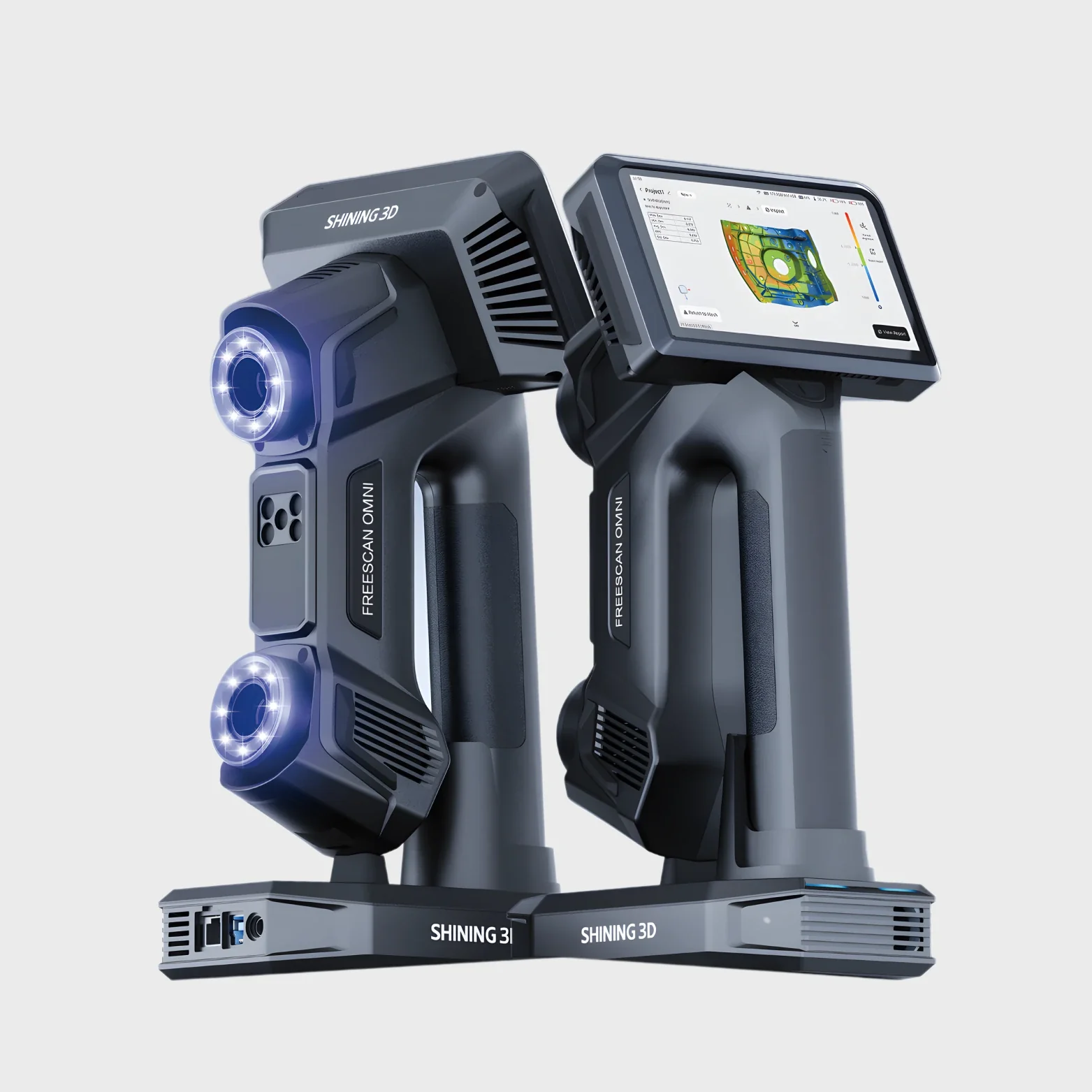
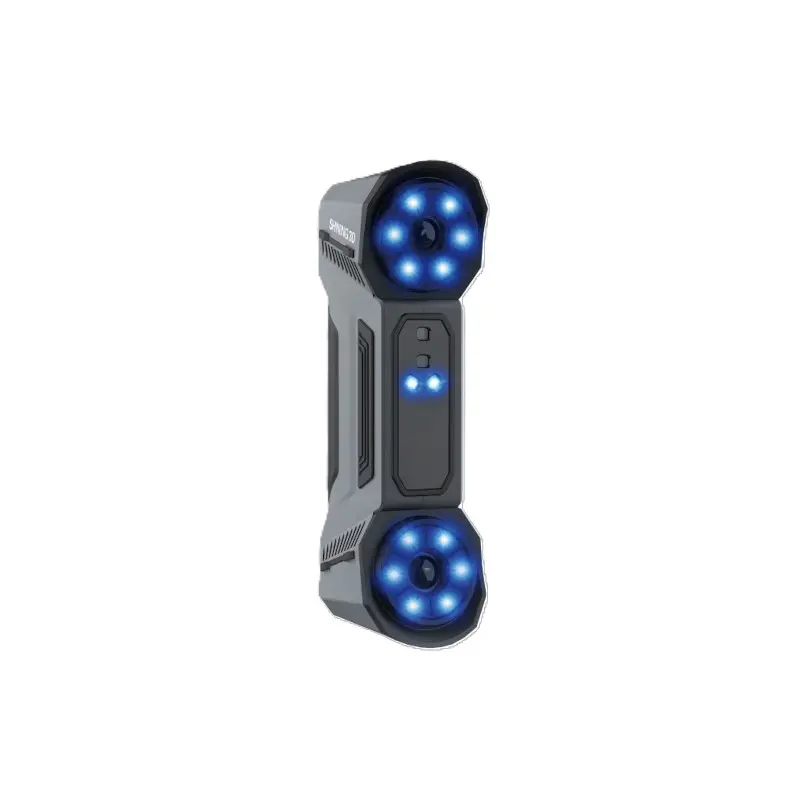
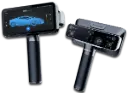
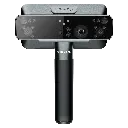
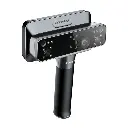
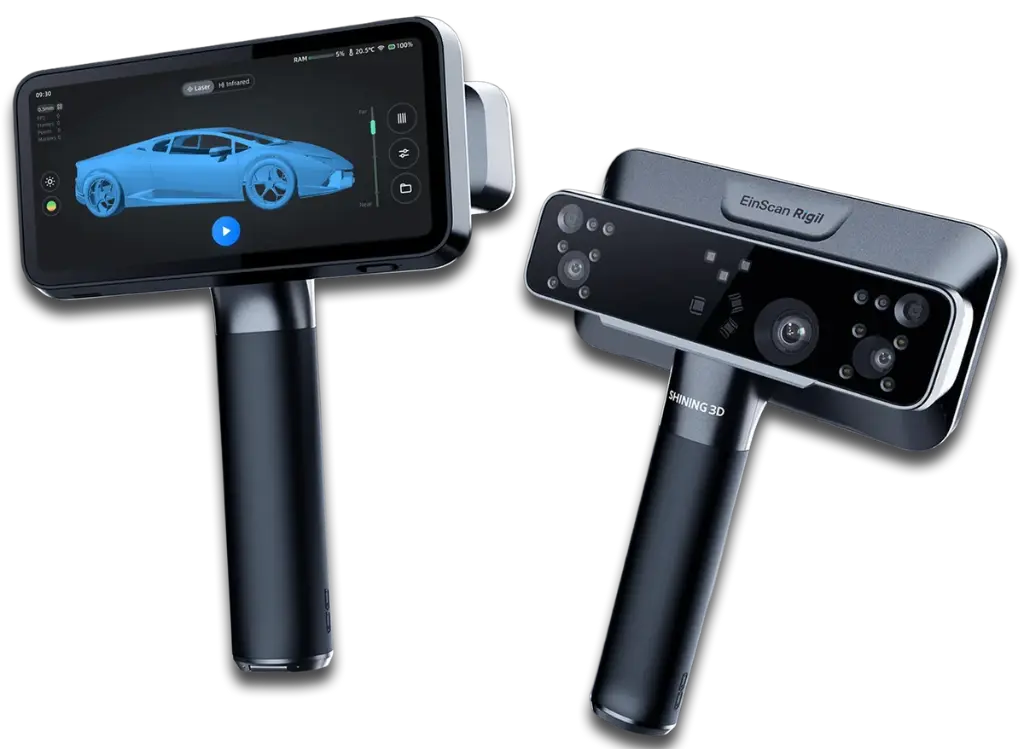
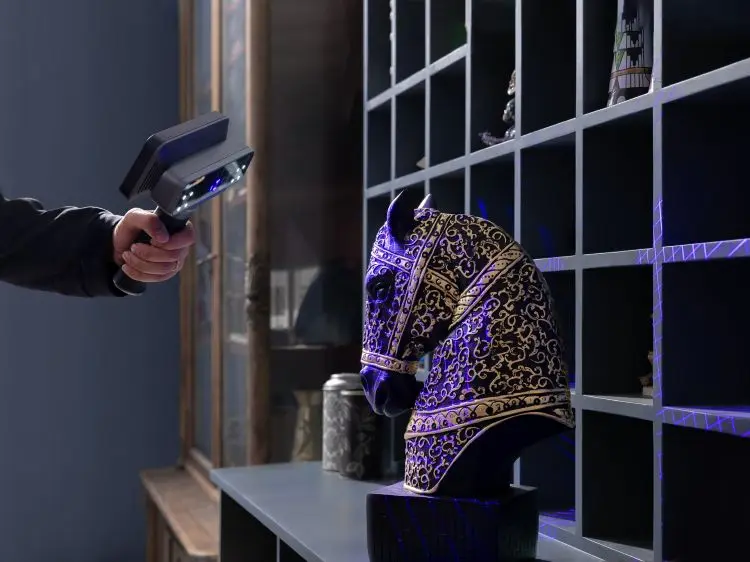
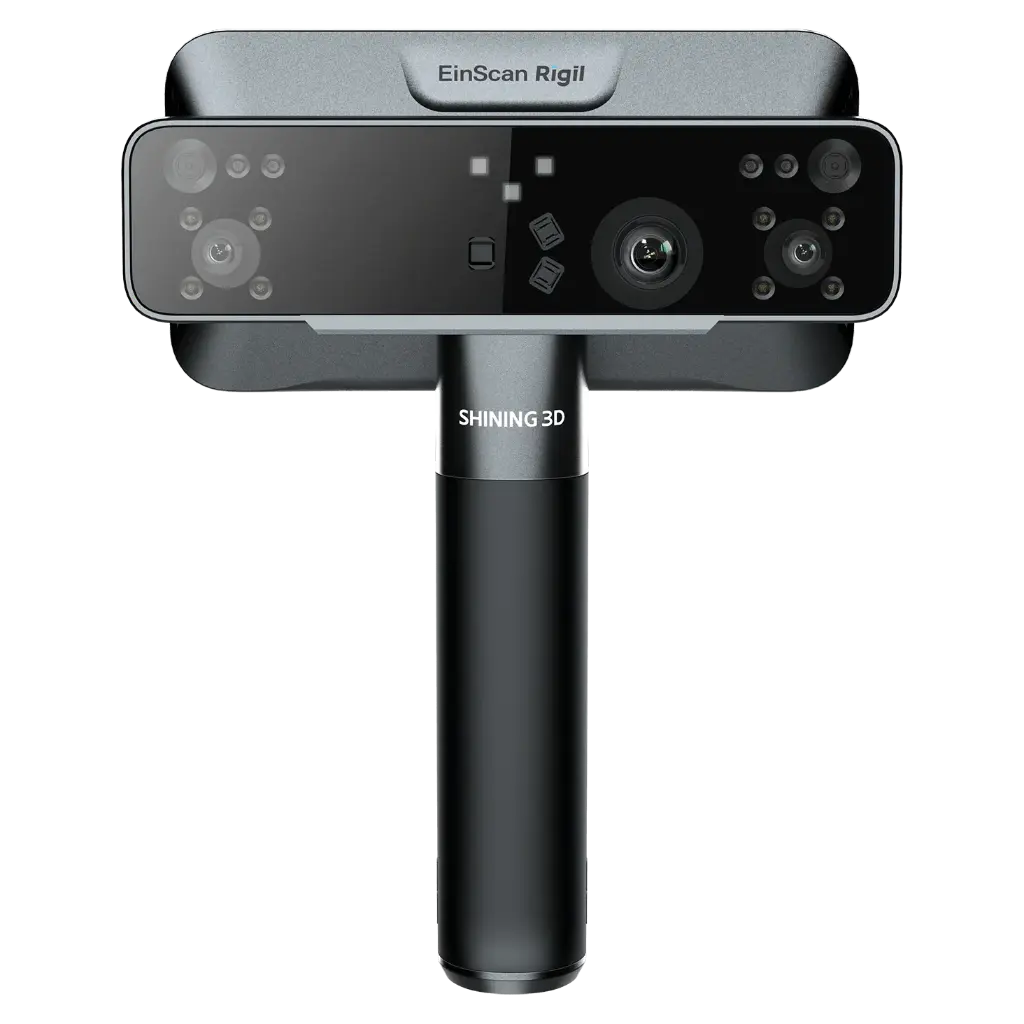
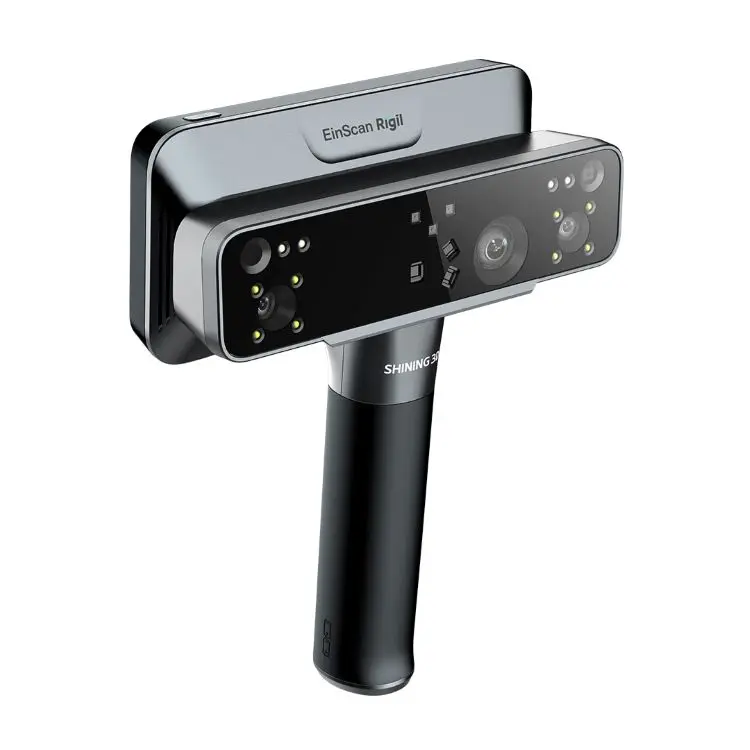
The SHINING 3D EinScan Rigil is a portable, all-in-one handheld 3D scanner combining blue laser technology, infrared VCSEL scanning and integrated computing. Designed for engineering, reverse engineering and 3D digitisation, it enables detailed scanning of mechanical components and larger objects, with fully standalone, wireless or wired PC operation.
How Does EinScan Rigil Combine Blue Laser and Infrared 3D Scanning?
- Three operating modes: Scan and process data directly on the device, or connect to a PC via Wi-Fi 6 or USB-C for more demanding projects.
- Hybrid scanning technology: 25+25 crossed blue laser lines enable high-speed capture, while 7 parallel laser lines capture fine geometric details. Infrared VCSEL scanning provides wider coverage for medium to large objects.
- High-accuracy 3D capture: Laser HD mode delivers volumetric accuracy up to 0.04 mm + 0.06 mm/m and geometric resolution down to 0.05 mm.
- Flexible scanning of challenging surfaces: Supports dark and reflective surfaces, outdoor scanning and marker-free laser scanning using hybrid tracking in EXScan Rigil software.
- Integrated standalone workflow: A 6.4-inch touchscreen, onboard processing, internal storage and replaceable batteries allow scanning without an external computer.
- Colour capture and 3D model processing: A 5 MP texture camera, onboard editing tools and EXScan Rigil PC software support textured 3D models and mesh preparation for downstream design applications.
What Is the EinScan Rigil 3D Scanner Used For?
- Reverse engineering and product development: Digitising mechanical components, prototypes and complex geometries for CAD reconstruction or redesign.
- Automotive engineering and aftermarket: Capturing vehicle parts and assemblies for customisation, modification and fit assessment.
- 3D printing and digital modelling: Creating digital models for reproduction, prototyping and custom manufacturing.
- Cultural heritage, research and education: Digitising artefacts, artworks and objects for documentation, preservation and digital content creation.

Technical information
| Parameter | Specification |
| Scanning technology | Blue laser and infrared VCSEL |
| Operating modes | Standalone; wireless PC; wired PC |
| Scanning modes | Laser HD; IR Rapid |
| Blue laser configuration | 25+25 crossed laser lines; 7 parallel laser lines |
| Volumetric accuracy (Laser HD) | Up to 0.04 mm + 0.06 mm/m |
| Resolution (Laser HD) | 0.05–10 mm |
| Resolution (IR Rapid) | 0.2–10 mm |
| Scanning speed (crossed laser) | Up to 4,800,000 points/s |
| Scanning speed (parallel laser) | Up to 1,620,000 points/s |
| Scanning speed (IR Rapid) | Up to 16,000,000 points/s |
| Working distance (Laser HD) | 170–550 mm |
| Working distance (IR Rapid) | 160–1,500 mm |
| Alignment (Laser HD) | Global markers, markers, features |
| Alignment (IR Rapid) | Global markers, markers, features, texture, hybrid |
| Texture camera | 5 MP |
| Display | 6.4-inch 2K AMOLED touchscreen |
| Memory and storage | 32 GB LPDDR5 RAM; 64 GB eMMC + 1 TB SSD |
| Connectivity | Wi-Fi 6; USB Type-C |
| Power | 2 × 5,500 mAh replaceable batteries; 60 W USB-C PD support |
| Export formats | STL, OBJ, PLY, 3MF, ASC |
| Operating temperature | −10 to +40 °C |
| Dimensions (W × D × H) | 72.8 × 180 × 233 mm |
| Weight | 870 g (including batteries) |