Industrial 3D Laser Scanning for Metrology, Inspection and Reverse Engineering
Experience metrology-grade 3D laser scanning with high accuracy, speed and workflow efficiency for industrial applications.
Our Shining 3D Metrology Series offers professional 3D scanning solutions designed for:
- quality control,
- inspection,
- reverse engineering,
- manufacturing and production environments.
Explore the solution categories below to identify the most suitable 3D metrology scanner for your application and measurement requirements.
SHINING 3D Metrology presentation video - INSPECT ON THE MOVE
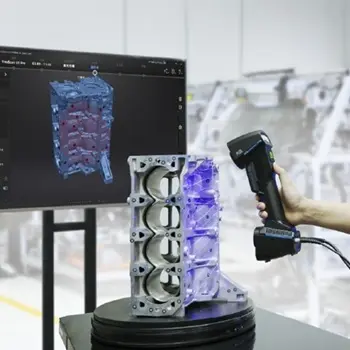
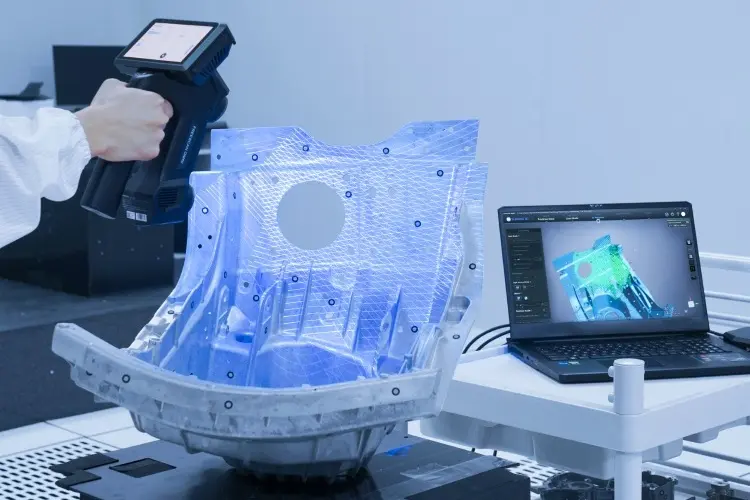
Handheld 3D Scanner
What is a handheld 3D scanner and why choose a portable solution?
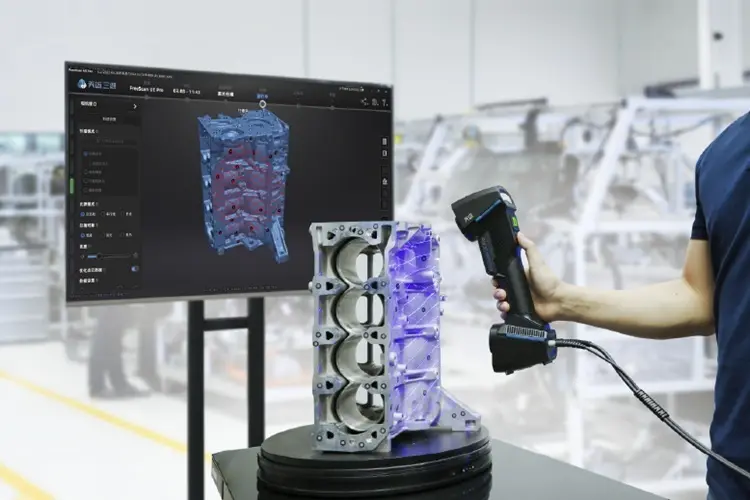
Handheld 3D scanners provide maximum flexibility for scanning complex geometries, freeform surfaces and large components, including in-situ and on-site measurements.
They deliver fast, metrology-grade data acquisition with minimal setup time, making them ideal for mobile inspection, reverse engineering and maintenance applications.
- High portability for mobile 3D scanning
- Fast data capture on complex geometries
- Compatible with a wide range of industrial surface types, including metal, plastic and cast parts
Dynamic Tracking System
What is a tracking 3D scanner and how does dynamic referencing improve productivity?
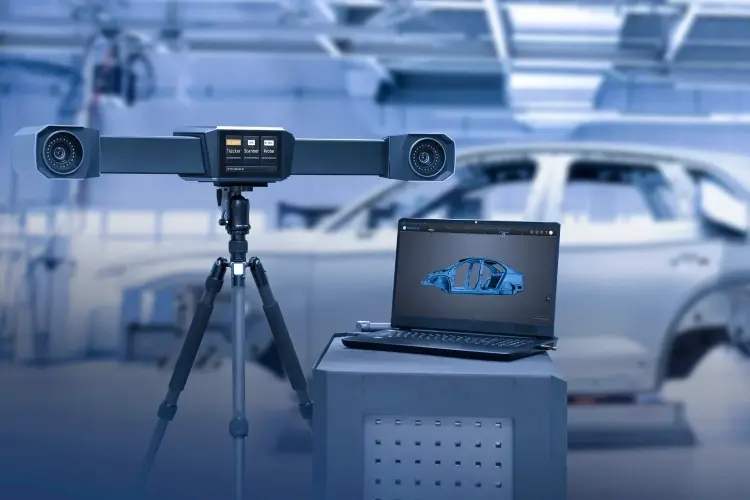
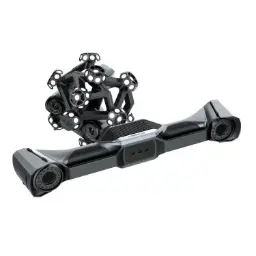
A dynamic tracking system uses optical tracking technology to follow the scanner in real time, maintaining accuracy without the need for fixed targets or markers.
This makes it ideal for large-volume measurements, shop-floor inspection and production environments, where speed, operator freedom and repeatability are critical.
- Marker-free scanning with optical tracking
- Real-time dynamic referencing
- Perfect for large parts and industrial shop-floor environments
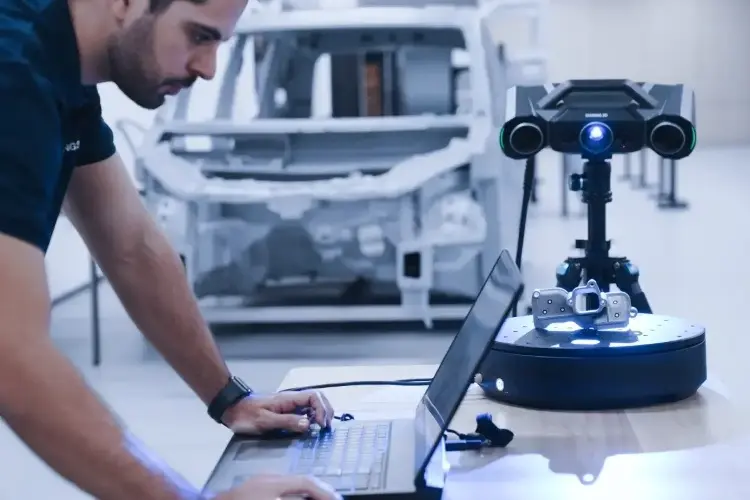
High-Accuracy Inspection Scanner
Why choose a high-accuracy 3D inspection scanner for quality control?
High-precision 3D scanners ensure traceable, metrology-grade accuracy for dimensional inspection, calibration and tight-tolerance quality control.
These systems are designed for manufacturers who require reliable, repeatable and standards-compliant measurement results.
- Metrology-grade accuracy
- High-resolution measurement
- Repeatable and reliable results for quality control and inspection workflows
Stand-Alone Scanner
What is a stand-alone 3D scanner and when is automated inspection preferred?
A stand-alone or automated 3D scanner is a fixed, operator-independent metrology system designed for repetitive, tandardised and high-throughput inspection tasks.
This category supports automated and semi-automated inspection workflows, making it ideal for inline and near-line quality control in production environments.
- Automated 3D measurement
- High consistency and repeatability
- Ideal for inline and near-line quality control
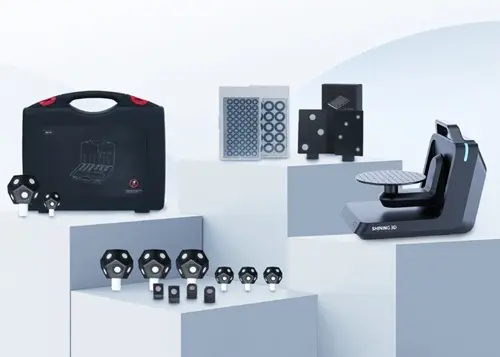
Accessories for 3D Scanning
Which accessories enhance your industrial 3D scanning workflow?
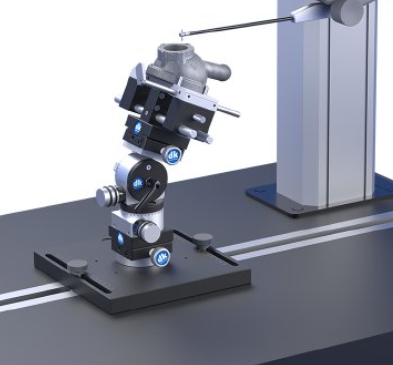
Accessories such as precision turntables, tripods, calibration plates, reference markers and dedicated fixtures improve measurement stability, accuracy and overall workflow efficiency across all industrial 3D scanning applications.
- Better stability during scanning
- Faster workflows with automated rotation tools
- Extended measurement capability for a wide range of part sizes, materials and geometries
Need help choosing the right 3D laser scanning solution?
Analis metrology specialists support QC engineers, production managers and manufacturing teams across Belgium, the Netherlands and Luxembourg with application-driven advice, demonstrations and long-term technical support.
Want to see how 3D scanning works in practice?
Watch the short SHINING 3D educational video explaining marker and markerless scanning.
Ask our metrology team your 3D scanning questions
SHINING 3D - Why do we put those small dots on objects before 3D scanning?
Frequently asked questions about 3D Laser Scanning
Those small adhesive targets are called reference markers. They help the scanner determine its exact position and orientation in space while capturing 3D data.
By tracking the position of these markers, the system can:
- Maintain high measurement accuracy
- Align multiple scans together
- Ensure reliable data capture on smooth or repetitive surfaces
Markers are particularly useful when scanning:
- Large components
- Featureless or smooth surfaces
- Parts with limited geometric references
Markers are typically required when:
- The surface lacks distinct features
- The part is large or geometrically repetitive
- Maximum metrology-grade accuracy is required
However, modern 3D scanning technologies now allow markerless scanning in many applications.
Advanced systems can use:
- Surface geometry recognition
- Optical tracking systems
- Dynamic referencing technologies to maintain accuracy without applying markers directly on the object.
Markerless scanning relies on either:
- Natural geometry features of the object
- Or an external optical tracking system that monitors the scanner in real time
Tracking-based systems, such as dynamic tracking technology, enable fast and reliable scanning even on large or smooth surfaces, while reducing preparation time.
This allows:
- Faster setup
- Cleaner workflows
- Efficient inspection on the shop floor
In many industrial applications, yes.
Modern dynamic tracking solutions can significantly reduce or even eliminate the need for placing adhesive markers, especially when scanning:
- Large assemblies
- Automotive components
- Industrial tooling
- Production-line parts
The result is faster scanning, reduced preparation time and consistent, high-quality data acquisition.
Our products
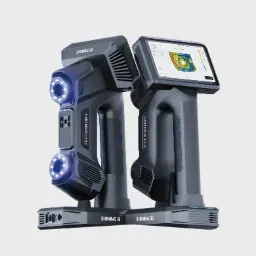
Key Advantages for Autonomous 3D Inspection
- On-scanner scan-to-inspect workflow
- PTB-certified inspection module for traceable results
- Fully wireless operation (no cables or external PC)
- Real-time processing and reporting on-device
- Multiple scan modes including high-speed laser and IR
Applications: Shopfloor & Field Inspection
- Production floor quality control
- On-site inspection and maintenance
- Mobile reverse engineering
Built for Fast and Reliable Decision-Making
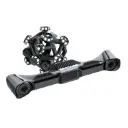
Key Advantages for Large-Volume 3D Inspection
- Markerless dynamic tracking for faster setup
- Integrated VPG for consistent volumetric accuracy
- All-in-one system: tracking + scanning + photogrammetry
- Wireless and portable for on-site measurement
- Large FOV combined with fine detail acquisition
Applications: Large Parts & Industrial Environments
- Aerospace, rail, and energy components
- Large assembly inspection and alignment
- Shopfloor and production line quality control
Built for High Productivity Measurement Workflows
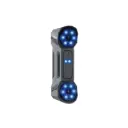
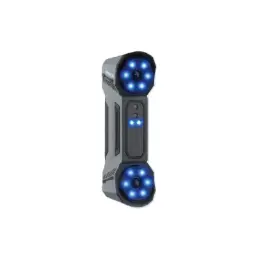
Key Advantages for Industrial 3D Scanning
- Hybrid light source: laser (precision) + IR (markerless scanning)
- 4 scanning modes: multi-line, fine, single-line, infrared
- High speed: up to 3.6 million points/sec
- Deep hole and complex geometry capture
- Lightweight and portable (620 g)
Applications: Inspection, Reverse Engineering & Production
- Dimensional inspection and quality control
- Reverse engineering and product development
- Maintenance and manufacturing environments
Optimized for Complex Industrial Surfaces
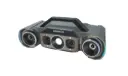
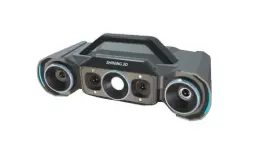
Key Advantages for Metrology & Inspection Labs
- 4 × 12.3 MP cameras for high-resolution data capture
- Dual scan range for small and medium-sized parts
- Monocular-Stereo Fusion (MSF) for complete data coverage
- Fast acquisition (<1 second per scan)
- Ready for automated and robotic inspection
Applications: Precision Measurement & Validation
- First article inspection (FAI)
- GD&T and tight tolerance verification
- Tooling, molds, and precision components