![NWE / PLW 8683 [LD DC10]](/web/image/product.template/130055/image_512)
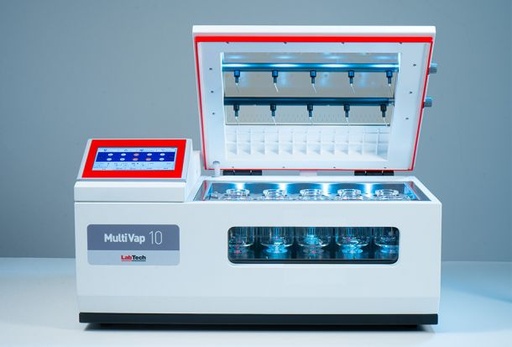
Engineered for labs requiring mid-range capacity with high automation, the MultiVap 10 supports up to 10 simultaneous evaporation positions and features infrared endpoint detection, vortex nitrogen purge, and a vapor exhaust system.
MultiVap 10 – Compact Automated Parallel Evaporator
With its compact design, it serves as an efficient, safer alternative to rotary evaporators, suitable for labs even outside a fume hood. Ideal for users in clinical, forensic, and environmental analysis across the Benelux region.
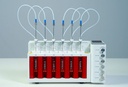
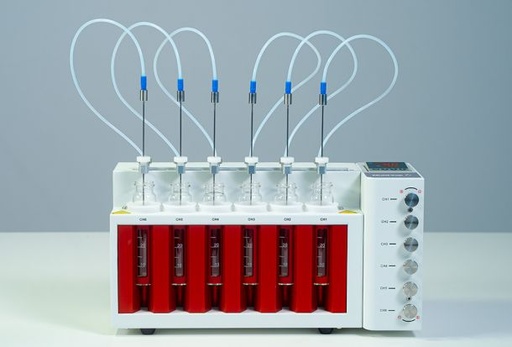
The MultiVap 6 is a reliable and budget-conscious concentration solution designed for laboratories handling up to 6 samples (40 ml).
MultiVap 6 – Cost-Effective Evaporator with Individual Control
With independently adjustable nitrogen channels and dry block heating, it enhances evaporation efficiency while preventing transfer loss. Its open-view design allows direct process monitoring, making it ideal for organic, geochemical, and petroleum analysis labs in Belgium and Luxembourg.
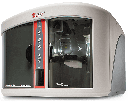
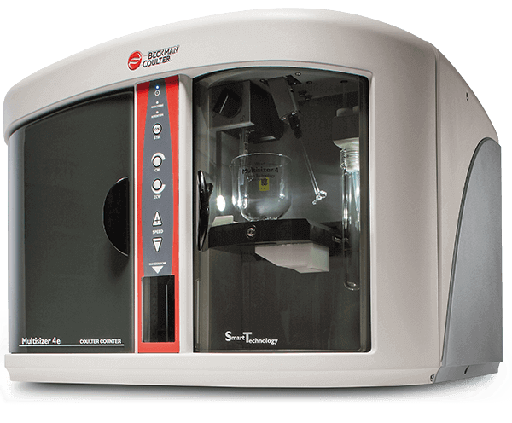
The Multisizer 4e Coulter Counter is a highly versatile particle counting and characterization system. It uses the Coulter principle to detect particles via electrical zone sensing, regardless of the particle’s nature or optical properties. This makes it an ideal tool for detecting and counting a wide variety of particles, such as mammalian cells, bacteria, yeast, abrasives, toner particles, cell aggregates, spheroids, large protein aggregates,...
- Detection of particles from 200 nm to 1600 µm
- Accurate determination of sample cell number, size, and concentration
- Uses the Coulter Principle Technology (Electrical Sensing Zone)
- Detects and analyzes each particle individually without using optical methods
- Analysis of a single cell per unit of time
- Real time detection of changes in the average cell size
- Detection of individual particles that deviate significantly from the average sample particle size (determination of cell aggregates)
- Detects and cleans up blockage of the aperture tube
- Easy SOP creation
- Automated aperture calibration and verification
- Automated filtration efficiency monitoring
Includes 100 µm aperture tube, 200 mL glass sample beaker, stirrer and software
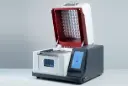
MultiVap 64 – Premium Parallel Concentration System
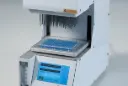
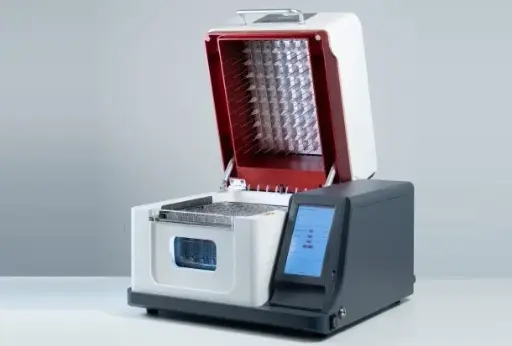
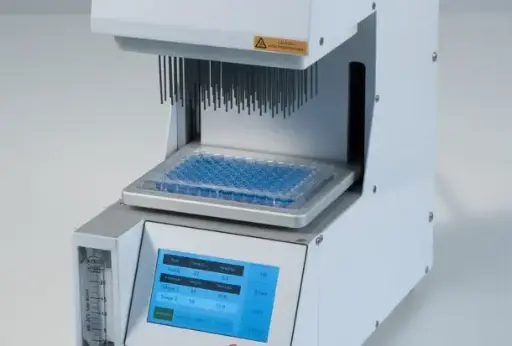
MultiVap 96 – High-Throughput Nitrogen Evaporator for Microplates
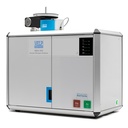
Built to maximize your productivity
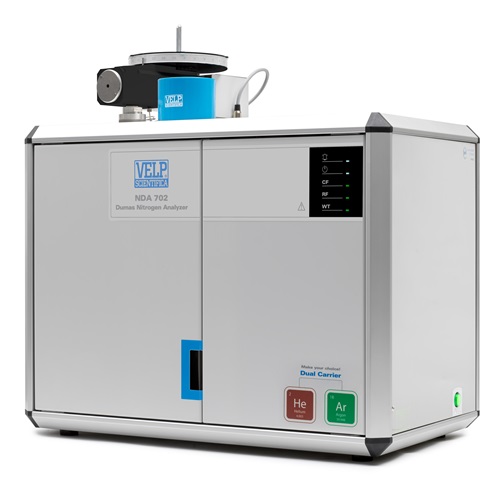
The NDA 702 Dumas elemental analyzer suits high-throughput labs that need a fast, safe analyzer, with a choice of helium or argon as carrier gas.
Powered by DUMASoft™ software, the NDA 702 produces N/protein results in just 3 to 4 minutes, fully unsupervised and cloud-enabled.
The NDA 702 is much faster, easier and safer than a traditional Kjeldahl system.
It is a safe analyzer that needs no aggressive chemicals or time-consuming steps: just prepare your sample and walk away.
NDA 702 Nitrogen Analyzer Working Principle
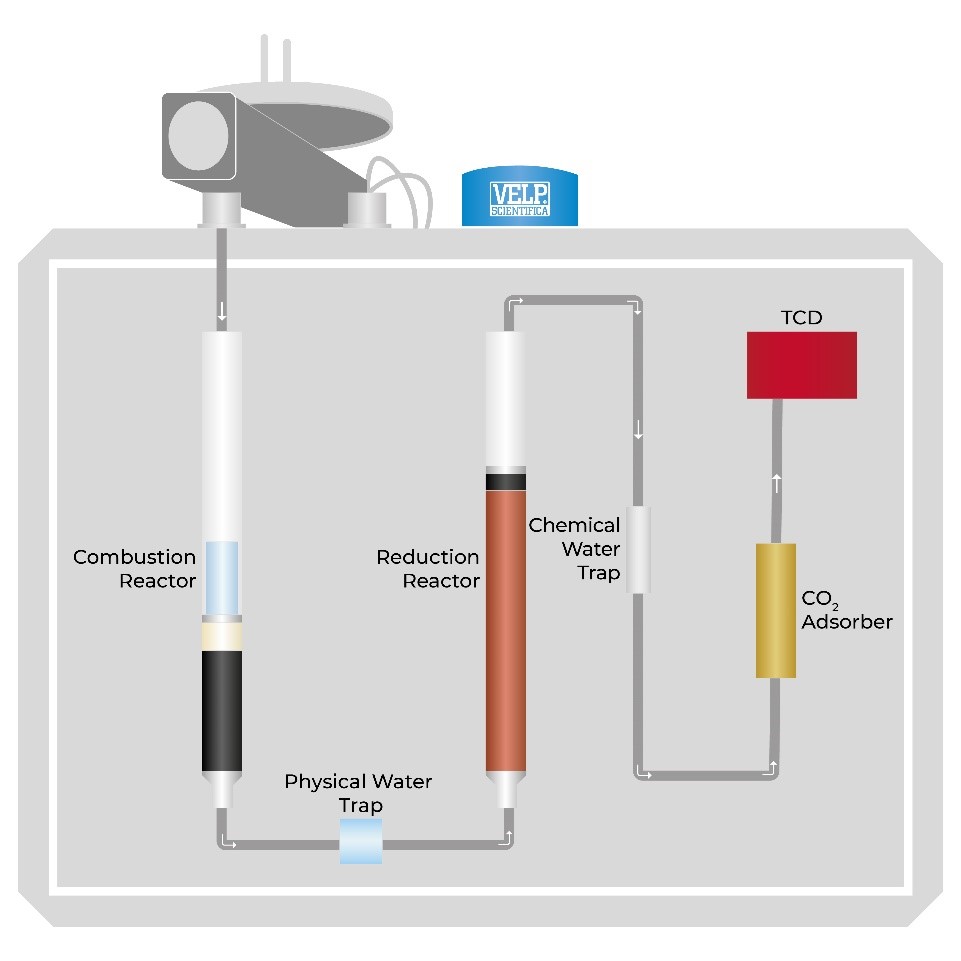
The Dumas method begins with combustion of the sample in the VELP combustion furnace (CF), above 1000 °C, to obtain elemental compounds.
Water is separated in two steps: first the maintenance-free physical trap DriStep™ (WT1) placed right after combustion, then a chemical trap (WT2) that removes the remaining 1% of water.
Between the two traps, the gas flow passes through the reduction furnace (RF), where NOx compounds are converted into molecular nitrogen (N2).
The CO2 is then trapped by the self-regenerating VELP CO2 adsorbers.
Finally, elemental nitrogen is detected by the TCD LoGas™ thermal conductivity detector, which sends the data to DUMASoft™ to calculate nitrogen and protein content.
Elemental Analysis and the Dumas Method
The Dumas method (combustion method) is a primary method for determining nitrogen and protein, offering fast results, ease of use and safety. It is considered an alternative to the classical Kjeldahl method. Both are validated by international bodies: Kjeldahl is recognized by AOAC, EPA, DIN, ISO and others, and Dumas by AOAC, AACC, ISO, DIN, ASBC, AOCS, OIV and others. In some countries, local guidelines recommend one method over the other.
The Dumas method for nitrogen determination (1831) is older than Kjeldahl (1883) but more convenient in many ways: speed, safety, cleanliness, productivity and cost per analysis.
In the past, the conditions the Dumas method requires were hard to reproduce, so Kjeldahl took the lead and became the classical method for nitrogen/protein determination.
Today, thanks to technological progress, Dumas nitrogen determination is becoming more widespread.
![NWE / PLW 8683 [LD DC10]](/web/image/product.template/130055/image_128)
The Miele PLW 8683 [LD DC10] is a high-performance laboratory glassware washer engineered for the precise and thorough cleaning of sensitive lab equipment. With advanced cleaning technologies and flexible loading capabilities, it delivers consistent, traceable results in demanding lab environments. This version replace the previous serie Miele PG 8583.
High-Efficiency Laboratory Washer for Benelux Laboratories
Designed to meet the high standards of laboratories in Belgium, the Netherlands, and Luxembourg, this model offers:
- Flexible Loading Capacity
Accommodates up to 128 laboratory bottles or 98 pipettes per cycle, ideal for routine and high-throughput labs. - Advanced Cleaning Technology
Equipped with a variable-speed pump that dynamically adjusts spray pressure to optimize cleaning performance and resource efficiency. - EcoDry Function
Includes an automatic door-opening feature at the end of the cycle to accelerate drying and prevent residual moisture buildup. - Intuitive Touchscreen Interface
The M Touch Flex color display simplifies cycle selection and enables easy customization of cleaning parameters. - Integrated Wi-Fi Connectivity
Enables integration with laboratory digital infrastructure for process control, monitoring, and data logging. - Built-in Water Softener
Maintains optimal water quality, preventing limescale and ensuring long-lasting performance. - Durable Stainless Steel Design
Provides resistance to corrosion and wear, making it a robust solution for long-term laboratory use.
Applications in Life Science and Pharmaceutical Labs
This washer is perfectly suited for:
- Research Laboratories
Ensures contamination-free glassware for reproducible results. - Pharmaceutical and Biotech Facilities
Maintains compliance with hygiene protocols for regulated environments. - Clinical and Diagnostic Labs
Supports critical cleaning needs for precise diagnostics.
Request More Information or a Quote
Looking to enhance your lab's cleaning efficiency with the Miele PLW 8683 [LD DC10]?
👉 Contact our experts for product details, technical advice, or a tailored quote.
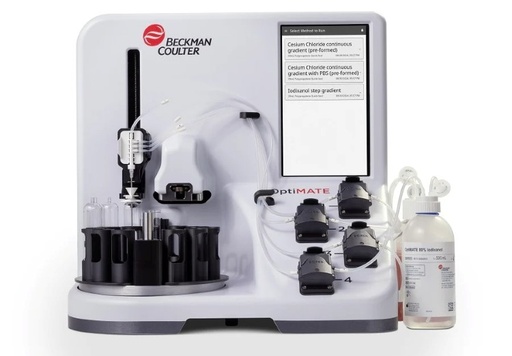
The Optimate™ Gradient Maker by Beckman Coulter is a breakthrough tool for preparing density gradients in ultracentrifugation workflows. Designed for research and diagnostic labs, it offers unmatched precision, automation, and reproducibility.
Optimate™ Gradient Maker – Simplify and Standardize Your Gradient Preparations
Whether you're working in molecular biology, virus purification, exosome isolation, or complex biomolecule fractionation, Optimate™ delivers:
- Manual or automated gradient preparation—adapt to your workflow
- Real-time process visualization via an intuitive interface
- Improved reproducibility with reduced operator variability
- Time savings and enhanced experimental consistency
Optimized for use with OptiSeal™ and Quick-Seal® tubes in SW 32 Ti or SW 41 Ti rotors, this system seamlessly integrates into any Beckman Coulter ultracentrifuge environment.
Analis is the exclusive distributor of the Optimate™ Gradient Maker in Belgium and Luxembourg. Benefit from our local support and scientific expertise to successfully implement it in your protocols.
👉 Contact our specialists!
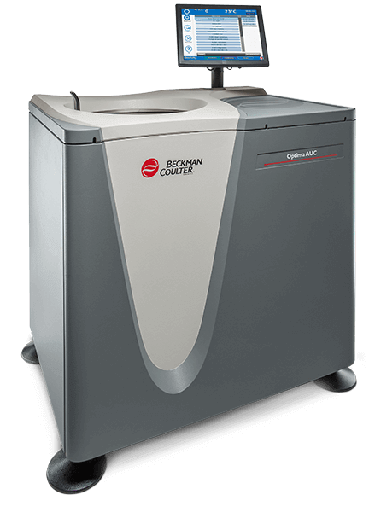
Optima AUC Analytical Ultracentrifuge package with Absorbance and Interference optics, Starter Kit (1 Counter balance, 1 Torque stand, 1 Quartz cell, 1 accessory kit) and 1 AN-50 rotor.
Beckman Coulter introduced the first AUC sample characterization instrument to help the scientific community power new discoveries. That tradition continues into the 21st century with the new Optima™ AUC system.
This latest tool is the most robust technology for providing data used to determine protein molecular weight in basic protein research and quantification of aggregation levels for academic and biopharma research.
Features :
Improved Data Quality
Higher radial resolution
Better signal to noise ratio than ProteomeLab
11x more vertical pixels for interference optics
Enables precise analysis of complex systems at discrete wavelengths (up to 20) in minimal time
Analyzes a wide array of particles in native, matrix-free conditions, including:
Proteins, Nanoparticles, LNPs, Peptides, Polymers, Micelles, Liposomes, Extracellular vesicles, Drug conjugates, Viral payload
Provides data which can answer more critical questions than any other comparable technique, including:
Shape, Mass, Diameter, Stoichiometry, Heterogeneity, Association, Aggregation, Purity, Formulation
Easier to Use
User-friendly touchscreen display indicates intuitive progression of experimental design.
Remote monitoring capabilities let you set up, monitor and extract data from virtually any location.
Compatibility with ProteomeLab XL cells and rotors
Toggle optics expedite workflow preparation.
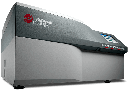
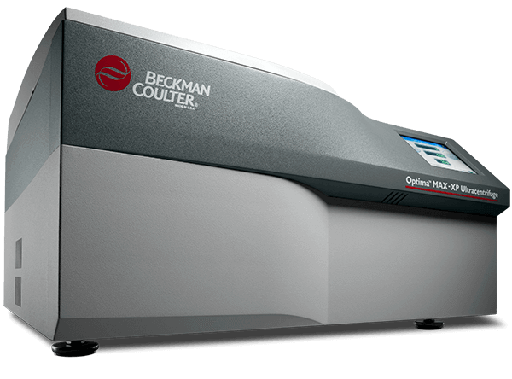
The Optima™ MAX-XP tabletop ultracentrifuge is a power-packed solution that delivers fast, efficient separations from samples as small as 175 µL up to 32.4 ml and at speeds of up to 150,000 RPM (2,500 revolutions per second) and more than 1,000,000 x g.
-Advanced software with rigorous electronic record keeping including password-controlled access and complete audit trail documentation
-Convenient touch-screen controls and easy-to-view display for gauging real-time speed, time and temperature
-Four unique tube designs for unparalleled productivity across a wide range of applications
-Features a proprietary multi-level approach to biosafety offering reliable protection
Features :
Track Detail Usage History
Security and tracking features manage your rotor life by serial number.
Password protection and electronic signatures help you maintain chain of custody and compliance.
Receive Diagnostic Alerts via Email
Remote monitoring and control enables you to start, stop, and monitor from your computer, smart phone, or tablet.
Enhanced Safety
Fits in standard biosafety hood
BioSafe optional dual PALL® Pharmaceutical Grade Sterilizing Filters
User-Friendly, Multilingual Interface
Full color LCD touchscreen display
Allows for large icons for easy selection
Touchscreen works with many glove types
9 different languages available for the intuitive interface (most in industry)
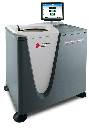
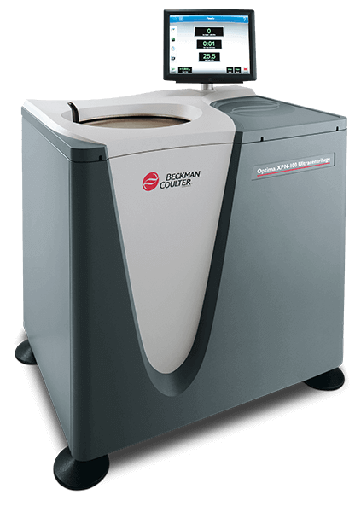
The Optima™ XPN is the premier ultracentrifuge. With networking capability and customizable security and tracking features to ensure chain of custody and compliance, the Optima XPN offers multi-layered BioSafety* features for a safe and productive work environment.
-Equipped with the innovative eXpert simulation software
-Available in 100k, 90k, and 80k RPM configurations
-Compatible with extensive rotor and labware options
-Backed by unparalleled service program options
Features :
Optimize protocols before running
Quickly perform common calculations and conversions with proprietary software to optimize protocols, save time, and save samples.
Receive diagnostic alerts via email
Remote monitoring and control enables you to start, stop, and monitor from your computer, smart phone, or tablet.
Track detail usage history
Security and tracking features manage your rotor life by serial number. Password protection and electronic signatures help you maintain chain of custody and compliance.
Enhanced Safety
Dynamic Rotor Inertia Check (DRIC)
Rotor overspeed disc
Real and simulated testing
BioSafe optional dual PALL® Pharmaceutical Grade Sterilizing Filters
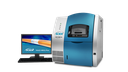
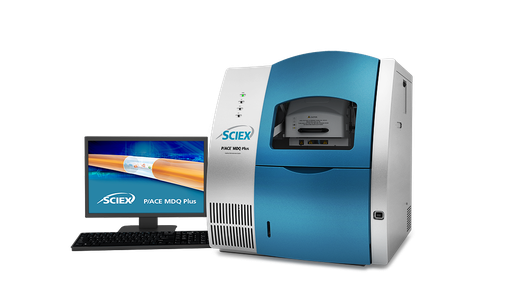
The P/ACE MDQ Plus is an automated, programmable capillary electrophoresis system designed to perform fast separations from complex samples.
The system includes:
> a selectable-wavelength high sensitivity modular UV/Vis detector (includes 200, 214, 230 and 254 nm filters to optimize analyte specificity) with UV source optics,
> temperature-controlled sample storage module
> 32 Karat™ Software configured on a desktop controller
> Installation Qualification, Operation Qualification 1 (OQ1) and documentation to aid in software validation are also included.
If required:
Add application support and training when desired.
Add other detectors specific for your application when desired - Optional DAD and/or LIF
Operational Qualification (OQ3) is NOT available for this system.
Automated Liquid Handling
Capillary Electrophoresis
Cell culture and Fermentation
Cell health
Centrifugation
Chromatography (flash & prep)
Cleaning
Clinical Automation (TLA)
Clinical IT solutions
Clinical chemistry
Clinical quality controls
Color-Appearance and Physical tests
DNA / RNA (Nucleic acids)
Disinfection
Electrochemistry
Environmental monitoring
Flow cytometry
Flow cytometry Cell sorting
Freeze drying
Heating & cooling
Hematology
Imaging
Immuno-Hematology
Immunoassay
In Vitro Fertilization (IVF)
Lab furniture & design studies
Liquid Handling (Manual)
Mass spectrometers
Material testing & characterization
Metrology
Microbiology (Clinical)
Microscopy
Moisture analysis
Nephelometry
POCT
Particle characterization
Platelet aggregation
Protection cabinets
Pumping
Rheometers
Sample preparation
Shakers and stirrers
Sterilization
Storage
Synthesis
Tablet testing
Texture analyzers
Toxicology
Urine analysis
Viscometers
Water purification
Weighing