How can optimized solid-liquid solvent extraction techniques improve analytical precision?
Solvent extraction separates and quantifies components from solid or liquid matrices using a suitable solvent. It relies on the solubility of specific compounds in that solvent, allowing selective removal and measurement.
The sample is immersed in solvent, washed with fresh solvent, and the extract is collected.
Extraction can be done several ways. The traditional Soxhlet method is the best known, though it leaves room for improvement.
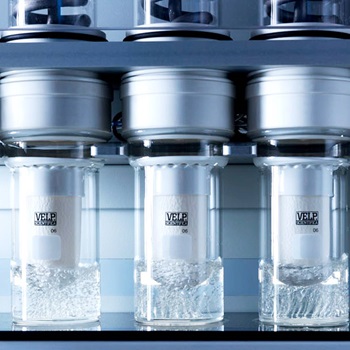
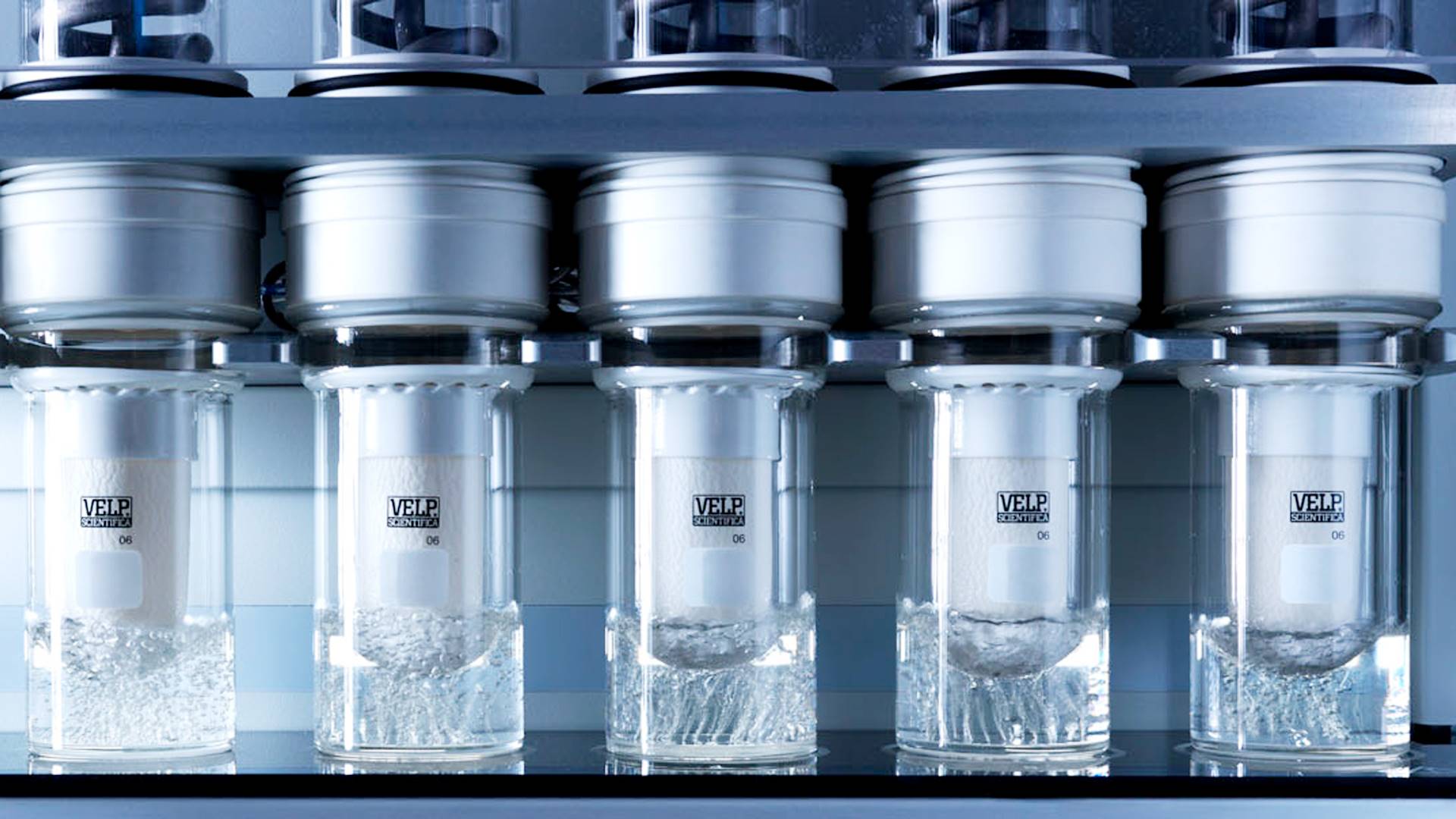
The Randall extraction (used by VELP), also called hot solvent extraction, is a faster, more efficient variant of Soxhlet. It cuts extraction time by working at higher temperatures and combining boiling, rinsing and evaporation into a single process.
How does the Randall method achieve faster results in solvent extraction?
The Randall method runs single or multiple solvent extractions using hot solvents to speed up analysis. Fast solubilization in hot solvent cuts extraction time to about 90 minutes.
The sample is immersed in boiling solvent, then rinsed with cold solvent.
It ensures high reproducibility and a high recovery rate of the solvent.
The SER Series works with a wide range of sample types and solvents for added flexibility.
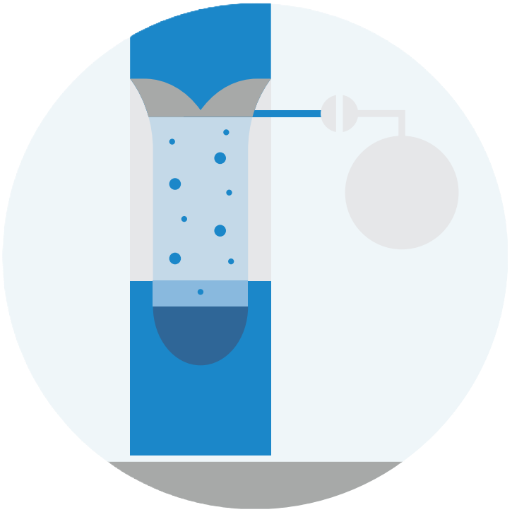
Immersion
The sample is immersed in boiling solvent for effective defatting.
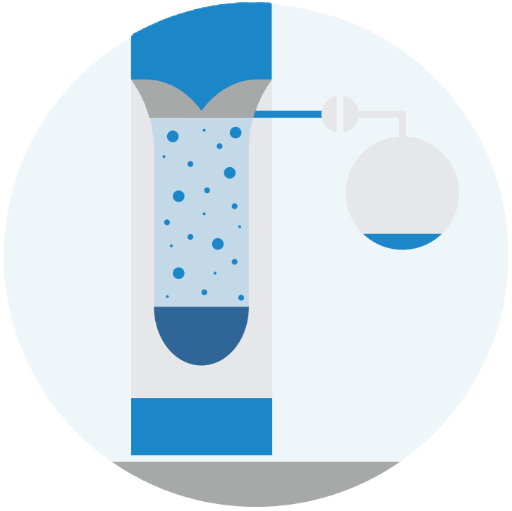
Rinsing
Condensed solvent flows over the sample and through the thimble to complete the extraction.
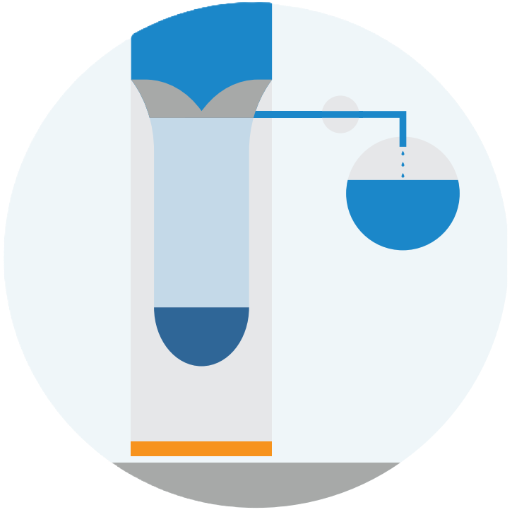
Recovery
Over 90% of the solvent is recovered in the internal recovery tank (SER 158). The glass cup holds the extracted matter.
Applications of solvent extraction
Solvent extraction is widely used to extract many compounds. The most common uses are determining crude fat and total fat content, among others.
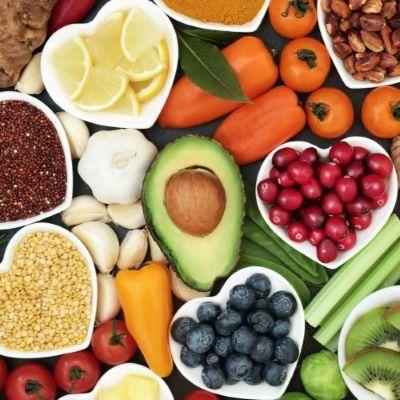
Food and Feed
- Crude fats
- Total fats

Environment
- Oils and fats in water and wastewater
- Oils and fats in sludge
- Paraffin in wood chips
- Extraction of micropollutants
- PCBs (Polychlorinated Biphenyls)
- Dioxins
- EOX (Extractable Organic Halides)
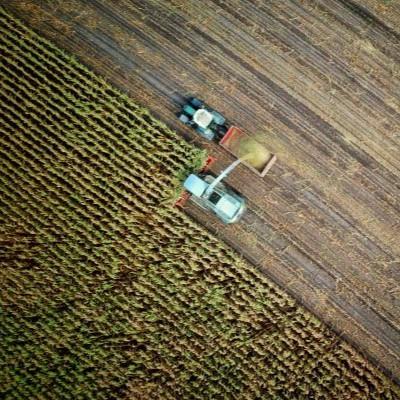
Agriculture
- Determination of hydrocarbons
- Fat coating of artificial fertilizers
- Coating of fertilizers
- PAHs (Polycyclic Aromatic Hydrocarbons)
- Extraction of cannabinoids
(Photo by nosure cares on Unsplash)

Chemical
- Non-gelled material by polymer crosslinking
- Determination of oil presence in recycled PET
- Resin residues in paper
- Saponified oil and unsaponifiable matter in soap
- Oils and lubricants
- Softeners/Additives in plastic and rubber
- Pesticides (TAPPIT408)
- Phenols

Textile
- Fatty Oil Determination in Feather
- Fat or oil in textiles and synthetic fibers
- Determination of oil presence in leather
- Dye on textile fibers
(Photo by Bozhin Karaivanov on Unsplash)
Products for Solvent Extraction
VELP offers a complete range of solvent extraction systems and a hydrolysis unit for qualitative and quantitative determination of extractable matter, such as:
- Crude and total fat determination in food and feed
- Fat/oil extraction in textile fibers, pulp and paper
- Sample preparation for PCB and dioxin analysis
- Oil determination in recycled PET
- Extraction of cannabinoids
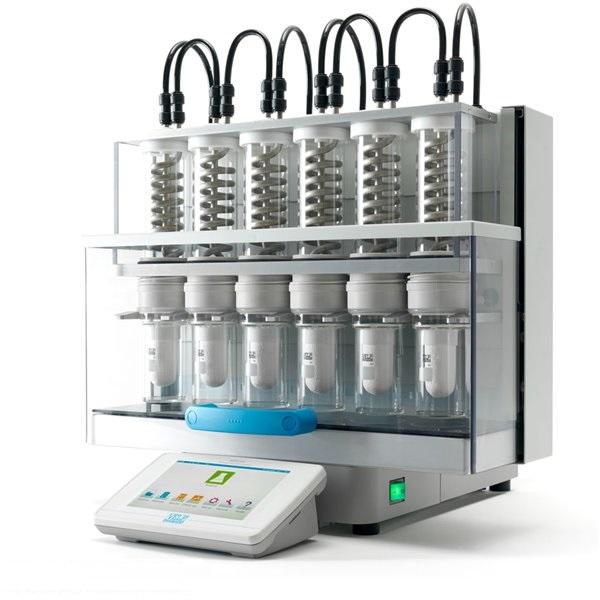
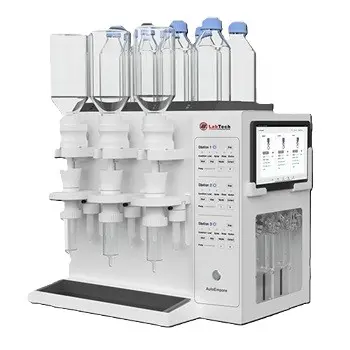
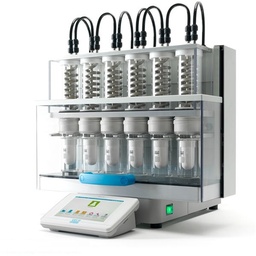
SER 158 Series – Automatic Solvent Extractor
Fully automatic, cloud-enabled hot solvent extractor for safe, fast, accurate and reliable determination of extractable matter.
See product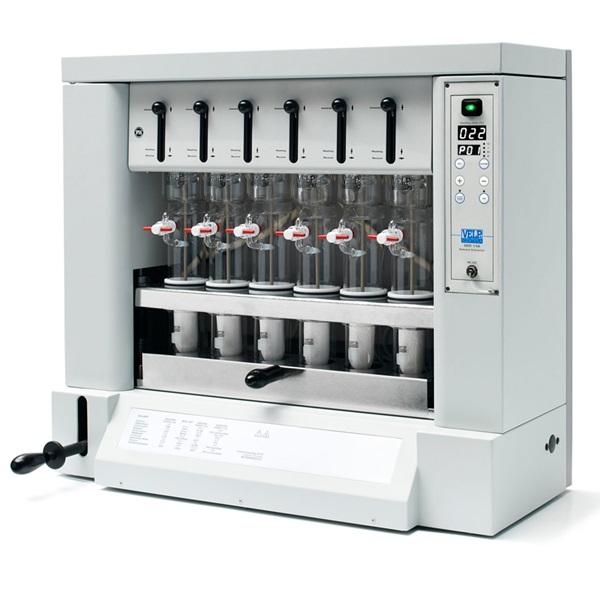
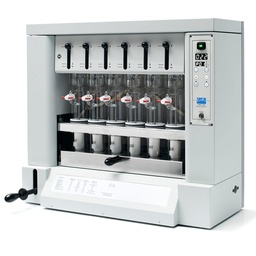
SER 148 Series – Solvent Extractors
Safe, convenient semi-automated extraction system for fat extraction and sample preparation across food, feed, environmental and other industrial applications.
See product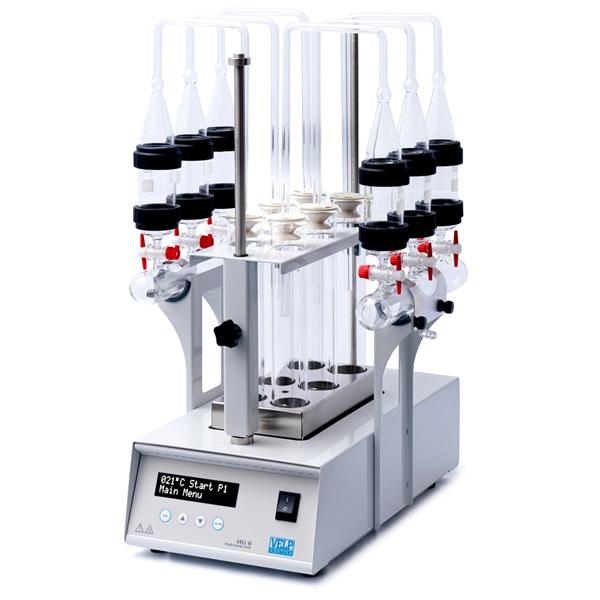
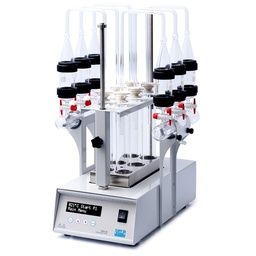
HU 6 – Hydrolysis Unit
Convenient, reliable and safe hydrolysis unit for sample preparation before extraction in total fat determination.
See productOur products
Preliminary hydrolysis for total fat determination
The VELP Scientifica HU 6 Hydrolysis Unit prepares samples before solvent extraction for total fat determination, freeing the fat molecules ready for extraction.
This procedure is required in a number of AOAC Official Methods to determine the fat content of food samples such as meat, cheese, seafood, chocolate, cereal flours and more.
The HU 6 performs hydrolysis safely and handles six samples at once to maximize productivity.
Fast and safe hydrolysis
Samples are heated in test tubes in an aluminum block with excellent thermal homogeneity. Hydrolysis runs in an acidic medium (4N hydrochloric acid) — and in some cases a basic medium (20% w/v ammonia) — for about 60 minutes at 170 °C. The hydrolyzed sample is then filtered in a glass crucible and washed with warm deionized water to remove traces of hydrochloric acid.
The HU 6 comes with a vacuum pump that improves safety by reducing acid fumes.
The glass crucible with the hydrolyzed, washed sample is oven-dried, then placed in a desiccator. It transfers directly to the SER 158 or SER 148 Solvent Extraction Unit, avoiding sample loss and improving accuracy.
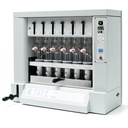
The reliable solution for solvent extraction
The SER 148/3 and SER 148/6 can be used to separate a substance or a group of elements from solid and semi-solid samples according to the Randall technique (consisting of Immersion, washing and solvent Recovery).
As for the automatic version SER 158, the main field of application is the determination of the content of soluble products such as fats, detergents, plasticizers and pesticides in food, animal feeds, detergents, rubber and plastic formulas, pharmaceutical products, soil.
The SER 148 Series is a semi-automatic solution with no compromises on operator safety (IP55) and solvent consumption also guaranteeing a limited cost per analysis.
Combined to HU6 Hydrolysis Unit, is possible to use the same crucibles to prevent any possible sample loss between the two units.
Randall Method, Faster Results
Perform single or multiple solvent extractions with Randall method, an improvement of Soxhlet technique, as hot solvents are used to speed up the analysis. In fact, the fast solubilization made by hot solvent permits a considerable reduction of the extraction time (approx. 90 minutes).
The extraction is made by immersion of the sample in the boiling solvent, followed by a rinsing phase with cold solvent.
Maximum reproducibility is ensured, as well as a high recovery rate of the solvent used.
SER Series can be used with a wide range of sample types and with a variety of solvents, for increased flexibility.
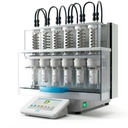
Fast and accurate solid-liquid extraction
The SER 158 Series automatic solvent extractors, available in 3- and 6-position models, provide precise and accurate solutions for both quantitative and qualitative extractable matter determination according to the Randall method, analyzing up to 5 times faster than traditional Soxhlet extraction.
The solid-liquid extraction process efficiently removes soluble components from solids through 5 sequential steps. The SER 158 works in compliance with international standards, including s AOAC, ISO, EPA, APHA, UNI.
With robust heating, advanced software, and integrated safety features, the SER 158 ensures reproducible extraction results.
The SER 158 is fully automated to maximize productivity and free operator time. Just Load&Go!
Unparalleled versatility and scalability
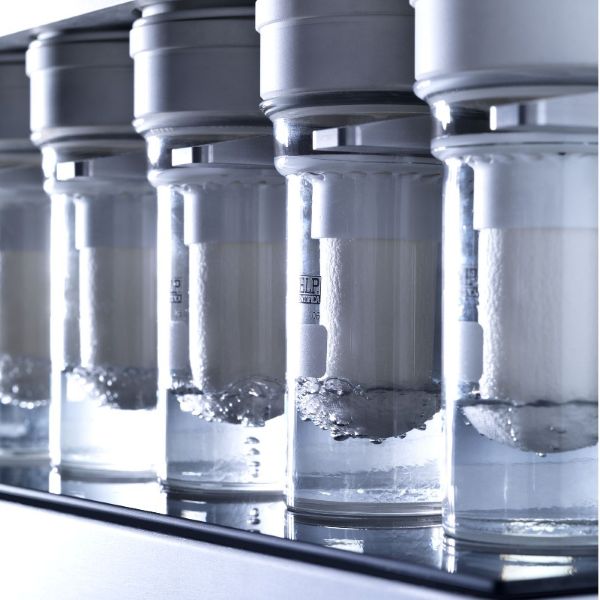
The SER 158 Series stands out for its versatility, designed to handle all sample types and sizes with a complete range of accessories and consumables:
- Butyl, Viton, and the exclusive Vaflon seals ensure broad compatibility with the majority of solvents and solvent mixtures.
- 3 different sizes of cups, thimble holders, and thimbles enable precise extraction of minimal sample amounts while reducing solvent use.
- Choose between cellulose thimbles for quantitative analysis and glass fiber thimbles for qualitative analysis.
- Compatibility with HU6 glass crucible to prevent sample loss during transfer.
The SER 158 is a universal solvent extractor and combining up to 4 units enables you to perform multiple applications independently and simultaneously.
Smart and easy to use.
The SER 158’s exclusive 7" ControlPadTM offers a highly intuitive User Interface, simplifying setup and interaction with the analyzer.
Engineered for 24/7 unattended operation, the SER 158 leverages the Load&Go technologies, minimizing the need for manual intervention. The integrated, removable ControlPadTM supports connection with a balance and barcode reader, maximizing automation and ensuring full traceability.
Choose from a library of pre-installed methods, create new ones, and mark your favorites for a fast start-up. The ControlPad™ displays each extraction step in real-time, providing a comprehensive set of information and options.
Results are immediately calculated and stored in the on-board memory. With three USB ports and an Ethernet connection, data can be easily exported to external devices for seamless integration.