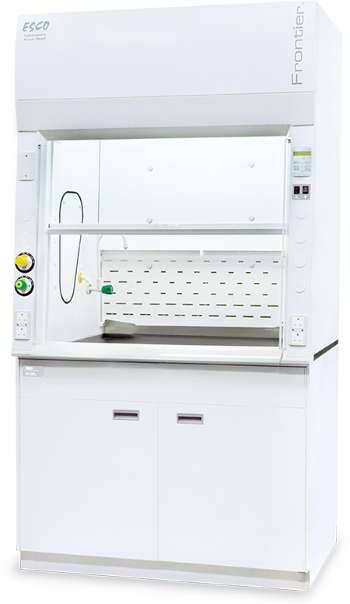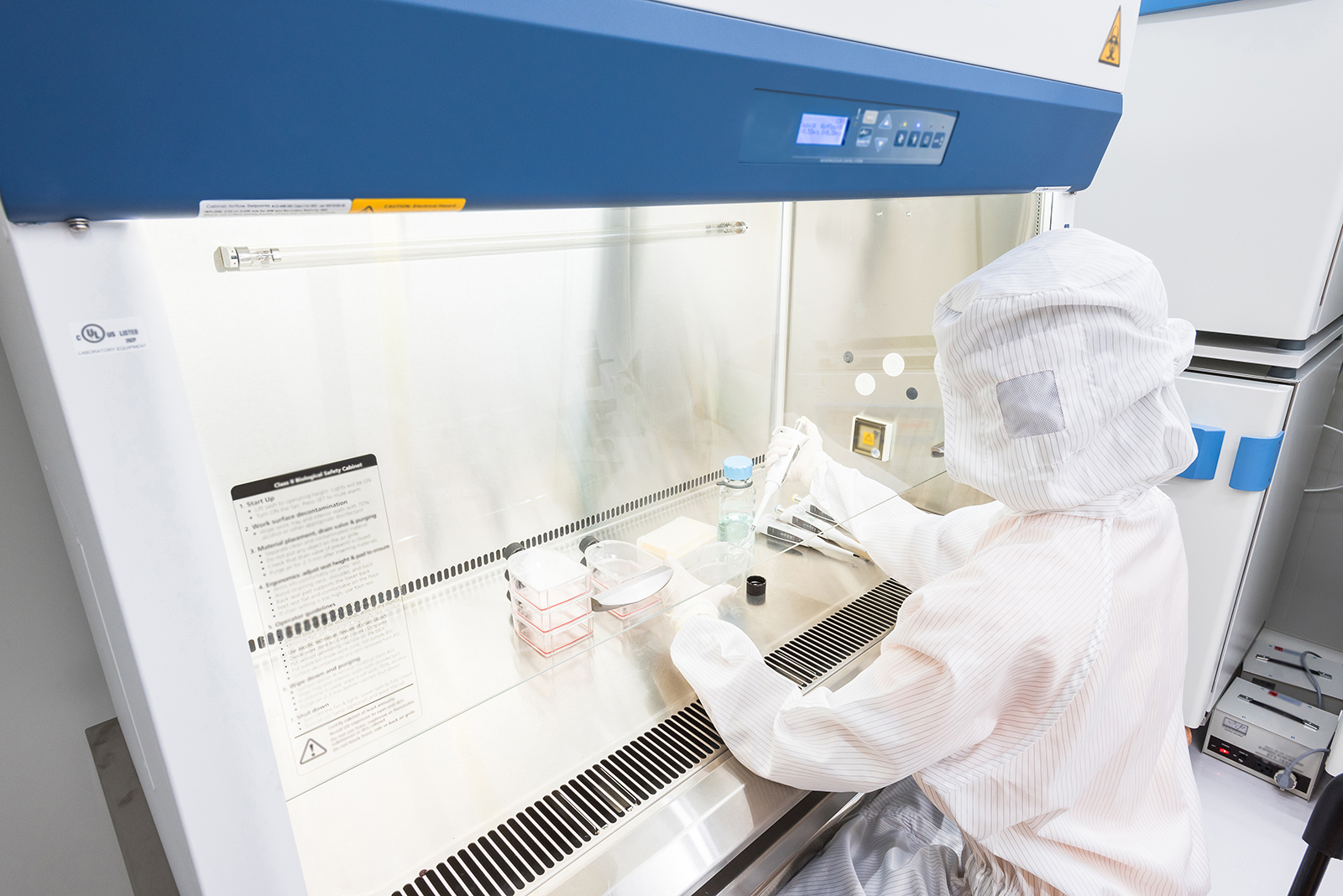
What is a Biosafety Cabinet?
A biosafety cabinet, or biological safety cabinet is a laboratory workstation that is used to provide operator and environment protection against biohazards. In practice, for most applications, there is also the need for a downflow of clean air to protect the experiment/product against contaminations in the air. That is why in most cases a biosafety cabinet class II is used.
Analis is exlusive distributor of Esco Biosafety Cabinets for Belgium, the Netherlands and Luxembourg.
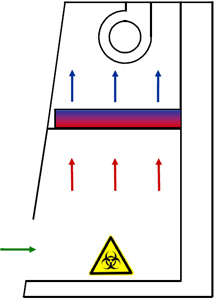
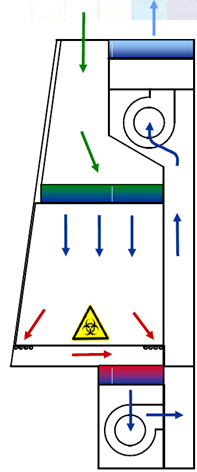
A biosafety cabinet class I is a laboratory workstation that is used to protect the user against biohazards. The cabinet has a unidirectional upwards airflow and sucks the air trough a HEPA filter before re-sending it into the laboratory environment. Due to the flow direction, unfiltered air is passing by the product/experiment used inside the cabinet. In practice, for most applications involving biohazards, the cross contamination with unfiltered air is a problem. That is why the biosafety cabinet class I has almost disappeared from the lab environment. Besides the problem of cross contamination, the cost of the cabinet is more or less the same as the cost of a biosafety cabinet class II type A2, which does offer protection of the product/experiment against air contaminants.
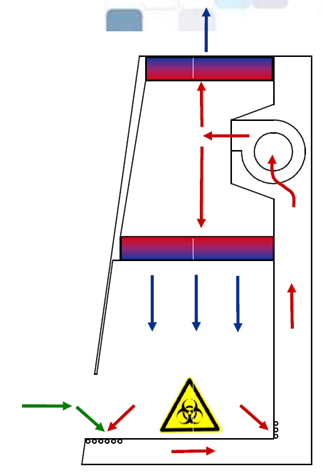
A biosafety cabinet class II is a laboratory workstation providing user and environment protection against biohazards AND providing protection of the product/experiment against air contaminants. The European standard allows the users to choose which type of class II cabinet they use, as long as it complies with certain test criteria. In practice, a biosafety cabinet class II type A2 is used for around 95% of applications involving biohazards within Europe.
When low concentrations of chemicals are used in a class II A2 biosafety cabinet, it is in most cases connected to the laboratory HVAC system using thimble ducting. The flow rate just needs to be above a certain minimum and does not need to be regulated exactly. An alternative is adding a carbon filter on top of the exhaust filter, but this technology is not used a lot yet in biosafety cabinets. The only limitation of a biosafety cabinet class II type A2 is when you use large quantities of volatile chemicals in the same workstation as biohazards. Because a class II A2 re-circulates 70% of the air, there is the possibility that chemical vapours build up. When these are toxic or explosive, they can be a large safety risk. In this case the other types of the American standard are better solutions. Biosafety cabinets class 2 type B1, B2 and C1 are all biosafety cabinets that are developed to work with large quantities of volatile chemicals in the same cabinet where biohazards are used. They are connected to an HVAC system. The flow rate needs to be regulated very exactly for these 3 types of cabinets using hard ducting. In practice this means an individual HVAC system with an individual FAN unit needs to be installed in the laboratory dedicated for these cabinets. This makes the installation a lot more expensive and complex compared to a type II A2. The scope for a biosafety cabinet class II type B1, B2 and C1 is exactly the same. In practice laboratories will never choose type B1 and C1 because they have the same cost as a B2, but use of chemicals is limited to certain parts of the work area.
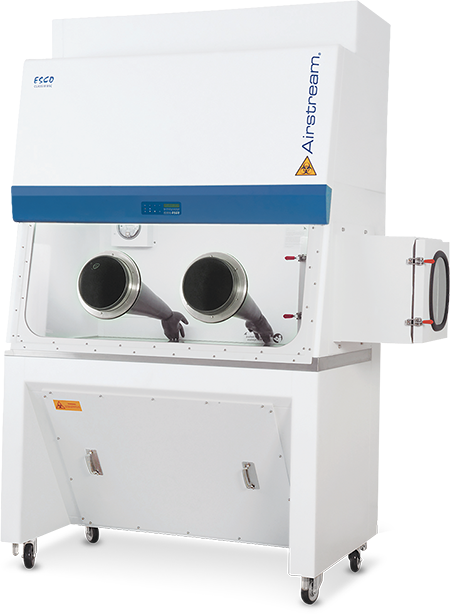
A biosafety cabinet class III is a laboratory workstation that protects the user and environment against biohazards and the product/experiment against air contaminants. The main difference with a biosafety cabinet class II is that there is a complete physical separation between the user and the product/experiment, while a class II has a sash opening. It is also sometimes referred to as an isolator, but this name is used also for some other cabinet types. Materials need to be entered via an air sash, and the manipulations are done using long gloves that are integrated into the front window. This type of cabinet is usually only found in biosafety level 4 laboratories.
If you use small amounts of chemicals, you can use a biosafety cabinet class II A2. You just need to connect it to the HVAC system using an exhaust collar and ducting. The flow rate needs to be above a threshold communicated by the supplier of the cabinet. An alternative for ducting is using a carbon filter. Carbon filters have coatings that can capture chemicals using a process called adsorption. When using large volumes of volatile chemicals in the same workstation as biohazards, you need to keep in mind that a biosafety cabinet class II A2 has 70% re-circulation. This can cause build-up of chemical vapours inside the workstation and create a risk. If a biosafety cabinet class II A2 is not an option for that reason, the biosafety cabinet class II B2 is the best solution.
It is very confusing for the end users to find the right type of biological safety cabinet. This is related to the presence of 2 different standards :
- First of all, there is the older NSF 49 standard from the US. This standard only talks about class II biosafety cabinets and defines 4 types based on their construction.
- There is also the newer European EN 12469 standard. This standard defines 3 classes of biosafety cabinets but does not define how they need to be built. They just need to pass certain test criteria.
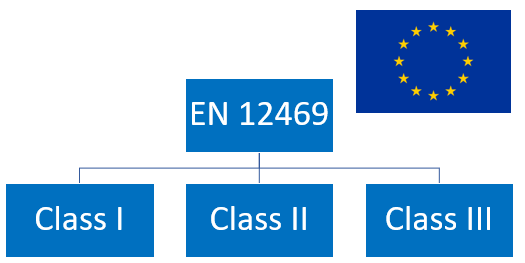
In Europe, we need to follow the European standard of course. In practice, for most applications a class II biosafety cabinet will be needed. Taking into account that the European standards do not say much about the construction, you can choose from all types defined by the US standard. In practice, we see that around 95% of the biosafety cabinets in the Benelux are class II A2. Why is that?
Analis, as an exclusive distributor of Esco for the BeNeLux, also offers the necessary support. We have a local service team for installation, validation, preventive, and corrective maintenance.
Discover the NEW ESCO
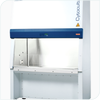
Labculture® EU G4 & Labculture Plus G4 Class II
Prevent cross contamination for protecting your sample ...
The NEW Labculture® G4 (LA2 G4) ergonomic work zone is comprised of bright illumination using industry-leading dimmable LED combined with raised, durable, stainless-steel armrest and a large, recessed work tray that is spill-resistant and designed for optimal working comfort.
The new BSC with Centurion Touchscreen controller is TUV-certified according to EN12469, enlarged sash opening of 20 cm, with standby height that easily activates standby mode.
What are the main advantages of this device?
- Intuitive, comprehensive, and easy-to-understand Centurion
- Touchscreen controller
- Front tilting window for easy cleaning
- Frameless, shatterproof, and UV-absorbing tempered glass,
- Tray support beams and holder for less vibration and easy drain pan cleaning
- USB Port and Remote Modbus to access cabinet data log and BMS connectivity for users to securely access the cabinet remotely from external devices
Discover the NEW ESCO
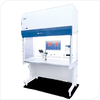
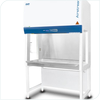
Airstream® G4 Class II BSC with Centurion Touchscreen Controller |
The latest Airstream® G4 (AC2 G4) Biosafety Cabinet provides a high level of containment and user and product protection with the use of ECM motor technology (DC motor) that eliminates instabilities in cabinet airflow that are caused by fluctuations in building power supply.
The new BSC with Centurion Touchscreen controller is EN 12469 certified and available in E and S series.
Features standby mode that easily activates as the sash is on the designated height to save energy up to 80%.
Airstream® G4 (AC2 G4) offers ergonomic work zone with comfortably bright illumination using industry-leading dimmable LED combined with raised, durable, stainless-steel armrest and large, recessed, spill-containing work tray devised for autoclave size tray for optimum work comfort and cleaning.
What is a Biosafety Cabinet?
A biosafety cabinet (BSC), or biological safety cabinet, is a laboratory workstation designed to protect the operator and the environment from biohazardous materials. In most applications, it also needs to protect the sample or experiment from airborne contamination which is why Class II cabinets are the most commonly used type.
In short:
- Class I → protects the operator and environment only (no product protection)
- Class II → protects operator, environment, and product (most common choice)
- Class III → maximum containment, for the highest biohazard risk levels
Not sure which class fits your application? Our team can guide you through the selection process.
NEW Esco Biosafety Cabinets G4 Range
Airstream® G4 Class II BSC with Centurion Touchscreen Controller
High containment, engineered for stability.
The latest Airstream® G4 (AC2 G4) provides a high level of containment and user/product protection using ECM motor technology (DC motor), eliminating airflow instabilities caused by building power fluctuations.
The new BSC with Centurion Touchscreen controller is EN 12469 certified, available in E and S series.
Features a standby mode that activates automatically at the designated sash height saving up to 80% energy.
The ergonomic work zone offers comfortably bright dimmable LED lighting, a raised stainless-steel armrest, and a large recessed work tray sized for autoclave trays, for optimal comfort and cleaning.
Discover the full product range
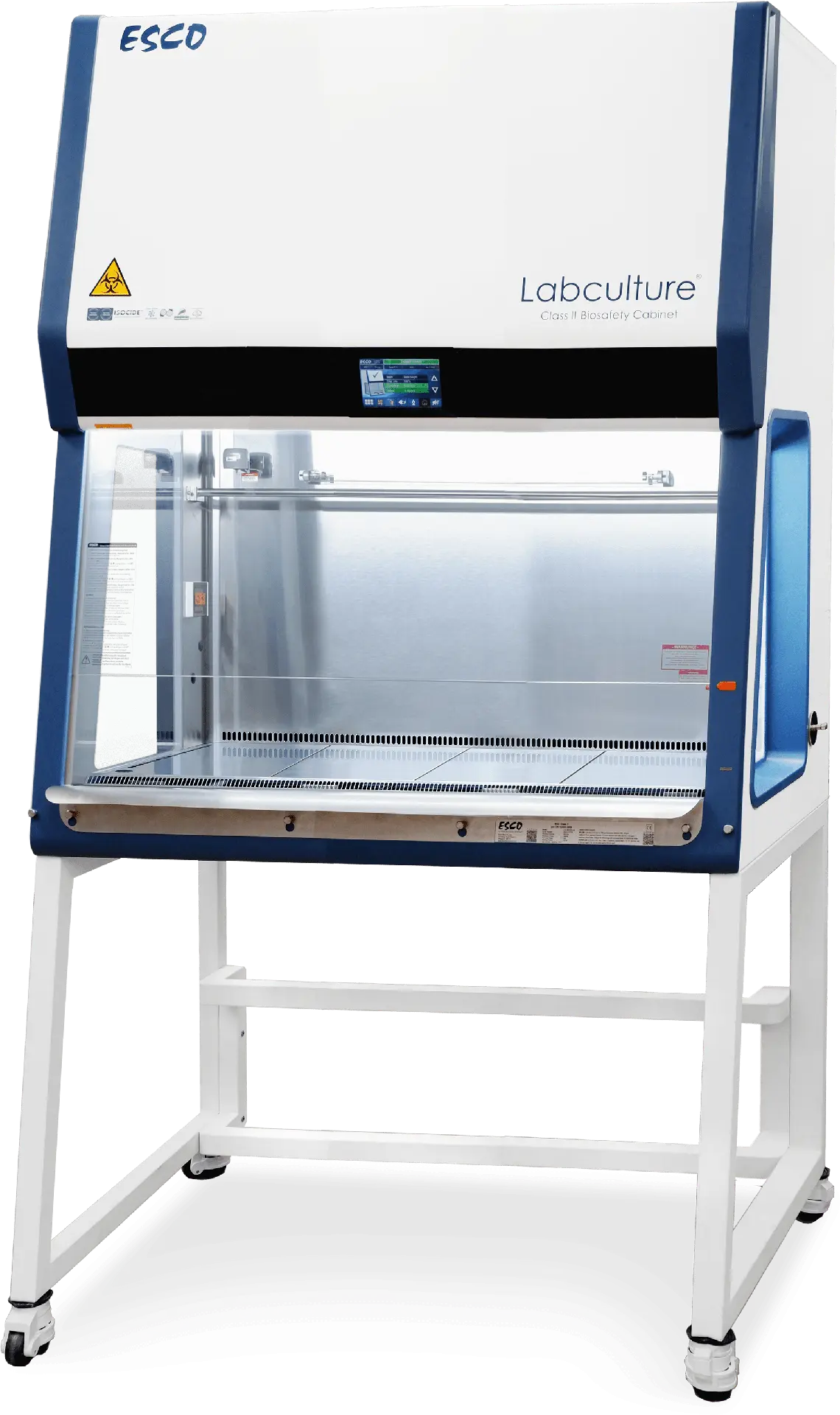
Labculture® EU G4 & Labculture Plus G4 Class II
Prevent cross-contamination and protect your sample.
The NEW Labculture® G4 (LA2 G4) ergonomic work zone features bright illumination using industry-leading dimmable LED, combined with a raised, durable stainless-steel armrest and a large, recessed work tray that is spill-resistant and designed for optimal working comfort.
The new BSC with Centurion Touchscreen controller is TÜV-certified according to EN 12469, with an enlarged sash opening of 20 cm and a standby height that easily activates standby mode.
Main advantages:
- Intuitive, comprehensive Centurion Touchscreen controller
- Front tilting window for easy cleaning
- Frameless, shatterproof, UV-absorbing tempered glass
- Tray support beams and holder for less vibration and easier drain pan cleaning
- USB port and remote Modbus access for cabinet data log and BMS connectivity
Help me choose: Quick Decision Guide
What is your applications and needs? | Recommended direction |
Standard microbiology / cell culture work | Class II — Labculture® or Airstream® G4 |
High-throughput lab, need energy efficiency | Airstream® G4 (ECM motor, up to 80% energy savings) |
Need advanced monitoring / remote data access | Labculture® G4 (Centurion Touchscreen, USB/Modbus) |
Handling chemicals inside the cabinet | [À COMPLÉTER] |
Highest containment / high-risk pathogens | Class III — [contact our experts for specifications] |
Already have an Esco cabinet, need service | See "Already Own a Cabinet" section below |
Already Own an Esco Cabinet?
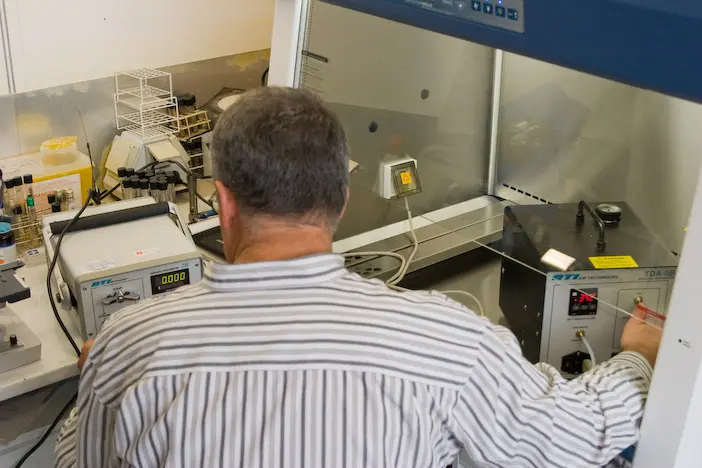
Still using a previous-generation Esco biosafety cabinet? Analis continues to support all Esco generations, not just the new G4 range.
- Need a spare part or consumable?
- Need maintenance, validation, or certification? Our field engineers handle installation, annual validation, and certification for all Esco models, old and new.
- Considering an upgrade to G4? Talk to us about trade-in options and compatibility with your current lab setup.
Why Choose Analis

Exclusive Esco Partnership
As the exclusive Esco distributor for Belgium, the Netherlands, and Luxembourg, we offer direct access to the full range (new G4 generation and previous models) backed by manufacturer-level product expertise you won't find elsewhere in the region.

100 Years of Trusted Experience
With 100 years of experience, 30,000+ users, and 90+ brands represented, Analis has supported laboratories through generations of technology change; a track record built on consistency, not just a one-time sale.

Local Technical Support, Start to Finish
Our field engineers handle installation, validation, certification, and maintenance all delivered locally, in BE/NL/LU, by our own technical team, not a subcontractor.

One Partner for Your Entire Lab
Beyond biosafety cabinets, Analis supports your full laboratory environment (from equipment to furniture) so you deal with one trusted partner instead of managing multiple suppliers.
Frequently asked questions
Class I protects the operator and environment only. Class II (most common) adds product protection via HEPA-filtered laminar airflow. Class III offers the highest containment level for high-risk pathogens, with a fully enclosed, gas-tight design.
Yes. Analis continues to distribute and support previous-generation models, ensuring compatibility with existing lab fleets and budget requirements.
Yes. Our technical team manages installation, on-site validation and certification (EN 12469 / TÜV Nord) across Belgium, the Netherlands and Luxembourg.
Our specialists assess your application, risk level, and space constraints to recommend the most suitable model — free of charge and without obligation.
Annual certification and filter checks are recommended as standard. Analis offers maintenance contracts covering both G4 and previous-generation models.
Get Your Quote
Ready to equip or upgrade your lab? Tell us about your application, and our experts will recommend the right biosafety cabinet.
Our products
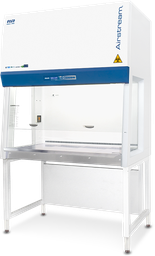
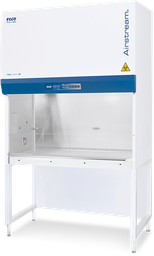
The Esco Airstream® Gen 3 Class II Biological Safety Cabinet (AC2) is an effective solution in providing operator, product and environmental protection. It also features stable and self-compensating airflow, despite building voltage fluctuations & filter loading. Certified to EN 12469, Esco Airstream® Class II Biological Safety Cabinet also has antimicrobial coating on all its external and internal painted surfaces for improved safety.
The AC2- E series has tempered glass sidewalls that increases visibility and prevents the operator from experiencing a ""boxed-in"" feeling. This unit is also equipped with multi-piece, autoclavable work tray for easy cleaning process.
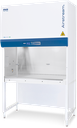
The Esco Airstream® Gen 3 Class II Biological Safety Cabinet (AC2) is an effective solution in providing operator, product and environmental protection. It also features stable and self-compensating airflow, despite building voltage fluctuations & filter loading. Certified to EN 12469, Esco Airstream® Class II Biological Safety Cabinet also has antimicrobial coating on all its external and internal painted surfaces for improved safety.
The AC2- S series Class II Biosafety cabinet features a one-piece stainless steel with coved corners for cleanability. The side capture zones and negative pressure side walls optimize containment.