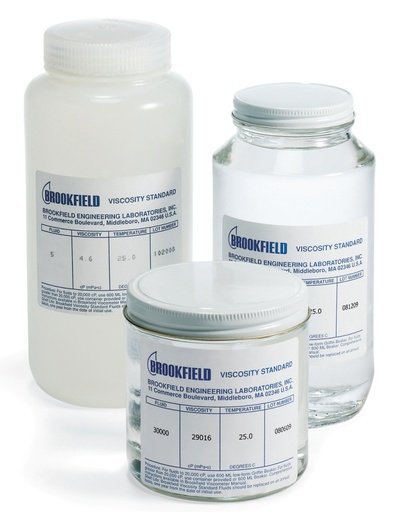
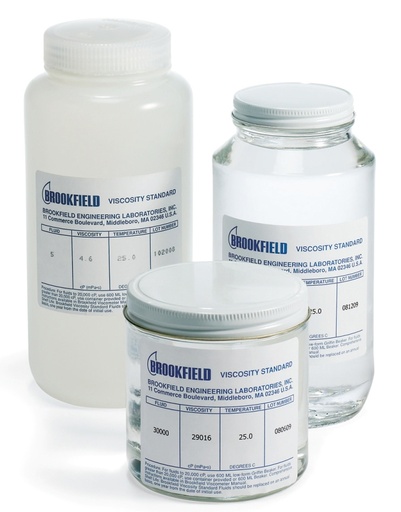
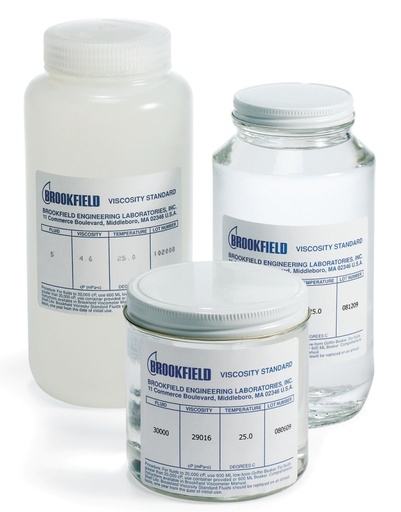
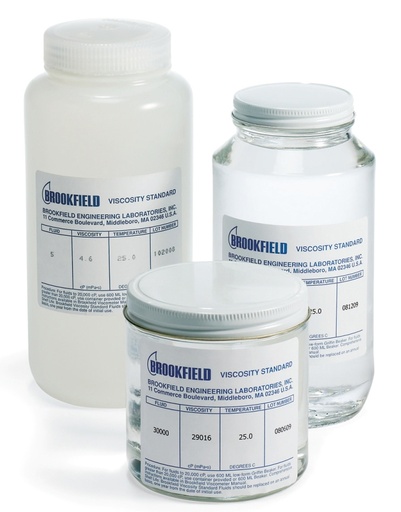
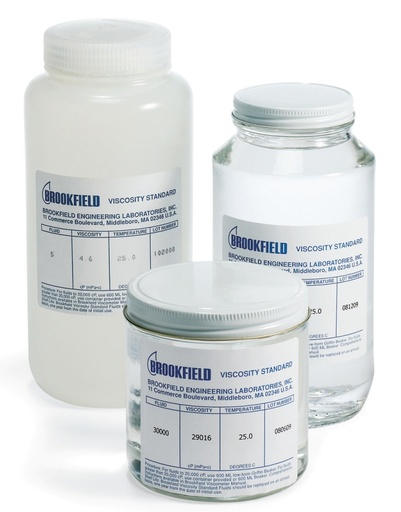
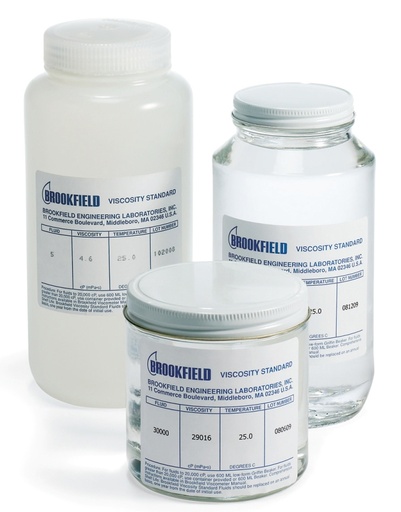
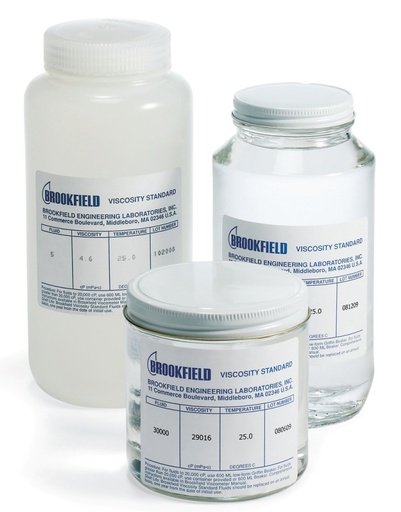
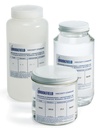
Silicone viscosity Standard fluids are most commonly used to verify the calibration of Brookfield lab viscometers and rheometers and are less temperature sensitive than mineral oils.
General purpose silicone fluids are the most commonly used standard for verifying the calibration of your Brookfield Viscometer/Rheometer.
Silicone Standards are Newtonian fluids, which are accurate to ±1% of viscosity value.
Silicone fluids provide excellent temperature stability and are less temperature sensitive than oil viscosity standards.
Brookfield Viscosity Standards are certified by methods traceable to the United States National Institute of Standards and Technology (NIST).
The selection of one or two fluids will normally provide sufficient measurement points to verify the calibration of your instrument.
All fluids are supplied in ½ liter (1 pint) containers complete with a certificate of calibration.
FEATURES & BENEFITS
- Accuracy: ±1% of viscosity value
- Excellent temperature stability
- Recommended for use with Brookfield and most other rotational viscometers
- Most economical
- Special viscosity values and temperature calibrations are available upon request
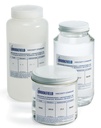
Silicone viscosity standard fluids are most commonly used to verify calibration of Brookfield lab viscometers/ rheometers and are less temperature sensitive than mineral oils.
General purpose silicone fluids are the most commonly used standard for verifying calibration of your Brookfield Viscometer/Rheometer.
Silicone Standards are Newtonian fluids which are accurate to ±1% of viscosity value.
Silicone fluids provide excellent temperature stability and are less temperature sensitive than oil viscosity standards.
Brookfield Viscosity Standards are certified by methods traceable to the United States National Institute of Standards and Technology (NIST).
The selection of one or two fluids will normally provide sufficient measurement points to verify the calibration of your instrument.
All fluids are supplied in ½ liter (1 pint) containers complete with a certificate of calibration.
FEATURES & BENEFITS
- Accuracy: ±1% of viscosity value
- Excellent temperature stability
- Recommended for use with Brookfield and most other rotational viscometers
- Most economical
- Special viscosity values and temperature calibrations available upon request
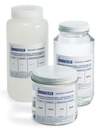
Silicone viscosity standard fluids are most commonly used to verify calibration of Brookfield lab viscometers and rheometers and are less temperature sensitive than mineral oils.
General purpose silicone fluids are the most commonly used standard for verifying calibration of your Brookfield Viscometer/Rheometer.
Silicone Standards are Newtonian fluids which are accurate to ±1% of viscosity value.
Silicone fluids provide excellent temperature stability and are less temperature sensitive than oil viscosity standards.
Brookfield Viscosity Standards are certified by methods traceable to the United States National Institute of Standards and Technology (NIST).
The selection of one or two fluids will normally provide sufficient measurement points to verify the calibration of your instrument.
All fluids are supplied in ½ liter (1 pint) containers complete with a certificate of calibration.
FEATURES & BENEFITS
- Accuracy: ±1% of viscosity value
- Excellent temperature stability
- Recommended for use with Brookfield and most other rotational viscometers
- Most economical
- Special viscosity values and temperature calibrations available upon request
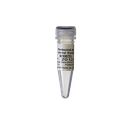
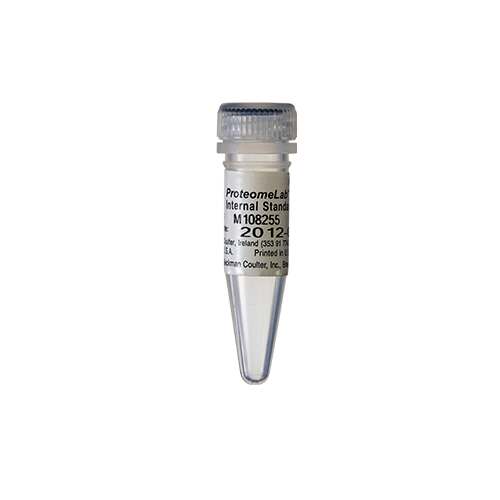
For use with the IgG Purity/Heterogeneity and SDS MW Kits.
10 kDa internal standard is used as a mobility marker and all protein mobility is calculated relative to this internal standard.
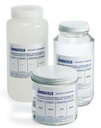
Silicone viscosity standard fluids are most commonly used to verify calibration of Brookfield lab viscometers/ rheometers and are less temperature sensitive than mineral oils.
General purpose silicone fluids are the most commonly used standard for verifying calibration of your Brookfield Viscometer/Rheometer.
Silicone Standards are Newtonian fluids which are accurate to ±1% of viscosity value.
Silicone fluids provide excellent temperature stability and are less temperature sensitive than oil viscosity standards.
Brookfield Viscosity Standards are certified by methods traceable to the United States National Institute of Standards and Technology (NIST).
The selection of one or two fluids will normally provide sufficient measurement points to verify the calibration of your instrument.
All fluids are supplied in ½ liter (1 pint) containers complete with a certificate of calibration.
FEATURES & BENEFITS
- Accuracy: ±1% of viscosity value
- Excellent temperature stability
- Recommended for use with Brookfield and most other rotational viscometers
- Most economical
- Special viscosity values and temperature calibrations available upon request
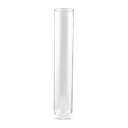
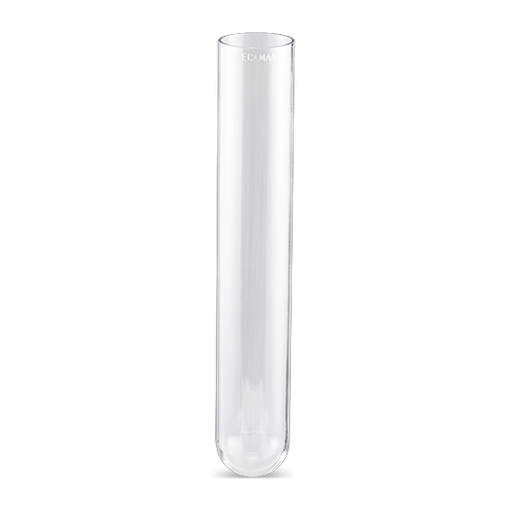
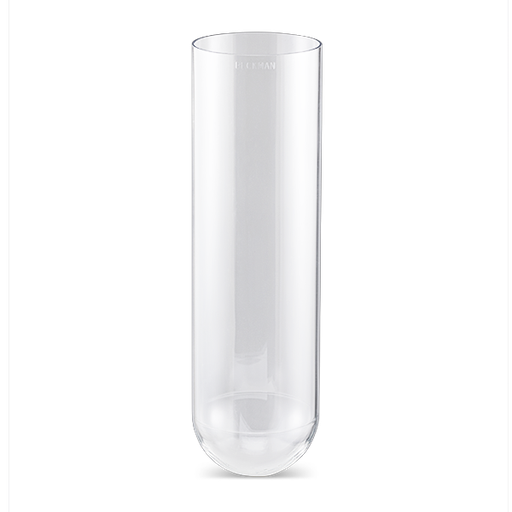
This round bottom tube is designed for use in Beckman Coulter instruments and rotors. Ultra-Clear tubes are transparent, allowing for easy location of visibly banded or pelleted samples.
Compatible Ultracentrifuge Swinging Bucket Rotor: SW 41 Ti
Certified-free and sterile tubes are also available.
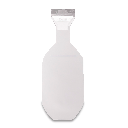
Superior labware is only the beginning when it comes to obtaining extraordinary results in the lab.
Safe, efficient workflows are as critical to your work as quality samples.
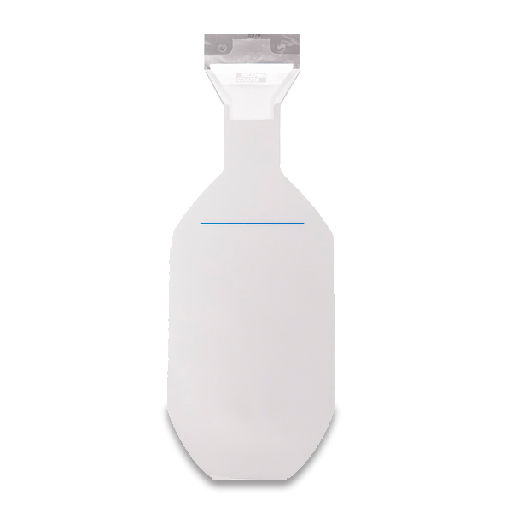
Now you can safely harvest high-quality samples in fewer steps from prep to cleanup with Beckman Coulter’s HARVESTLINE sterile bottle liners.
Click here for non-sterile.
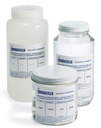
Silicone viscosity standard fluids are commonly used to verify the calibration of Brookfield lab viscometers and rheometers, and are less temperature-sensitive than mineral oils.
General-purpose silicone fluids are the most widely used standard for verifying the calibration of your Brookfield viscometer or rheometer.
Silicone standards are Newtonian fluids, accurate to ±1% of the viscosity value.
Silicone fluids provide excellent temperature stability and are less temperature-sensitive than oil viscosity standards.
Brookfield Viscosity Standards are certified by methods traceable to the United States National Institute of Standards and Technology (NIST).
One or two fluids normally provide enough measurement points to verify your instrument's calibration.
All fluids come in ½-liter (1 pint) containers with a calibration certificate.
FEATURES & BENEFITS
- Accuracy: ±1% of viscosity value
- Excellent temperature stability
- Recommended for use with Brookfield and most other rotational viscometers
- Most economical
- Special viscosity values and temperature calibrations available upon request
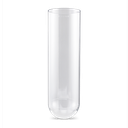
This round bottom tube is designed for use in Beckman Coulter instruments and rotors. Ultra-Clear tubes are transparent, allowing for easy location of visibly banded or pelleted samples.
Compatible Ultracentrifuge Rotors
- Fixed Angle: Type 70 Ti, Type 50.2 Ti
- Swinging Bucket: SW 32 Ti, SW 28
Compatible High Performance Rotor
- Swinging Bucket: JS-24.38
Certified-free and sterile tubes are also available.
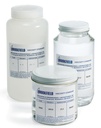
Silicone viscosity standard fluids are most commonly used to verify calibration of Brookfield lab viscometers anviscometers and rheometers and are less temperature sensitive than mineral oils.
General purpose silicone fluids are the most commonly used standard for verifying calibration of your Brookfield Viscometer/Rheometer.
Silicone Standards are for Newtonian fluids which are accurate to ±1% of viscosity value.
Silicone fluids provide excellent temperature stability and are less temperature sensitive than oil viscosity standards.
Brookfield Viscosity Standards are certified by methods traceable to the United States National Institute of Standards and Technology (NIST).
The selection of one or two fluids will normally provide sufficient measurement points to verify calibration of your instrument.
All fluids are supplied in ½ liter (1 pint) containers complete with a certificate of calibration.
FEATURES & BENEFITS
- Accuracy: ±1% of viscosity value
- Excellent temperature stability
- Recommended for use with Brookfield and most other rotational viscometers
- Most economical
- Special viscosity values and temperature calibrations available upon request
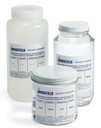
Silicone viscosity standard fluids are commonly used to verify the calibration of Brookfield lab viscometers and rheometers, and are less temperature-sensitive than mineral oils.
General-purpose silicone fluids are the most widely used standard for verifying the calibration of your Brookfield viscometer or rheometer.
Silicone standards are Newtonian fluids, accurate to ±1% of the viscosity value.
Silicone fluids provide excellent temperature stability and are less temperature-sensitive than oil viscosity standards.
Brookfield Viscosity Standards are certified by methods traceable to the United States National Institute of Standards and Technology (NIST).
One or two fluids normally provide enough measurement points to verify your instrument's calibration.
All fluids come in ½-liter (1 pint) containers with a calibration certificate.
FEATURES & BENEFITS
- Accuracy: ±1% of viscosity value
- Excellent temperature stability
- Recommended for use with Brookfield and most other rotational viscometers
- Most economical
- Special viscosity values and temperature calibrations available upon request
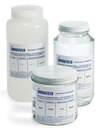
Silicone viscosity standard fluids are most commonly used to verify calibration of Brookfield lab viscometers/ rheometers and are less temperature sensitive than mineral oils.
General purpose silicone fluids are the most commonly used standard for verifying the calibration of your Brookfield viscometer or rheometer.
Silicone Standards are Newtonian fluids which are accurate to ±1% of viscosity value.
Silicone fluids provide excellent temperature stability and are less temperature sensitive than oil viscosity standards.
Brookfield Viscosity Standards are certified by methods traceable to the United States National Institute of Standards and Technology (NIST).
The selection of one or two fluids will normally provide sufficient measurement points to verify calibration of your instrument.
All fluids are supplied in ½ liter (1 pint) containers complete with a certificate of calibration.
FEATURES & BENEFITS
- Accuracy: ±1% of viscosity value
- Excellent temperature stability
- Recommended for use with Brookfield and most other rotational viscometers
- Most economical
- Special viscosity values and temperature calibrations available upon request
Automated Liquid Handling
Capillary Electrophoresis
Cell culture and Fermentation
Cell health
Centrifugation
Chromatography (flash & prep)
Cleaning
Clinical Automation (TLA)
Clinical IT solutions
Clinical chemistry
Clinical quality controls
Color-Appearance and Physical tests
DNA / RNA (Nucleic acids)
Disinfection
Electrochemistry
Environmental monitoring
Flow cytometry
Flow cytometry Cell sorting
Freeze drying
Heating & cooling
Hematology
Imaging
Immuno-Hematology
Immunoassay
In Vitro Fertilization (IVF)
Lab furniture & design studies
Liquid Handling (Manual)
Mass spectrometers
Material testing & characterization
Metrology
Microbiology (Clinical)
Microscopy
Moisture analysis
Nephelometry
POCT
Particle characterization
Platelet aggregation
Protection cabinets
Pumping
Rheometers
Sample preparation
Shakers and stirrers
Sterilization
Storage
Synthesis
Tablet testing
Texture analyzers
Toxicology
Urine analysis
Viscometers
Water purification
Weighing